The Science of Naengmyeon: Pyongyang vs. Hamhung Styles
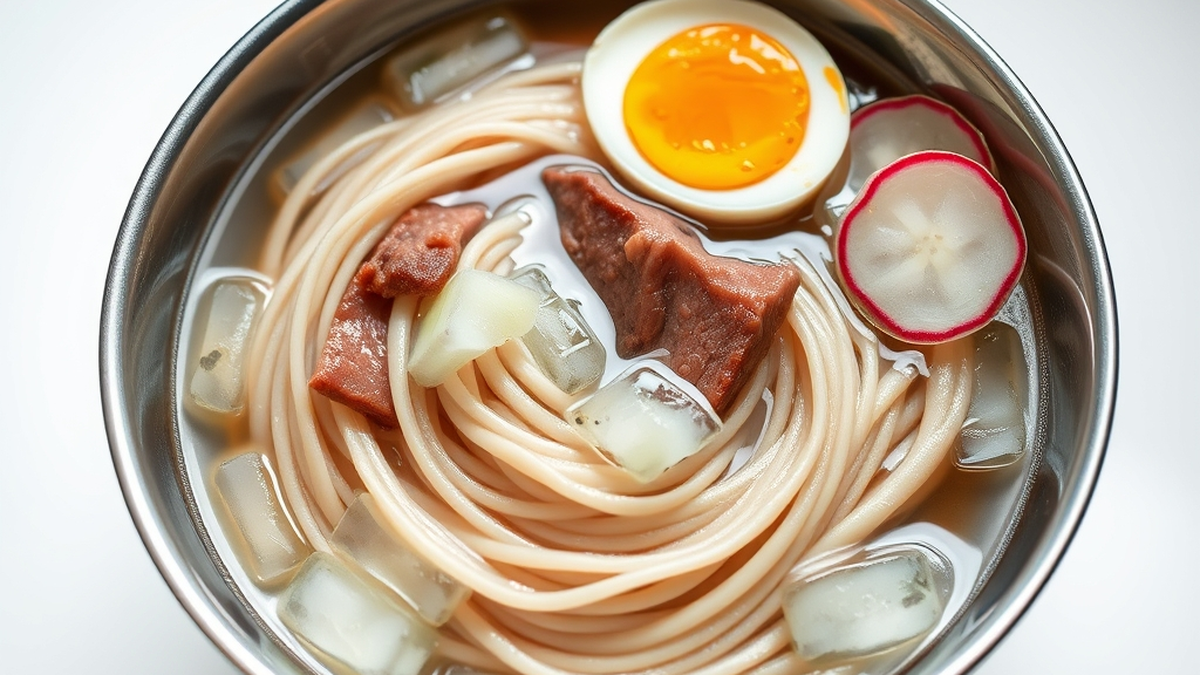
The World of Naengmyeon: Cold Noodles as a Culinary Science
In the heat of a Korean summer, when the asphalt seems to shimmer and the air clings to the skin, there is only one dish that draws a silent, collective consensus from office workers, students, and elders alike: Naengmyeon (cold noodles).
To the uninitiated, it might seem like a simple bowl of chilled noodles in broth. However, to sit down at a traditional Naengmyeon specialty shop is to enter a world governed by strict, albeit unspoken, rules. It is a culinary science that balances texture, temperature, and seasoning, reflecting regional histories that persist in the taste profiles of the modern dining table.
The Great Divide: Pyongyang vs. Hamhung
When you order Naengmyeon, the first decision is binary: Do you want the subtle, broth-forward experience of the North, or the spicy, chewy intensity of the East?
Pyongyang Naengmyeon (Pyongyang-sik Naengmyeon)
Originating from the northern capital, this style is defined by its buckwheat-heavy noodles and its clear, understated beef or pheasant broth. The hallmark of a true Pyongyang-style bowl is its restraint. The noodles have a shorter, earthier snap, and the broth is often described by locals as “tasting like nothing”—an intentional, high-level compliment. It implies a delicate, clean profile that requires patience to appreciate. You are meant to taste the subtle nuttiness of the buckwheat rather than the seasoning. It is a dish of nuance, often served with thin slices of beef, cucumber, and a slice of Asian pear to cut through the richness of the meat stock.
Hamhung Naengmyeon (Hamhung-sik Naengmyeon)
If Pyongyang style is a quiet whisper, Hamhung style is an exclamation. Coming from the coastal region of the northeast, these noodles are made from potato or sweet potato starch, resulting in a texture that is famously resilient and “chewy.” Because the noodles are so firm, they are almost never served in a cold soup. Instead, they are Bibim-naengmyeon (mixed cold noodles), tossed in a vibrant, spicy, and slightly sweet sauce made from Gochujang (fermented chili paste). Often topped with Hoe (thinly sliced raw fish, usually skate), it provides a fiery, satisfying bite that contrasts sharply with the austere elegance of its Pyongyang cousin.
The Temperature Debate: To Ice or Not to Ice
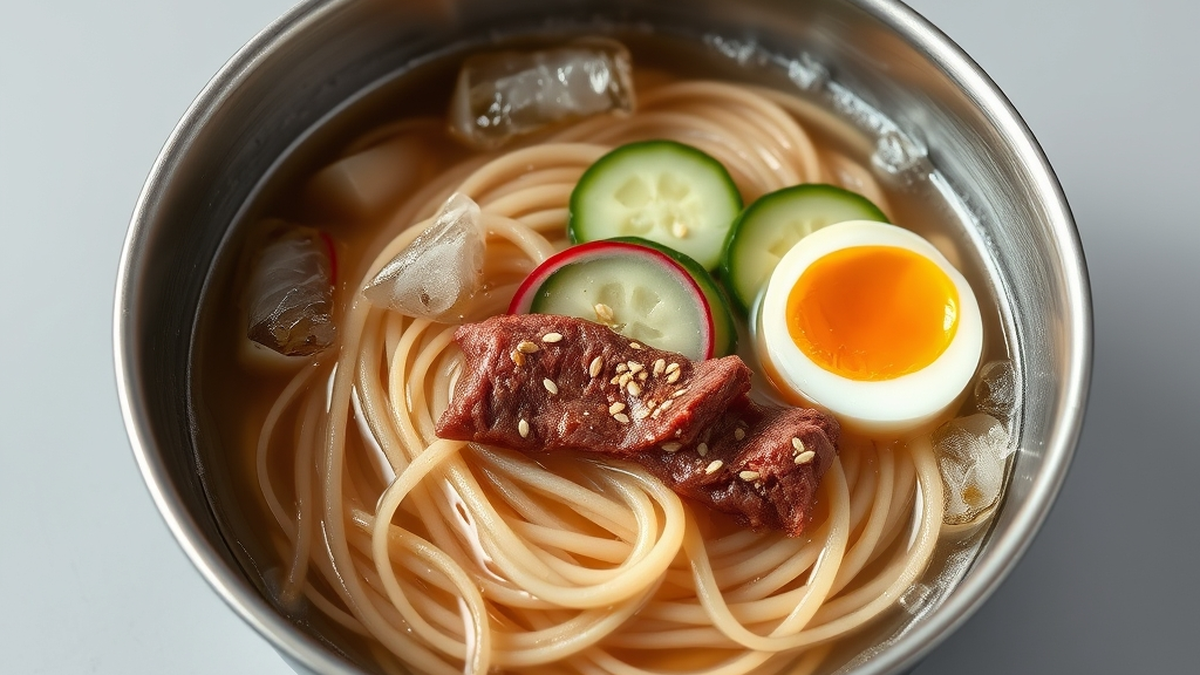
Perhaps the most common source of confusion for international diners is the state of the broth. Walk into a Naengmyeon house in July, and you will see bowls served with slushy, crystalized ice floating on the surface, alongside bowls where the broth is merely cool.
The debate over broth temperature is not about refrigeration; it is about the integrity of the ingredients. Purists often argue that aggressive icing mutes the flavor. When broth is too cold, your tongue’s ability to perceive the subtle saltiness and the savory depth of the meat stock—the Umami—is significantly diminished.
However, in the height of the humid summer, the “ice-cold” delivery is a functional necessity for refreshment. When the broth is served with a thin layer of shaved ice, the noodles remain incredibly firm until the very last bite. If the broth were warm or even room temperature, the delicate buckwheat noodles would soften and lose their structural integrity, turning mushy in the bowl. Most local shops leave the decision to the diner by providing a metal pitcher of extra broth on the side, allowing you to add more or adjust the temperature as you go.
Customizing Your Bowl: The Local Way
When your tray arrives, you will notice a set of condiments: a pair of kitchen shears, a bottle of vinegar, and a bottle of spicy mustard (Gyeoja).
The Ritual of the Scissors
Before you take your first bite, you will likely see your dining companions pause. If they are eating Pyongyang-style noodles, they might opt not to cut them at all—long noodles are traditionally considered a symbol of longevity. However, if the noodles are particularly long and difficult to manage, a quick vertical snip is perfectly acceptable. Do not over-cut them; you want to maintain a decent length for slurping.
The Art of the Seasoning
The most important rule in a Naengmyeon shop is to taste the broth before you add anything. Because the flavor is so delicate, a splash of vinegar or a squeeze of mustard can fundamentally shift the balance.
If you are eating the Pyongyang style, use the vinegar sparingly. The purpose of the vinegar is to brighten the beefy finish, not to turn the soup into a vinaigrette. The mustard adds a sharp, sinus-clearing heat that cuts through the starch of the noodles. Many locals add a small amount of mustard directly onto the noodles rather than into the broth, ensuring each bite has a punch of flavor without compromising the clarity of the soup.
For Bibim-naengmyeon, the customization is more robust. You might add a small splash of the provided cold broth into the spicy sauce to help bind it to the noodles, making the mixture smoother and easier to eat.
Beyond the Bowl: Table Context
Naengmyeon is rarely eaten in isolation. In a traditional setting, it is almost always paired with Mandu (steamed dumplings). The contrast of the piping hot, savory dumplings with the freezing cold, sharp noodles is a foundational pairing in Korean dining. The fat and salt from the Mandu fill the gaps left by the lightness of the Naengmyeon, creating a complete, satisfying meal.
You will also notice the side dish, usually Mu-saengchae (thinly sliced pickled radish). This adds a necessary crunch to every bite. In a busy shop, don’t be surprised if your water or broth arrives in a steel cup; the conductive properties of stainless steel help maintain the temperature of the dish, a design choice that is as practical as it is iconic.
When you finish your meal, you will likely be served a small cup of Yuksu (warm beef broth) before you leave. While it might seem counterintuitive to follow a cold meal with a hot drink, it is a thoughtful way to settle the stomach after a long, icy bowl of noodles.
Recognizing these nuances—knowing why you shouldn’t instantly dump vinegar into your broth, or why you might choose between potato-starch chewyness and buckwheat earthiness—changes your relationship with the dish. Naengmyeon is not just a way to beat the heat. It is a deliberate, layered experience, perfected over decades, that turns the simple act of slurping noodles into a refined ritual of the Korean summer.