The Seven Stars and the Great Bear in Korean Shamanism

The Seven Stars and the Great Bear: Constellation Worship in Korean Shamanism
On a clear, crisp night in the Korean countryside—especially away from the neon glow of the cities—the sky can look immense. If you look toward the north, the familiar shape of the Big Dipper hangs in the darkness, a constellation that has served as a celestial compass for millennia. In Korean folk belief and shamanism, however, these stars are more than just astronomical points of navigation. They are known as Chilseong (Seven Stars), a group of deities that hold the keys to the most fundamental human desires: longevity, fortune, and the smooth unfolding of life’s path.
As August brings some of the most stable, clear skies for stargazing in Korea, it is the perfect time to look upward and understand why, for centuries, the people of the peninsula have turned their gaze toward the Big Dipper to ensure their well-being.
The Celestial Governors: Who are the Chilseong?
In the context of Korean shamanism, or Mu-gyo, the Chilseong are the “Seven Star Spirits.” They are not merely cold, distant balls of gas, but active, anthropomorphic deities that govern the human lifespan and the success of one’s endeavors. While many Western traditions look to the zodiac to determine personality or compatibility, the Korean approach to the Seven Stars is focused on direct petitioning.
The Chilseong reside in the northern sky, which is why they are often associated with the North Star, or Buk-geuk-seong. In ancient Korean cosmology, the North Star was the stationary center of the heavens, around which everything else rotated. Because it never moved, it became a symbol of constancy and ultimate authority. The Seven Stars that form the dipper shape were seen as the subordinates or the manifestations of this central power, tasked with the practical administration of human fate.
When you walk into a traditional Korean temple complex, you might notice a smaller, separate structure tucked away behind the main halls. This is the Chilseong-gak, or the Hall of the Seven Stars. It is a space dedicated specifically to these celestial spirits. Even in Buddhism, which historically integrated local folk beliefs, you will find images of the Seven Stars depicted not just as constellations, but as seven distinct figures, often shown in the robes of scholars or mountain spirits, holding symbolic items that represent the granting of prayers.
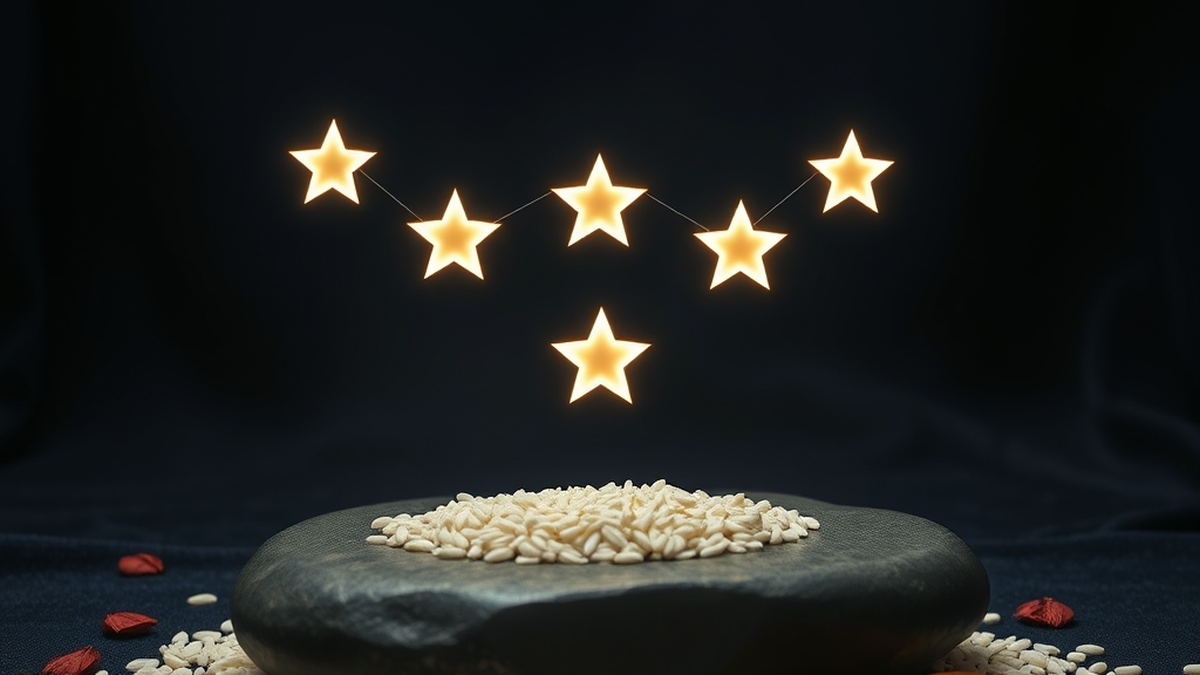
Petitioning for Longevity and Success
In traditional Korean culture, the Seven Stars were considered the primary administrators of human life. It was believed that when a child was born, their life force was recorded in the registry of the Chilseong. When that same person reached the end of their life, it was the Chilseong who returned to close the ledger.
Because they controlled the duration of a life, they became the patrons of longevity. You will often see the Seven Stars represented alongside other symbols of long life, such as pine trees, turtles, or the mushroom of immortality. Parents would pray to the Chilseong for the health of their children, hoping that the “star spirits” would keep their offspring’s internal “candle” burning brightly for many decades.
Beyond simple survival, the Chilseong were also invoked for success. In a pre-industrial society, “success” was often defined by the fertility of the land and the health of the family. A good harvest, a safe pregnancy, and passing the state examinations were all events that were thought to be influenced by the alignment of one’s luck with the will of the stars.
You might see this manifest in older rituals where a bowl of clean water—jeong-hwan-su—is placed on a low table at night, pointing toward the North Star. The person praying would pour their hopes into this water, believing that the reflection of the stars in the bowl served as a bridge between the mortal world and the divine administrators above. It is a quiet, solitary act of faith that has been repeated on Korean balconies and temple courtyards for generations.
Symbols and Recognition: Where You See Them Today
If you know what to look for, you will start noticing the influence of the Seven Stars in places you might have previously overlooked.
The most obvious place is within the architecture of Buddhist temples. If you visit a large, historic temple, keep an eye out for the Chilseong-gak. Unlike the main halls which feature grand, imposing statues of the Buddha, the halls dedicated to the Seven Stars often feel more intimate. The paintings inside are distinct; look for seven figures arranged in a row, or sometimes represented by seven circular discs or lamps.
Another, more subtle place to find the Seven Stars is in the patterns used in traditional Korean aesthetics. The number seven itself is considered auspicious in this context. You will occasionally see patterns on traditional furniture or fabric that evoke the constellation’s shape. Even in certain folk dances or traditional procession formations, the movement of the performers can mirror the arc of the Big Dipper, symbolically “blessing” the ground they walk upon.
You might also encounter the term in linguistic remnants. While modern life has largely moved toward Western astrological terms, elderly Koreans may still occasionally refer to the “starry fate” or the “path of the stars” when speaking about particularly good fortune that seemed to arrive out of nowhere. It is a way of acknowledging that some things in life—like a sudden windfall or a narrow escape from misfortune—are simply the result of the stars watching over a person’s household.
Understanding the “Starry” Folk Belief
It is important to differentiate this folk belief from what many international readers might associate with “astrology.” The Seven Stars are not about predicting the future based on a birth chart or checking a horoscope for daily advice. There is no personality typology associated with being born under a certain star.
Instead, the relationship with the Chilseong is transactional and respectful. It is a relationship of petition. In shamanic practice, the spirits are entities that require recognition and offerings in exchange for their protection. This is why the prayers offered to the Chilseong are typically earnest requests for “a life of peace” or “a household free of illness.”
It is also a deeply communal belief. In the past, the health of the village was seen as a reflection of the collective merit of the villagers. If the village was suffering from drought or sickness, the community might perform rituals to appease the stars, hoping that the heavenly governors would turn their gaze back to their village with favor. It was never about individual ego; it was about the stability of the home and the community.
Modern visitors to Korea may find it interesting that while most people live in apartments and navigate by GPS rather than the night sky, the cultural memory of the Seven Stars remains. You can see it in the way that even a non-religious person might feel a sense of solemnity when standing under a clear, starry night in a mountainous area. The instinct to look north and acknowledge the vast, guiding presence above is a remnant of a time when the stars were the closest neighbors a family had.
As you look up at the sky this August, take a moment to find the Big Dipper. It is a shape that has been etched into the consciousness of this land for centuries—a silent, glowing witness to the prayers of millions who came before. Whether you view it as a celestial wonder or a cultural symbol, recognizing the Seven Stars adds a layer of depth to the Korean landscape, connecting the modern observer to the ancient tradition of looking upward in hope of a better tomorrow.