The Golden Harvest: A Cultural History of Korean Persimmons
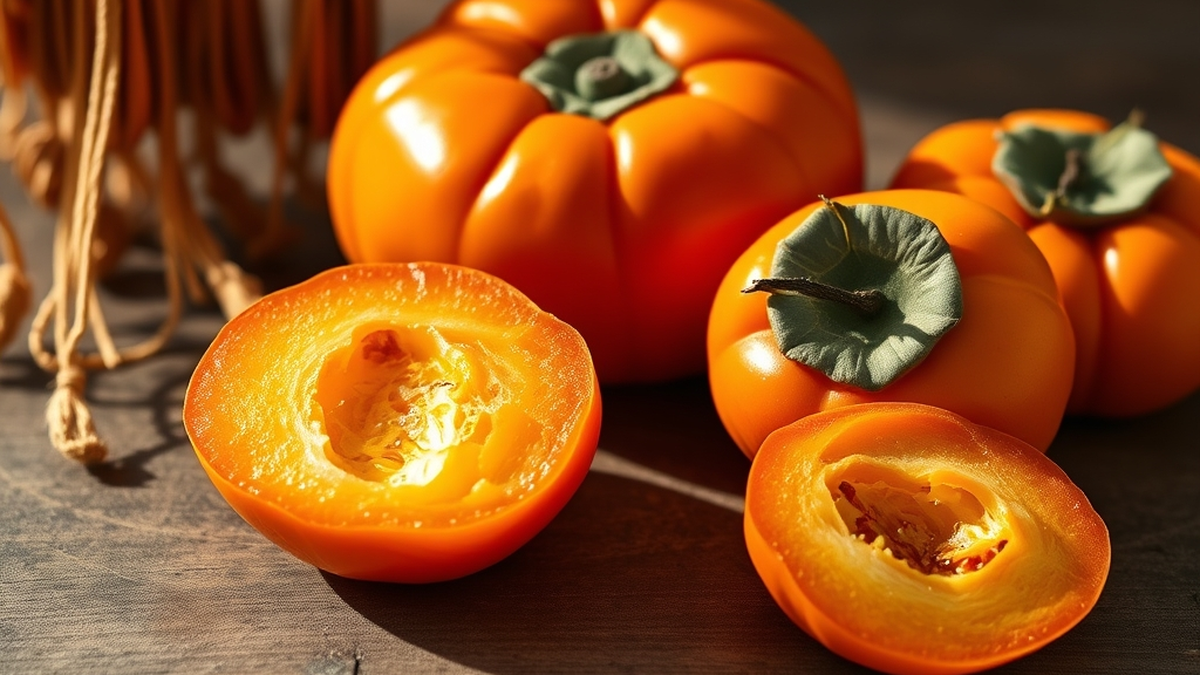
The Season of Persimmons: From Sweet Fruit to Dried Snacks
If you walk through a rural village in Korea during late October, you will notice a distinct color palette dominating the landscape. While the maple trees turn vibrant red and the gingko leaves scatter bright yellow, it is the burnt orange of the gam (persimmon) that defines the mood of the Korean autumn. They hang like ornaments from leafless branches, glowing against a crisp, blue sky. This is not merely a seasonal aesthetic; it is the arrival of Korea’s most versatile autumn staple.
For those new to the Korean culinary landscape, the persimmon is not just a piece of fruit—it is a transformation. It starts as a crunchy, firm object, softens into a jelly-like sweetness, and eventually ends up as a chewy, concentrated dessert that anchors the holiday table. Understanding the persimmon is key to understanding the rhythm of the Korean kitchen as the weather turns cold.
The Three Stages of the Persimmon
To appreciate the persimmon, one must first recognize its three distinct states, each of which serves a specific purpose in a Korean household.
The first is the danga (sweet persimmon), which you will find in supermarkets throughout October. These are meant to be eaten fresh, much like an apple. They are firm, crisp, and possess a mild, honey-like sweetness. If you visit a Korean home during this time, you might be offered a plate of these, sliced into thin wedges. It is a casual, everyday snack, often peeled and served to guests alongside green tea or coffee.
Then there is the hongsi (soft persimmon). This is the fruit in its most delicate form. As the fruit ripens, it turns a deep, translucent crimson. The skin becomes paper-thin, and the interior liquefies into a texture somewhere between a pudding and a custard. Eating a hongsi is a tactile experience. You don’t slice it; you carefully peel back the skin or scoop the center out with a spoon. It is famously messy, notoriously sweet, and considered a luxury of the season. In many households, you will find firm persimmons placed in a dark, cool corner or tucked into a paper box for a few days to intentionally force them to soften into this state.
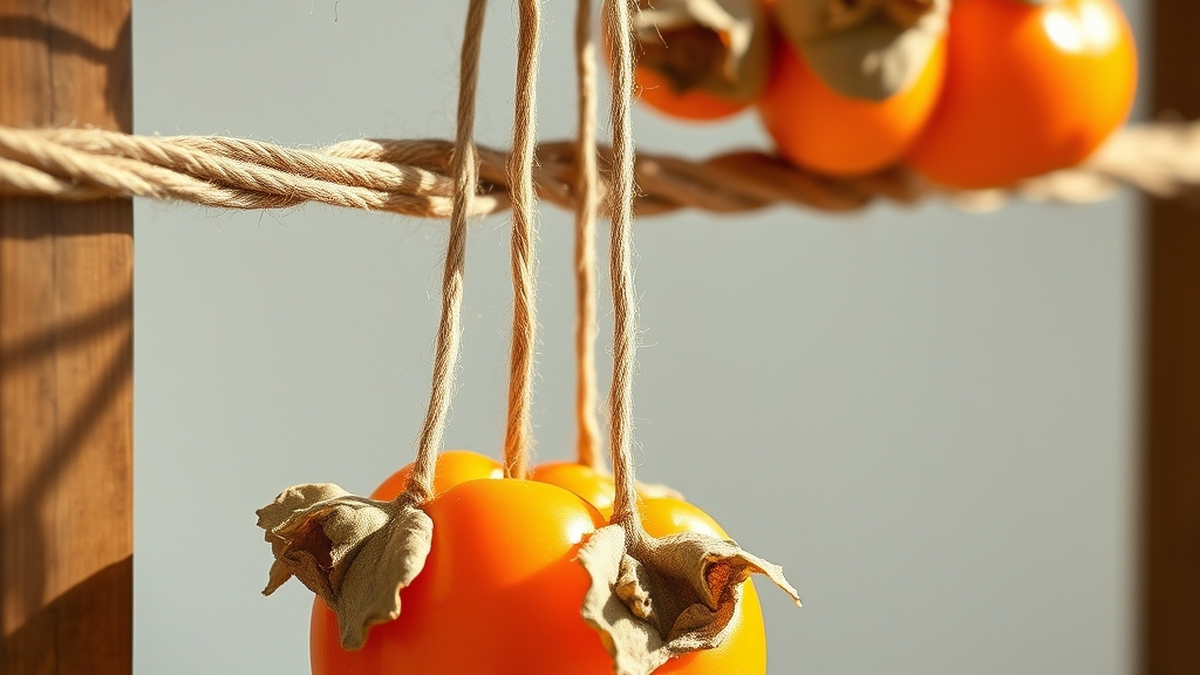
Finally, there is the gotgam (dried persimmon). This is the form that persists long after the harvest is over. During the peak of the season, you will see strings of peeled persimmons hanging under the eaves of rural houses or on balcony drying racks. This is the traditional method of preservation. The drying process concentrates the sugars and creates a dense, chewy texture. By the time winter arrives, the gotgam are coated in a fine, white powdery bloom of natural sugars, marking them as ready for the table.
The Art of the Drying Rack
The process of making gotgam is a quiet, labor-intensive ritual. It begins with peeling the firm, orange fruits—a task that fills afternoons for many families. Once peeled, the fruits are hung on strings or placed on bamboo trays. The goal is to allow the cold, dry autumn wind to pull the moisture out of the fruit without letting it spoil.
This is why you will see clusters of orange hanging in the sun across the Korean countryside. It is a race against the first frost. The air in late autumn is dry and crisp, which is ideal for the slow curing process. If the weather is too damp, the fruit risks molding; if it is too cold, the sweetness does not develop properly.
For international readers, spotting these drying racks is one of the clearest markers of the season. If you are traveling through regions like Sangju, which is historically famous for its gotgam production, the sheer volume of hanging fruit is breathtaking. It transforms the architecture of the farmhouses, turning the exterior of the home into an extension of the larder. It is a practical, agricultural necessity that happens to look like an art installation.
Persimmons on the Table and in Ceremony
In Korea, food is rarely separated from the concept of gathering, and the persimmon is a regular fixture in both informal snacks and formal ritual.
During Chuseok (the harvest festival) or the lunar new year, gotgam takes on a more formal role. It is a standard component of cha-rye (ancestral memorial rites). The dried persimmon is arranged neatly on plates, often paired with walnuts. This is not random; the dense, chewy sweetness of the fruit pairs perfectly with the earthy bitterness of the nut. If you are served this combination, it is usually meant to be consumed slowly, as a sophisticated accompaniment to traditional teas like sujeonggwa (a cinnamon and ginger punch).
Sujeonggwa is the natural partner of the gotgam. Because the drink is spicy, warming, and slightly bitter from the ginger and cinnamon, the inclusion of a dried persimmon—which has been soaked in the punch until it swells and softens—provides the necessary sugar balance. The result is a drink that feels like autumn in a glass: spicy, sweet, and comforting.
Beyond the formal ceremonies, you will also encounter the persimmon in the form of gam-mallaengi. These are bite-sized pieces of dried persimmon that haven’t been fully dehydrated into the traditional gotgam. They are softer and easier to chew, often sold in small, vacuum-sealed bags at subway station kiosks or grocery stores as a quick, healthy-ish snack. They are the perfect “grab and go” food for a chilly commute.
Navigating the Persimmon Experience
If you find yourself in a Korean grocery store or local market in October, you will be met with a sea of orange. Here is how to navigate the experience without feeling overwhelmed:
First, don’t be alarmed by the white powder on the gotgam. This is not dust or mold. It is the fruit’s natural sugars crystallizing on the surface as it dries. In fact, the more prominent this white coating, the sweeter the fruit is considered to be. If you are buying them, look for ones that have an even, slightly firm texture without signs of dark, damp spots.
Second, be mindful of the hongsi etiquette. If you are served one, do not try to pick it up with your fingers. The skin is delicate, and the contents are liquid. Use a small dessert spoon and treat it like a bowl of yogurt or pudding. It is perfectly acceptable—and quite common—to simply scoop the flesh right out of the skin.
Lastly, if you are offered a persimmon that is still very firm and tastes slightly “astringent” or mouth-drying, don’t worry. This is called tup-tup-ham in Korean, a sensation caused by the tannins in the fruit. This usually happens when the fruit isn’t quite ripe yet. If you have bought them yourself, simply keep them at room temperature for a few more days. The starch will convert to sugar, the tannins will recede, and the fruit will move from that crunchy, slightly drying stage to the honeyed sweetness that makes it a beloved part of the season.
The Korean autumn moves quickly. The harvest begins, the drying racks go up, and within a few weeks, the temperatures drop and the winter winds take over. By the time the gotgam are ready to be eaten, the harvest season has already passed. The fruit serves as a literal bridge between the bounty of the autumn and the stark, quiet months of the coming winter. When you see those strings of orange hanging against the graying sky, you are looking at the final act of the Korean agricultural year. It is a humble, quiet, and deeply sweet conclusion.