A Guide to Naengmyeon: Comparing Pyongyang and Hamheung Styles
The Refreshing World of Naengmyeon: Cold Noodle Traditions
When the humidity of a Korean summer begins to cling to the city streets, the collective appetite of the nation shifts. You will notice it in the office breakrooms, the bustling lunch spots, and the way friends start conversations in June: “Shall we get Naengmyeon (cold noodles) today?”
Naengmyeon is not just a dish; it is a seasonal ritual. Served in chilled stainless steel bowls that frost over the moment they leave the kitchen, these noodles are the primary way Koreans beat the heat. For a newcomer, however, walking into a noodle shop can be a moment of slight confusion. The menu might look simple, but the experience is defined by a deep, long-standing divide between two major styles: the mild, ethereal Pyongyang style and the bold, spicy Hamheung style.
Understanding this difference is the key to navigating any Korean noodle house with confidence.
The Pyongyang Style: An Acquired Appreciation
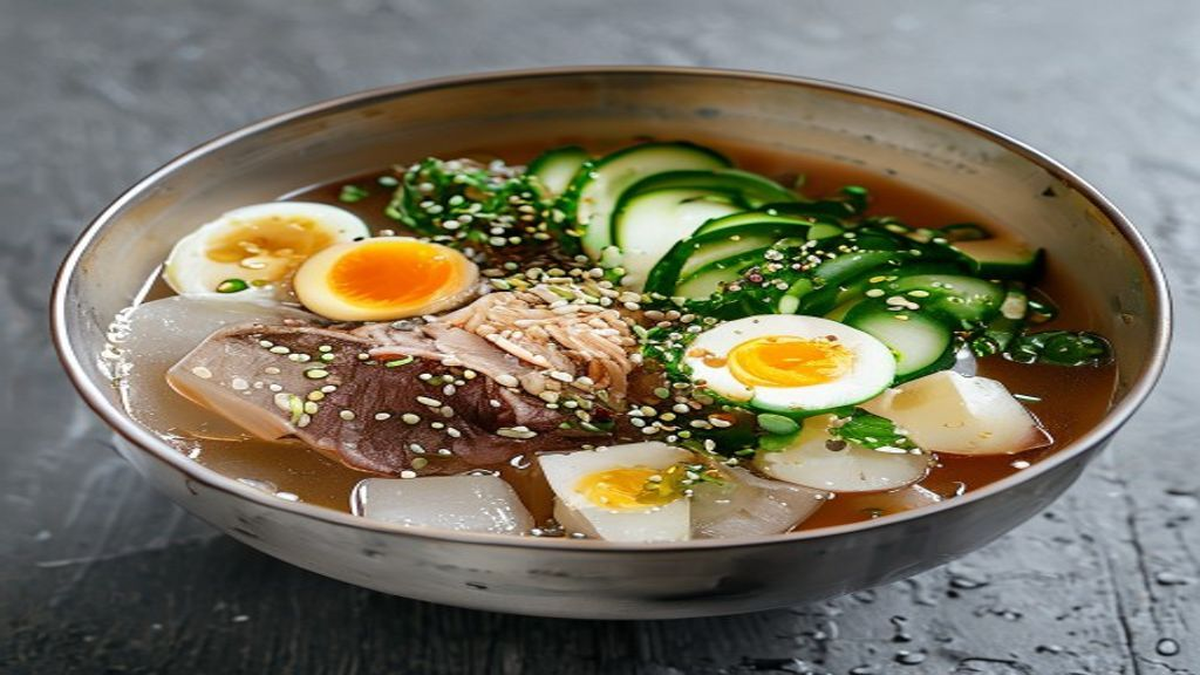
If you order Pyongyang Naengmyeon (Pyeongyang naengmyeon), you are entering a culinary experience that rewards patience. Originally from the northern region of the Korean Peninsula, this style is characterized by a very subtle, light, and clear broth.
When your bowl arrives, you will see a tangled nest of buckwheat noodles submerged in a pale, translucent soup. It is usually topped with thin slices of beef, perhaps a few pieces of cucumber, and a slice of Korean pear.
For many people trying it for the first time, the initial reaction can be one of surprise. It is not “salty” or “intense” in the way many other popular Korean foods are. In fact, seasoned enthusiasts often describe the broth as having a flavor that you have to “search for.” It is delicate, slightly meaty, and faintly earthy from the buckwheat.
The cultural nuance here is that Pyongyang Naengmyeon is considered a meal for the refined palate. In Korea, there is a common saying that you must try it three times before you truly begin to understand the appeal. You do not go to a Pyongyang Naengmyeon restaurant for a flavor explosion; you go to appreciate the subtle harmony of the cold broth and the texture of the buckwheat noodles. It is a cooling, clean experience that feels perfect on a day when the temperature is pushing past 30 degrees Celsius.
The Hamheung Style: The Spicy Challenger
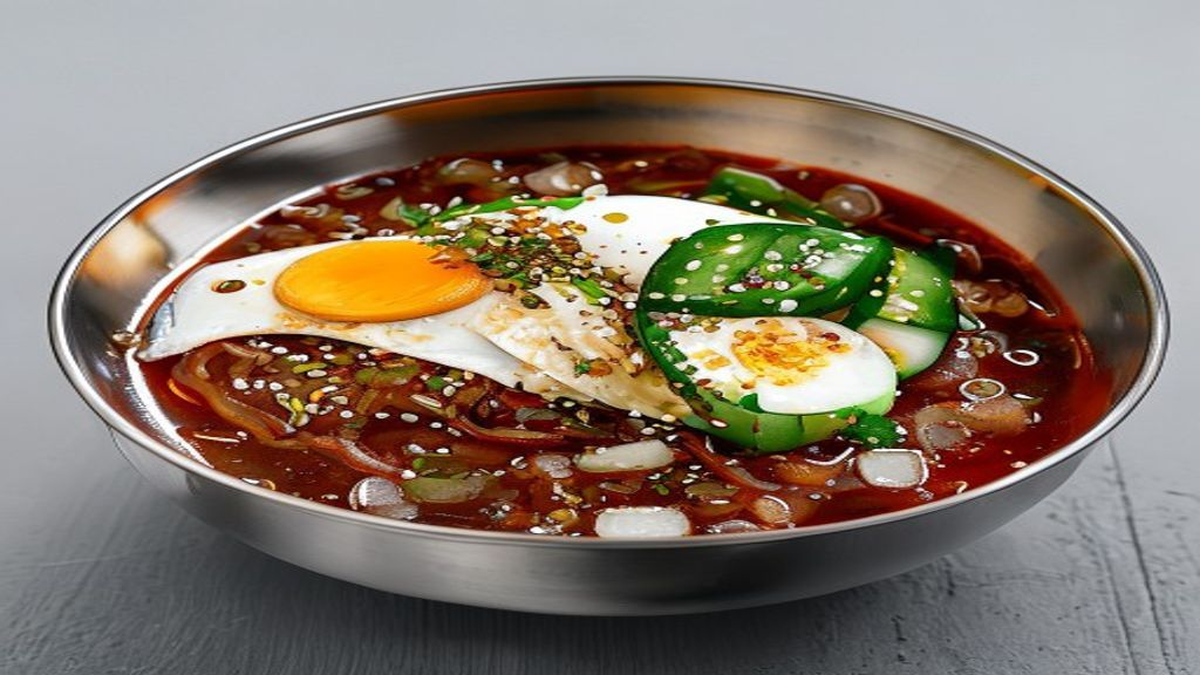
If you find yourself craving something punchy and vibrant, the Hamheung Naengmyeon (Hamheung naengmyeon) is your destination. While the Pyongyang style relies on broth, the Hamheung style is most famous for its Bibim Naengmyeon (mixed spicy cold noodles).
Instead of buckwheat, these noodles are typically made from potato or sweet potato starch. This gives them a distinct, chewy, and elastic texture—you will often need to use the provided kitchen scissors to snip the noodles once or twice before eating, as they are famously resistant to being bitten through.
The highlight of this dish is the spicy red pepper paste sauce, or gochujang base. It is sweet, spicy, and tangy, coating the noodles in a glossy, vibrant red. It is usually served with thinly sliced raw skate (a type of fish) or seasoned beef.
When you order this, you are not looking for the subtle notes of a chilled beef broth. You are looking for a meal that wakes up your senses. It is common to see people pairing this dish with a side of warm yuksu (meat broth), which is provided in a kettle at most of these shops. The contrast of the icy, spicy noodles and the savory, piping hot broth is one of the most classic dining combinations in Korea.
The Table Ritual: Customization and Etiquette
Once your Naengmyeon arrives, you will notice a set of condiments on the table. This is where the diner takes agency. Regardless of which style you ordered, you will almost always have access to two standard additions: vinegar (sikcho) and mustard (yeonsja).
In a Pyongyang Naengmyeon shop, the debate over whether to add these is practically a national pastime. Purists will argue that adding vinegar and mustard masks the delicate, hard-earned flavor of the broth. Others, however, believe that a dash of vinegar adds the necessary brightness to elevate the buckwheat. There is no right answer, but it is considered good form to take a sip of the plain broth first before you begin adding your personal touches.
For Hamheung Naengmyeon, the condiments are a bit more flexible. Because the dish is already heavily seasoned with the spicy paste, the vinegar and mustard are used to balance the sweetness or to cut through the richness of the meat.
Another essential part of the Naengmyeon table setting is the side dish of mu (pickled radish). These thin, white, crunchy strips provide a sharp acidity that acts as a palate cleanser between bites. Do not be surprised if your server brings a pair of stainless steel scissors with your meal; in Korea, it is standard practice to cut the long, tangled noodles so they are easier to manage with chopsticks. If you are struggling, feel free to use them—it is a functional necessity, not a breach of etiquette.
When and Why We Eat Cold Noodles
Naengmyeon is uniquely tied to the rhythm of the seasons. While you can find these restaurants open year-round, the atmosphere shifts dramatically once the summer heat sets in. You will see lines forming outside popular shops during the peak lunch hours in July and August.
The logic behind this is purely practical. When the outside temperature is soaring, eating a steaming hot bowl of stew can feel exhausting. A bowl of cold noodles, however, provides a visceral sense of relief. It is a “cooling” food in the most literal sense.
You will also notice that Naengmyeon is a popular follow-up to grilled meat meals. If you go to a Korean barbecue restaurant, the menu will almost always feature a “small” portion of Naengmyeon at the end of the meal. This is a deliberate culinary choice: the cold, acidic broth or the spicy, chewy noodles help to cleanse the palate after a heavy meal of fatty pork or beef. It is the perfect closing note to a dinner party.
Recognizing the Nuance
The next time you are walking through a Korean neighborhood and see a sign with the word Naengmyeon in the window, take a moment to look at the shop’s identity. If the interior is quiet, minimalist, and focuses on the “purity” of the broth, you are likely in a Pyongyang shop. If the menu is heavy on the Bibim (spicy) varieties and the atmosphere is a bit more bustling and vibrant, you are likely in a Hamheung shop.
Recognizing these distinctions will save you from that first-time uncertainty. Whether you are looking for a subtle, meditative bowl of buckwheat soup to survive the afternoon heat or a fiery, chewy plate of noodles to kickstart your lunch break, you now know what to expect.
Naengmyeon is a deep-rooted part of how life moves in Korea, changing pace with the seasons. It is a simple, refreshing, and entirely accessible way to participate in the local culinary rhythm. Next time the heat index climbs, you will know exactly where to go.