The Golden Harvest: Celebrating Korea’s Pears and Persimmons
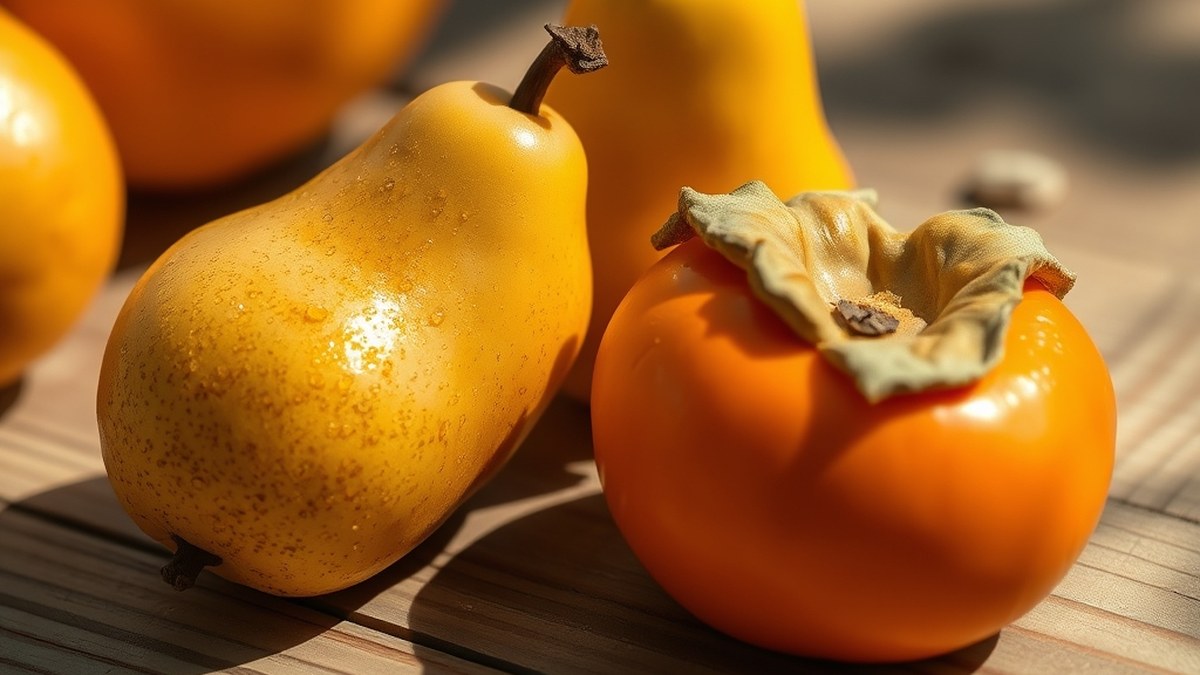
The Magic of Pear and Persimmon in Early Autumn
In Korea, the changing of the seasons is not merely marked by a shifting thermometer or a calendar date, but by the produce that suddenly claims center stage in grocery stores, street markets, and, most importantly, the dining table. As September arrives, the humidity of the long summer begins to wane, and the heavy, humid air is replaced by a crisp clarity. This is the moment when the bae (Korean pear) and gam (persimmon) make their grand arrival.
For those navigating Korean culture, these two fruits are more than just snacks. They are the quintessential markers of early autumn. To understand the Korean autumn is to understand why a box of perfectly symmetrical, gold-wrapped pears is considered a more thoughtful gesture than almost any store-bought luxury item.
The Korean Pear: A Study in Hydration and Texture
When you first encounter a Korean bae, your instinct might be to compare it to the slender, soft-fleshed pears common in other parts of the world. But the bae is a different creature entirely. It is large, round, and remarkably heavy, with a skin that feels like rustic, golden sandpaper.
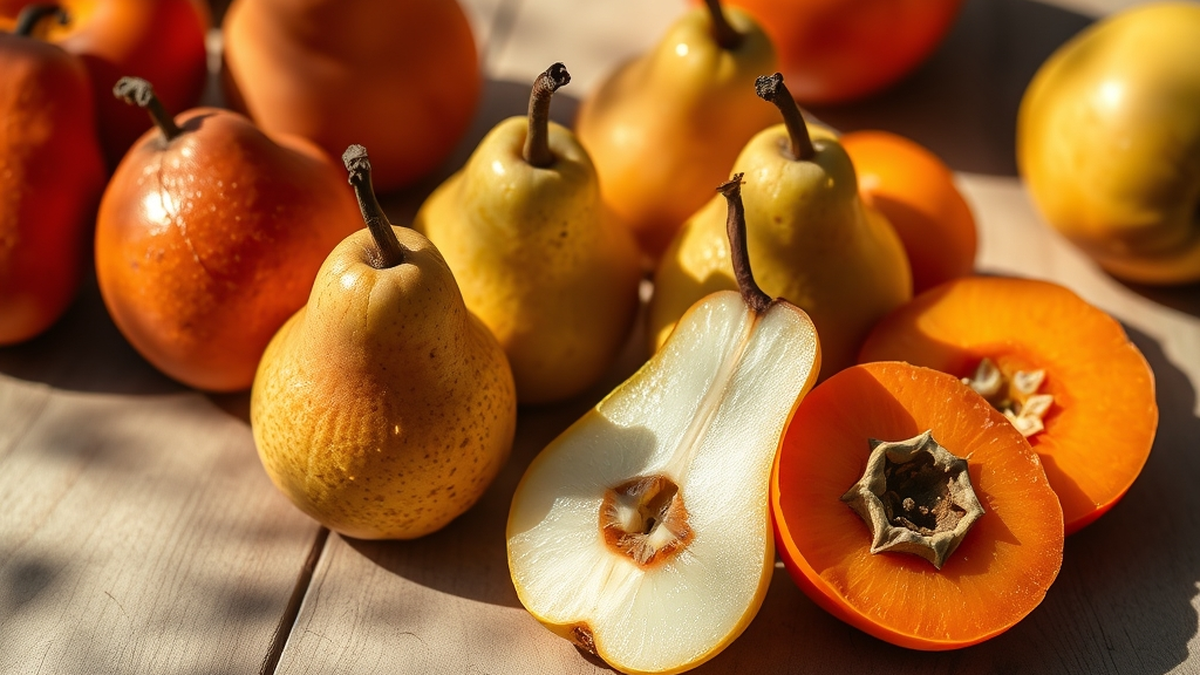
In a Korean household, the bae is treated with a degree of ceremony. It is rarely eaten as a “grab-and-go” snack. Instead, it is peeled with precision. The thick skin is removed in one long, curling strip, revealing a flesh that is ivory-white and incredibly dense. The defining characteristic of the bae is its crunch; when you bite into it, it yields with a satisfying snap that releases an abundance of juice. It is less like biting into a fruit and more like biting into a chilled, sweetened cloud.
During the harvest season, you will often find the bae served as a post-meal palate cleanser. After a heavy dinner of grilled meat or spicy stews, a few slices of cold pear are the standard conclusion. The sweetness is subtle—never cloying—and the high water content acts as a natural refresher.
One common misunderstanding for visitors is the role of the pear in cooking. It is a fundamental ingredient in Korean marinades, particularly for bulgogi (marinated beef) and galbi (short ribs). The enzymes in the pear act as a natural tenderizer for the meat. If you find yourself in a Korean kitchen, don’t be surprised to see a pear being grated into a bowl of soy sauce and garlic; it is this quiet, behind-the-scenes work that gives Korean barbecue its signature melt-in-the-mouth texture.
The Persimmon: From Firm to Silky
If the pear is the sturdy, reliable centerpiece of early autumn, the gam (persimmon) is the temperamental star of the season. The persimmon arrives in stages, and each stage is treated as a distinct food experience.
In early September, you will see firm, bright orange persimmons at the market. These are known as dan-gam (sweet persimmons). They are crisp and can be eaten similarly to an apple. You peel them, slice them into wedges, and serve them alongside tea. They have a mild, honeyed sweetness that pairs perfectly with the cooler air of early autumn.
However, the more iconic version of the fruit appears as the season deepens: the hong-si. This is a persimmon that has been allowed to ripen until it is deep red and incredibly soft. It is so delicate that it feels like a water balloon filled with jam. Eating a hong-si requires a specific method: you peel back the skin at the top and scoop the interior out with a spoon. It is essentially a natural pudding—a silky, intensely sweet dessert that tastes like a mix of honey and pumpkin.
Because of its texture, the hong-si is often enjoyed in the quiet moments of the afternoon. It is the kind of fruit that requires you to slow down. If you are ever offered a hong-si by a Korean host, understand that it is a sign of affection. Because the fruit is so delicate and easily bruised, presenting one that is perfectly ripe and intact requires care and intention.
The Art of the Harvest Gift
Perhaps the most important thing to learn about these fruits is their role in social relationships. In Korea, the harvest season, centered around Chuseok (the mid-autumn festival), is the primary season for gift-giving. During this time, the price and presentation of fruit become a language of their own.
You will see elaborate displays in department stores: pears tucked into individual foam netting, nestled in silk-lined wooden boxes, and tied with silk ribbons. These are not merely groceries; they are expressions of gratitude and respect. When families visit one another during the harvest season, showing up with a box of premium pears is a way of saying, “I value our relationship enough to bring you the best of the season.”
This is not a matter of commercialism, but of alignment with the cycle of nature. To gift fruit at this time is to participate in the tradition of sharing the abundance of the earth. Because Korean agriculture places a high premium on the appearance of the fruit—the roundness of the pear, the flawless sheen of the persimmon skin—a gift box of fruit acts as a visual shorthand for sincerity.
If you are living or working in Korea and receive such a gift, recognize it as a gesture of genuine warmth. You are not just receiving a snack; you are being included in the cultural tradition of honoring the season’s harvest.
Spotting the Signs in Daily Life
Once you start looking for these fruits, you will see them everywhere. You will see the street vendors with stacks of pears wrapped in white netting, glowing like lanterns under the evening lights. You will see grandmothers in the park peeling a persimmon for their grandchildren with a small paring knife, handing them a slice as if it were the most natural thing in the world—which, in the context of the Korean autumn, it is.
You will also notice the subtle shifts in the menus of local restaurants. During the summer, restaurants might serve cold noodles topped with cucumber or radish. Come September, you will suddenly see thin, translucent slices of pear appearing atop those same noodles. It adds a layer of cooling sweetness that cuts through the spice of the kimchi broth.
There is a rhythm to the Korean table that follows the sun and the soil. When you begin to recognize these patterns—the crunch of the pear in a marinade, the orange glow of a persimmon on a coffee table, the polite exchange of a heavy, ribboned box—you start to understand the internal clock of the culture.
It is a quiet magic, one that doesn’t demand attention, but rather rewards those who observe the small shifts in their surroundings. As September turns into October, and the leaves begin to match the deep orange of the persimmons, you realize that the season isn’t something you just witness; it’s something you participate in, one crisp bite at a time.