The Legend of the Imoogi: From Serpent to Korean Dragon
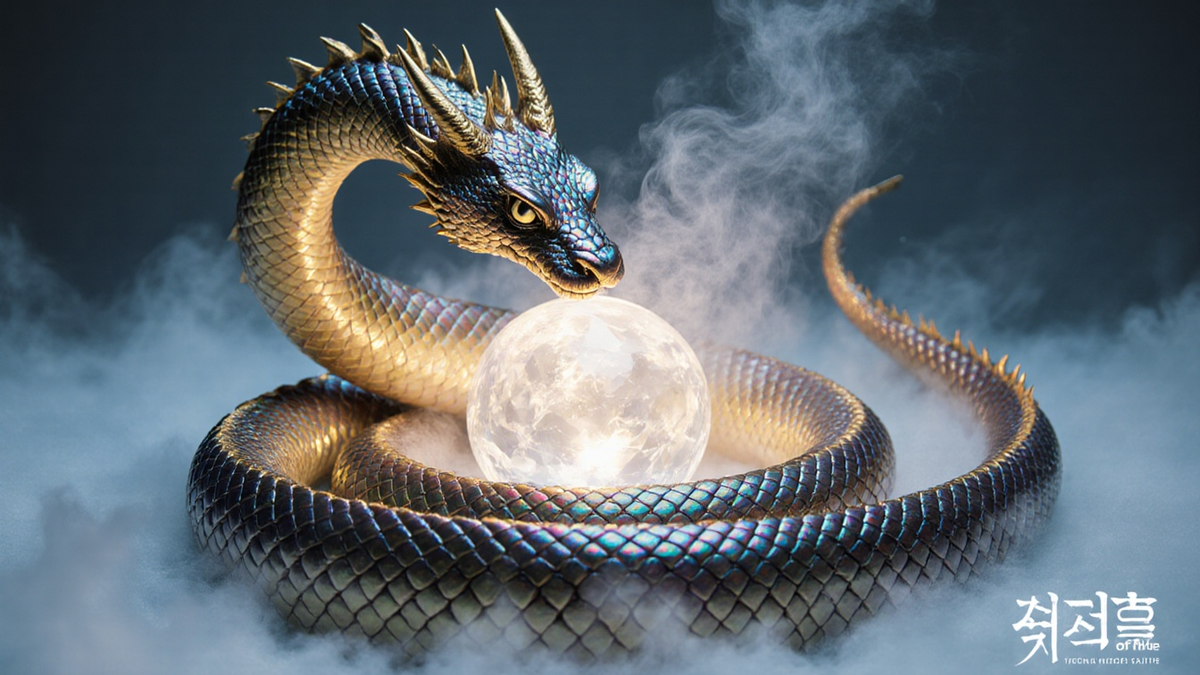
The Legend of the Imoogi: Serpent to Dragon
When the summer heat breaks over the Korean peninsula, the sky often turns a bruised purple, heavy with the promise of rain. In the tradition of Korean agriculture, water is life, and the figures that govern the clouds are never far from the public consciousness. While the magnificent, celestial dragon—the Yong—often commands the spotlight in art and royal symbolism, there exists a humbler, more grounded creature that occupies a unique space in Korean folklore: the Imoogi.
To understand the Imoogi is to understand a story of patience, endurance, and the long road toward enlightenment. It is the lesser dragon, a serpent-like creature waiting for its moment to ascend, and its presence is woven into the geography and seasonal rhythms of Korea.
The Nature of the Imoogi: A Creature of Potential
In Korean mythology, an Imoogi is essentially a proto-dragon. Unlike the Yong, which is already a fully formed, heaven-sent being of immense power and majesty, the Imoogi begins its life as a giant serpent. Folklore describes them as living in deep water—rivers, lakes, or sometimes hidden within the dark caverns of mountains—waiting for an opportunity to transcend their current state.
The core of the Imoogi legend is the transition. They are not simply “bad” dragons or failed creatures; they are beings currently defined by their yearning to become divine. According to traditional belief, an Imoogi must endure for a thousand years. If it survives this period and manages to obtain a Yeouiju (a mythical orb or jewel), it can transform into a true Yong and ascend to the heavens. Without this orb, the Imoogi remains bound to the earth, a powerful but incomplete entity.
This distinction is crucial for international readers. In Western mythology, serpents are often depicted as inherently malevolent or trickster figures. In Chinese mythology, dragon classifications are often complex and hierarchical. However, the Korean Imoogi is characterized by its longing. It is a creature of becoming. When you hear a Korean folktale about a serpent lurking in a deep pool of water, it is not necessarily a monster waiting to strike; it is often a creature testing its own resolve, waiting for a sign that it is ready to rise.
Distinction from the Celestial Dragon
If you visit a Korean palace or look at traditional ink paintings, you will notice the Yong immediately. It is depicted with four or five claws, a long, flowing mane, antlers, and an aura of absolute authority. The Yong is the creature of the Emperor or the King, a protector of the realm, and a bringer of rain who dwells in the sky.
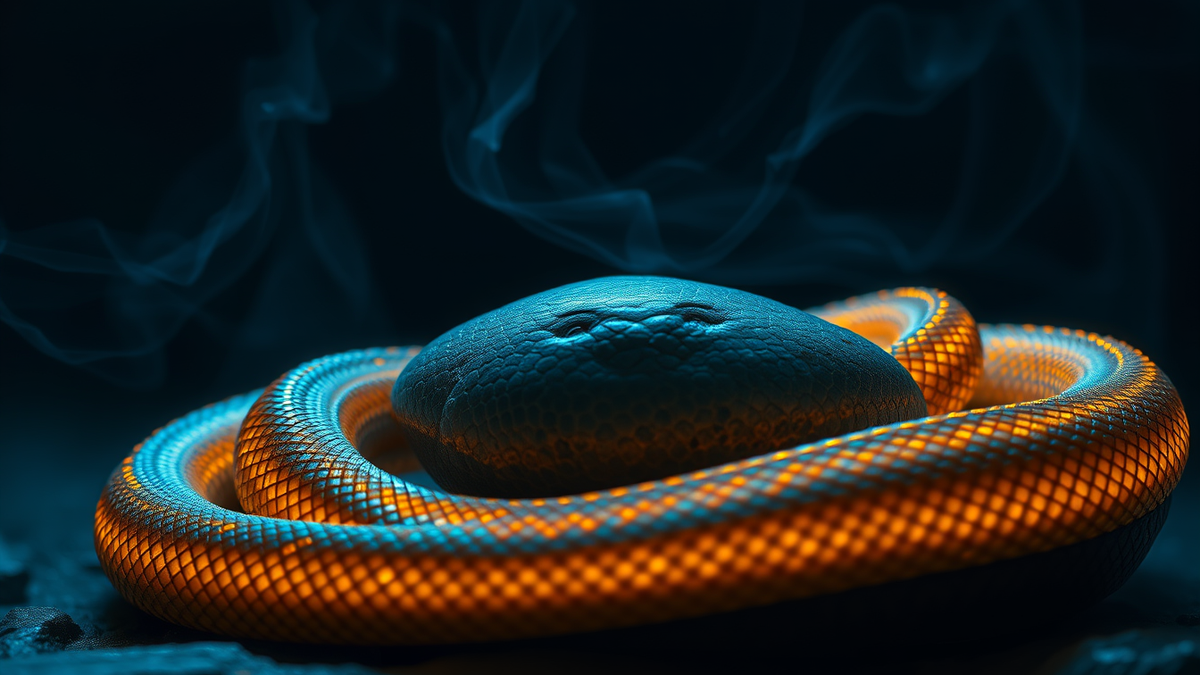
The Imoogi, by contrast, is often described as a scaled, serpent-like creature, sometimes possessing a horn or a slightly more developed appearance than a common snake, but lacking the regal complexity of the Yong. If the Yong is the final achievement, the Imoogi is the struggle.
This distinction manifests in the geography of the Korean landscape. Many rural villages have legends tied to specific streams or mountain passes where an Imoogi was said to dwell. These are often places that feel heavy with stillness—deep, dark, and mysterious. The locals would treat these areas with a mixture of reverence and caution, not because they feared the creature as a villain, but because they understood it as a powerful, ancient entity that existed outside the standard order of the animal world.
During the dry season, when the rice paddies suffered, the people would perform rain rituals (Giu-je). While these rites were often addressed to the celestial Yong, the presence of the Imoogi in local lore served as a reminder that the transition between earth and sky is not always easy. It humanizes the myth; it suggests that even the most powerful creatures have to work for their status.
Symbols of the Yeouiju: The Key to Ascent
The Yeouiju is the most important element in understanding the Imoogi. Often described as a glowing, multi-faceted jewel or orb, it represents wisdom, power, and the catalyst for transformation. In many stories, the Imoogi must keep the Yeouiju safe, or in some variations, it must be granted one by a deity as a reward for a good deed.
You can spot this motif throughout Korean visual culture. It is not uncommon to see a dragon—or a serpent with dragon-like features—holding a sphere in its claws or mouth. If you see this image, you are looking at the exact moment of transition. It is the visual representation of a creature that has successfully bridged the gap between its terrestrial roots and its heavenly potential.
This symbol serves as a quiet reminder of intent. In a cultural context, the Imoogi that fails is often seen as a tragic figure, one that lost its way or lacked the virtue to claim its Yeouiju. It teaches that power is not just about raw size or longevity—it is about the integrity to hold onto one’s goal. It is a very “Korean” way of looking at growth; it is a long, arduous process that requires the right conditions and the right intentions.
Recognizing the Imoogi in Modern Cultural Contexts
For those living in or traveling through Korea, you might encounter the Imoogi in subtle ways. It is often referenced in naming conventions for natural features. You may come across a “Dragon Pond” (Yong-so) or a “Dragon Cave” (Yong-gul). Depending on local history, these spots might carry the lore of an Imoogi that “nearly” made it to the heavens.
You might also see the motif on temple roof tiles or carved into the corner of stone pagodas. While the high-status dragons are on the central gates, the smaller, serpent-like figures hidden on the eaves often represent the Imoogi. They are the guardians of the periphery. They watch over the corners of the structures, reminding those who enter that every great accomplishment has a humble beginning.
There is also a lighthearted cultural nuance to the term. Sometimes, in older slang, people might use the term “Imoogi” to describe someone who is a “late bloomer” or someone who has great potential but hasn’t yet found their “Yeouiju” (or their breakthrough moment). It is a term used with a bit of affection and a touch of melancholy. It acknowledges the waiting period. When you hear a Korean person refer to themselves or a friend as an Imoogi in a self-deprecating but hopeful way, they are tapping into this long-standing myth of the serpent that hasn’t quite reached the clouds yet.
The Significance of the Summer Rain
Why do we talk about the Imoogi during the summer? Korea’s monsoon season, known as the Jangma, is a period of intense, unrelenting rainfall. In the agricultural cycles of the past, this rain was a matter of survival. It was common to anthropomorphize the weather, and because the Imoogi is so closely tied to water and the earth, it became a frequent character in the folklore of the rainy season.
During these months, when the clouds hang low over the mountains and the mist rises from the riverbanks, the stories of the Imoogi feel particularly grounded in reality. The landscape itself seems to shift, with the fog obscuring the trees and the water rising, creating the exact atmosphere described in the legends of old. It is a time when the boundary between the mythic world and the physical world feels thinner.
You don’t need to look for grand symbols or complex rituals to see how this impacts culture. It is enough to simply observe. When you walk through a rainy mountain trail or look out over a deep reservoir during a storm, you are looking at the same environment that inspired generations of people to imagine a serpent, waiting patiently in the depths, hoping for the rain to carry it toward the sky.
The next time you see a carving of a dragon or hear a mention of a creature in the clouds, keep an eye out for the serpent. It’s the story of the one that is still waiting, still working, and still part of the journey toward something greater. It is a quiet, enduring piece of the Korean narrative—a reminder that in the space between the earth and the heavens, there is always room for a little more patience.