The Art of Cooling: Natural Ventilation in Hanok Architecture
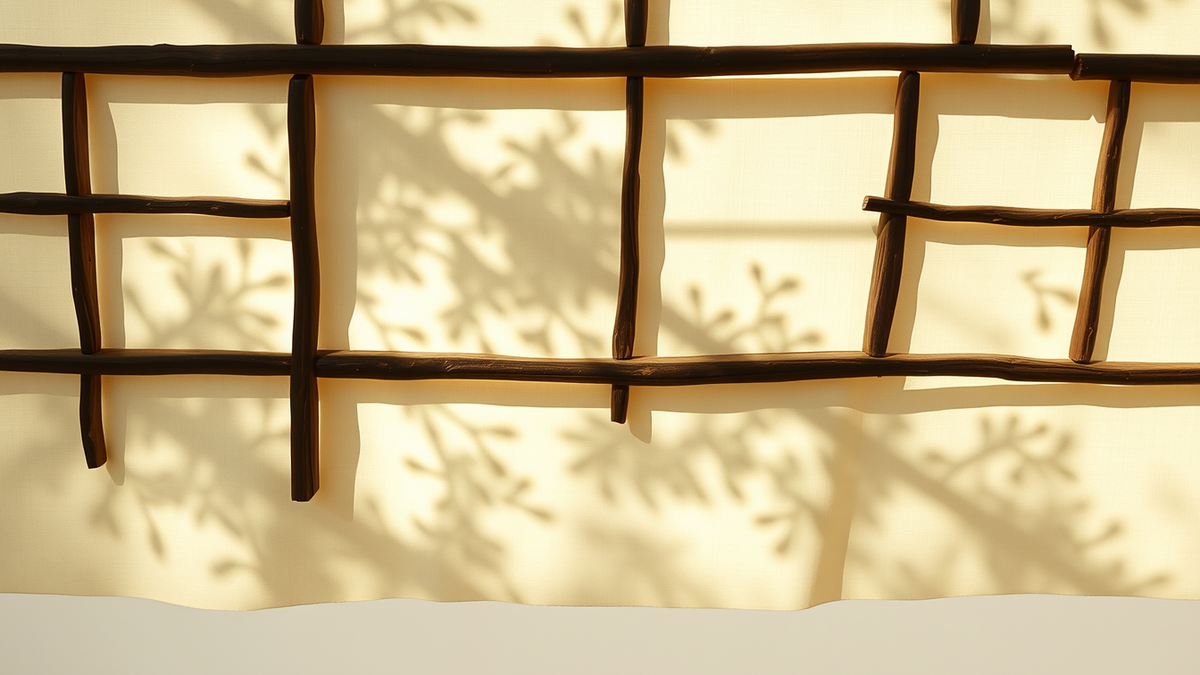
The Korean Architecture of Shade: Hanok Design Principles
If you have ever spent a mid-July afternoon in Seoul, you know that the air does not just sit around you—it clings. The humidity turns the city into a steam room, where the pavement radiates heat and the shade of a concrete high-rise offers little more than a visual break from the sun.
Yet, there is a specific feeling when you step into a Hanok (traditional Korean house) during these same months. It is not necessarily “cold” in the way an air-conditioned office is, but there is a strange, refreshing breeze that seems to exist even when the trees outside are perfectly still. This is not magic; it is the result of a deliberate architectural language designed to navigate the intense reality of a Korean summer.
The Science of the Daechung: A Living Corridor of Air
The most important feature of a Hanok for cooling is the Daechung (the central wooden-floored hall). In a traditional home, this acts as the lungs of the building. It is a large, open-air space located between the rooms, raised off the ground and exposed to the outside on at least two sides.
You can observe the efficiency of this design in everyday situations throughout the country.
1. The Picnic in the Pavilion: When you visit a public park or a historic palace like Gyeongbokgung, you will often see small, open-sided pavilions known as Jeongja. Locals will naturally gravitate toward these wooden platforms on a hot day. Even if the sun is blazing, the height of the platform allows air to flow underneath (keeping the floor cool to the touch), and the open design allows the wind to pass through unimpeded. If you see a group of older locals sitting on one of these, notice how they aren’t sweating; they are sitting in a natural wind tunnel created by that exact Daechung logic.
2. The Restaurant Layout: Occasionally, you might visit a traditional-style restaurant that incorporates these architectural elements. You will notice that there are no hallways in the modern, claustrophobic sense. Instead, you walk through sliding doors that open directly into wide, breezy wooden walkways. If you find yourself in such a space, take a moment to notice the placement of those doors. They are usually aligned perfectly across from one another. By opening doors on both sides, the architecture creates a cross-breeze that forces air to move through the house, rather than letting it stagnate in the corners.
3. The Modern Gallery: In many renovated Hanok-turned-cafes in neighborhoods like Bukchon, the owners often keep the original wide eaves. When you sit by the window with your iced coffee, you might notice that the sun never actually hits the floor inside the room. This is because the roof extends much further than a modern building’s roof. This shadow is a functional shade. It blocks the high, aggressive summer sun while allowing the lower winter sun to sneak under the eaves and warm the inner rooms.

Eaves and the Engineering of Light
The Cheoma (the curved, overhanging eaves of a roof) is the most recognizable silhouette of a Hanok, but its beauty is secondary to its environmental utility.
4. The Schoolyard Observation: Imagine walking past a heritage school or a traditional village complex. You might see a student standing under the edge of the roof during a sudden summer downpour. Because the Cheoma extends so far out, it creates a “dry zone” several feet away from the wall. This protects the wood and paper of the house from moisture, but it also creates a deep, dark pocket of cool air. In the height of summer, if you stand under that edge, the temperature drop is immediate. It is a physical buffer zone between the harsh sun and the cool interior.
5. The Public Library Niche: Some newer public cultural centers in Korea are built with a “modern Hanok” aesthetic. They use the same principle of deep eaves to keep the glass-heavy walls from turning the interior into a greenhouse. If you are reading by a large window in one of these buildings, look up. You will likely see that the roof extends past your head by at least a meter or two. This is the architects trying to replicate that natural shade. It keeps the room bright enough to read without the need for blinds or heavy curtains, which would block the airflow.
The Paper and the Floor: Breathing Materials
The cooling effect of a Hanok is not just about where the air moves, but what the air touches. The walls are traditionally made of Hanji (traditional mulberry paper), and the floors are often polished wood.
6. The Office Window: In modern homes, we use heavy vinyl or thick wood blinds to block the heat. But in a Hanok, the paper doors act differently. Because Hanji is porous, it allows for a very subtle, constant exchange of air. When you visit a traditional house, you might notice that the room doesn’t feel “stale,” even if the doors have been closed for a while. That is the material breathing. If you are messaging a friend who lives in a traditional-style home, they might mention “opening the doors for a breeze.” They aren’t just letting in wind; they are letting the house cycle its internal air through the paper membranes.
7. The “Barefoot” Social Cue: There is an unspoken rule in these spaces: remove your shoes. When you step onto the wooden Daechung or the Maru (raised floor), the sensation of the wood against your feet is part of the cooling experience. Wood has low thermal conductivity, meaning it doesn’t hold onto the heat like concrete or tile. Even in the middle of August, these floors feel surprisingly neutral or cool. If you are invited to a Hanok-stay, notice how your body temperature drops simply by sitting on the floor. It is a communal habit that dates back to the necessity of keeping cool.
A Language of Proportions
The reason these elements feel so coherent is that they are all scaled to the human body. The height of the windows, the width of the wooden floor, and the depth of the shade are all designed for someone sitting or standing in a living space.
When you encounter these designs, it’s helpful to remember that they weren’t created as a rigid, unchangeable system. They were a response to a specific climate: a summer that demands movement and a winter that demands heat retention.
If you are walking through a Hanok village and find yourself lingering in a spot that feels particularly comfortable, look for the source of the air. Is there a gate open that aligns with the courtyard? Is there a wide wooden walkway behind you? Are the eaves keeping the sun from touching the threshold?
The architecture of shade is not about hiding from the environment. It is about negotiating with it. By keeping the air flowing and the sun at arm’s length, the design creates a space that feels like a quiet, cool breath in the middle of a frantic, heated summer. It is a simple, effective solution that has managed to survive the centuries, proving that sometimes, the most sophisticated climate control is just a well-placed window and a deep, curved roof.