Yong: The Korean Dragon as a Guardian of Rain and Harvest
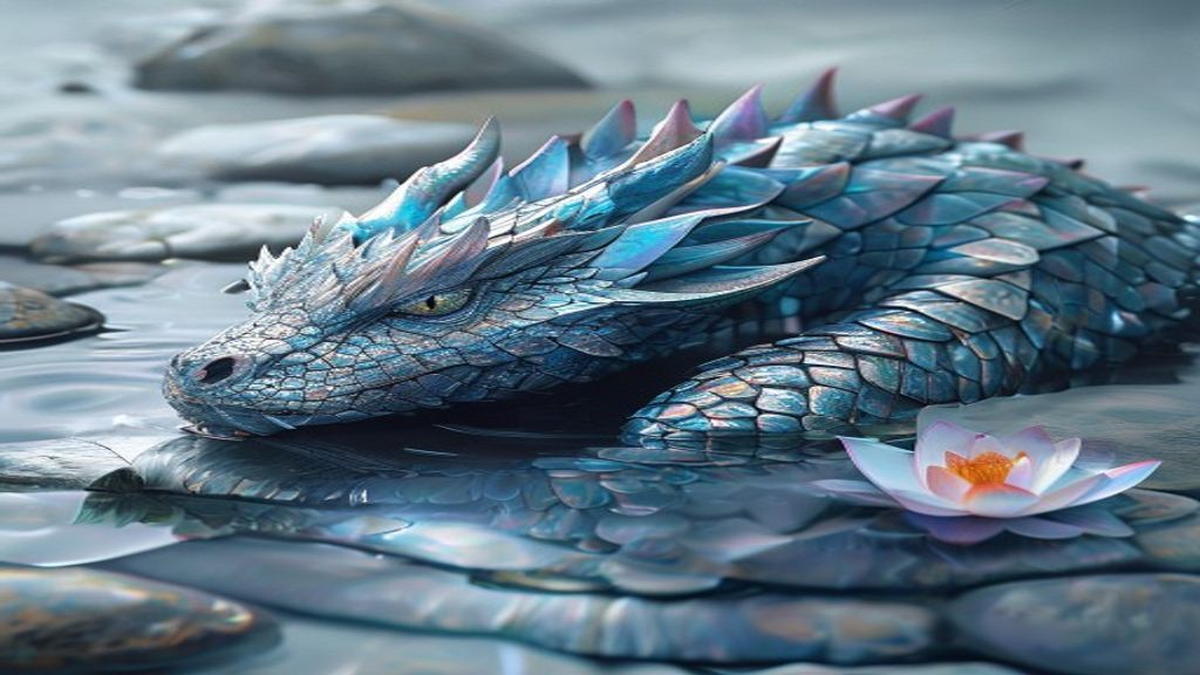
The Dragon of the Well: Exploring Korean Water Spirits
In the quiet countryside of Korea, particularly as the spring thaw gives way to the planting season, you might stumble upon a small, stone-walled enclosure tucked away near a village stream or a deep, moss-covered well. To an outsider, it may look like an abandoned shrine, but to the local community, it is a site of profound respect. This is often the dwelling place of the Yong (용), or the Korean dragon.
Unlike the fire-breathing, treasure-hoarding beasts that populate much of Western fairy-tale lore, the Korean dragon is not a monster to be defeated by a knight. It is a celestial official, a guardian of the heavens, and, most importantly, the bringer of life-giving water. As the May rains begin to nourish the newly turned earth of the rice paddies, understanding the Yong is key to understanding the heartbeat of the Korean landscape.
The Benevolent Guardian of the Clouds
At its core, the Yong is an entity tied inextricably to the climate. In a society that historically relied on the success of the rice harvest, rain was not just a convenience; it was a matter of survival. If the sky remained clear for too long, the crops would wither and the village would suffer. This created a unique cultural perspective: the dragon was not a creature to be feared for its power, but one to be appeased and honored for its generosity.
The Korean dragon is primarily a water spirit. You will rarely find a Yong living in a cave filled with gold. Instead, they reside in the deep parts of the ocean, in large rivers, or within the hidden aquifers of ancient wells. They are seen as beings of immense wisdom and nobility. When a drought hit a community in the past, villagers would often perform rain-seeking rituals, or Gijae (기제), at sites believed to be dragon residences.
This is the fundamental disconnect between the Western perception of dragons and the Korean reality. While Western folklore often positions the dragon as a villain representing chaos or greed, the Korean Yong represents order and the cycle of nature. They are celestial bureaucrats who manage the flow of water on Earth, reporting back to the Jade Emperor in the heavens. When you see a winding, serpentine dragon depicted on an old palace ceiling or a temple pillar, you are looking at a protector who guards the realm against calamity, not a beast that needs to be slain.

Physicality and Symbolism: Reading the Dragon
If you look closely at traditional Korean art, you will notice that the Yong is physically distinct. It is an amalgamation of features from various animals—often described as having the antlers of a deer, the head of a camel, the eyes of a rabbit, the neck of a snake, the scales of a carp, the claws of an eagle, and the ears of an ox.
These features are not random; they symbolize the dragon’s mastery over different parts of the natural world. The scales, for example, are often associated with the carp, which represents perseverance and the ability to overcome great obstacles—a nod to the dragon’s origins in water.
You can spot these symbols throughout Korea today. If you visit a Buddhist temple, look up at the eaves of the wooden rafters. You will almost certainly find intricate carvings or paintings of dragons. They are placed there to protect the sacred space, acting as spiritual sentinels. In palace architecture, such as at Gyeongbokgung in Seoul, dragons are etched into the stone flooring of the courtyards or featured on the central “throne” area. Here, the dragon symbolizes the king’s authority to rule, provided he remains in harmony with the natural order, much like the dragon maintains the balance of rainfall.
When you recognize these patterns, you start to see that the dragon is everywhere. It is not a mythological artifact of the past; it is a visual language of protection and prosperity that remains embedded in the Korean built environment.
The Dragon in the Well: Local Folklore and Daily Life
The connection between the dragon and the water source is perhaps most intimate at the village level. In many traditional folktales, a local well was considered the “eye” of a dragon. This is why many older, traditional homes or small village centers would have a Yong-sam (용샘), or “Dragon Well.”
The belief was that the water in these wells was exceptionally pure because it was blessed by the dragon residing deep beneath the earth. Because the dragon brought the rain and maintained the purity of the groundwater, it was considered bad luck to pollute a well or to behave disrespectfully near it. There are numerous stories about villagers who, through their humility and respect for the local water spirit, were rewarded with a bountiful harvest or a sudden reprieve from a long drought.
This cultural nuance explains why there is a pervasive sense of “sacredness” regarding water in Korea. Even today, you might notice that older generations in rural areas treat natural springs or deep mountain wells with a level of reverence that feels slightly out of place to a modern city dweller. They aren’t just fetching water; they are interacting with the environment in a way that acknowledges the living, breathing spirit of the land.
Distinguishing the Yong from Modern Myths
It is easy to get confused by the word “dragon” because it is a broad term used for completely different mythological creatures across the globe. To navigate Korean culture, it is helpful to keep a few distinctions in mind.
First, the Korean Yong does not have wings. It does not need them. Its movement through the sky is fluid, almost as if it is swimming through the clouds just as it swims through the ocean. When you see a drawing or a sculpture, if the creature looks like a winged bat-like reptile, it belongs to a completely different tradition. The Yong is defined by its serpentine, flowing grace.
Second, avoid looking for “lore” that suggests dragons are evil or need to be defeated. If you are reading a story from Korean folklore and there is a conflict involving a dragon, it is rarely a conflict of “good vs. evil.” Instead, it is usually a conflict involving “respect vs. arrogance” or “harmony vs. disruption.” If a human experiences misfortune in a tale, it is almost always because they failed to respect the boundaries of the natural world, symbolized by the dragon.
Finally, remember that the dragon’s primary role is weather control. During the month of May, as the agricultural preparations hit their peak, the dragon is the spirit that bridges the gap between the scorched earth and the green shoots of the rice fields. If you find yourself hiking in a mountain valley during a sudden spring shower, or noticing the deep, clear water of a mountain stream, you are in the domain of the Yong.
A Modest Connection to the Land
As you travel through Korea, you will likely encounter the dragon again and again—in the motifs of royal palaces, the rafters of ancient temples, and the quiet, stone-bound wells of the countryside. Once you recognize that these images represent a guardian of rain and a symbol of natural balance, the dragon stops being a “fantasy creature” and starts to feel like a part of the landscape itself.
You do not need to perform rituals or look for shrines to appreciate this aspect of the culture. It is enough to simply observe. When you see a fountain, a well, or a painting of a serpentine creature swirling through blue clouds, you can appreciate the historical reliance on the land and the quiet, persistent hope for the rains that make life possible. The dragon of the well is not a secret to be unlocked, but a reminder of the delicate, seasonal rhythm that has shaped this corner of the world for centuries.