Praying to the Dragon King: Korea's Coastal Sea Beliefs
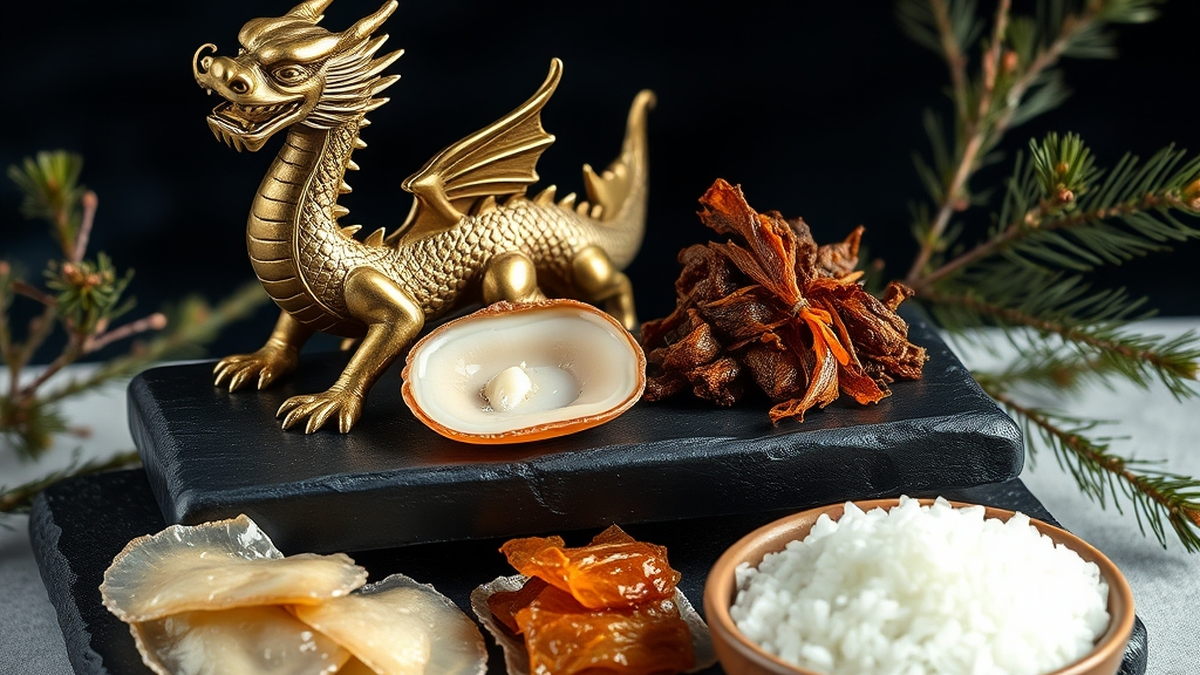
On a chilly morning along Korea’s eastern coastline, before the diesel engines of small wooden fishing boats roar into life, an elderly deckhand might pour a small cup of clear rice wine straight into the crashing surf. In Jeju, an experienced haenyeo (free-diving woman) might pause at a small seaside altar made of jagged volcanic rocks to leave a piece of dried kelp, an apple, or a bowl of fresh water.
These quiet gestures are offered to Yongwang (용왕), the Dragon King of the Sea.
For international travelers familiar with Western fantasy, dragons are winged, fire-breathing monsters perched atop hoards of gold, waiting to be slain by knights. In Korea, however, dragons belong entirely to water. They do not fly through volcanic caverns; they rule rivers, wells, rainclouds, and the ocean floor. At the peak of this aquatic pantheon sits Yongwang, a deity who holds absolute authority over tides, storms, and the abundance of the catch.
As late autumn sets in across the Korean Peninsula, seasonal winds whip the Yellow Sea and the East Sea into treacherous whitecaps. Historically, this shift from calm summer waters to unpredictable, freezing gales brought immense peril to seafaring families. Understanding Yongwang is the key to understanding how coastal Korean communities have survived on a rocky, peninsula landscape bordered on three sides by water.
The Master of Water: Who Is the Dragon King?
To understand Yongwang, one must first dismantle the Western concept of the dragon. A Korean dragon, or yong (용), is an auspicious, spiritual being associated with benevolence, agricultural fertility, and rainfall. Above all, dragons are the physical embodiments of water in all its forms.
In maritime folklore, Yongwang is usually imagined not merely as a giant serpent, but as an elderly monarch wearing royal robes, seated in an underwater palace known as Yonggung (용궁). This magnificent palace is often described as built of mother-of-pearl, coral, and glowing jade, populated by court officials who take the forms of fish, turtles, and crustaceans.
Yongwang’s character in traditional tales is complex. He is not a moralizing deity who hands down commandments, nor is he an evil beast to be hunted. Instead, he behaves like an absolute sovereign of nature:
- He is transactional: If honored with respect, music, and clean food, he grants gentle currents, clear skies, and nets bursting with fish.
- He is mercurial: If disrespected, polluted, or ignored, he unleashes typhoons, swallows boats whole, and hides the fish deep in the trenches where nets cannot reach.
- He is vulnerable to physical ailment: In several folk traditions, the Dragon King falls ill and relies on terrestrial creatures—most famously the clever rabbit in the folktale Sugungga (Song of the Underwater Palace)—to provide him with medicine.
For fishing villages, this meant that the sea was never an empty void to be conquered. It was an inhabited territory ruled by a monarch whose laws had to be strictly observed.
Maritime Shamanism: The Yongwang-gut and Village Rituals
Because an angry sea meant widowhood and starvation for an entire harbor, coastal villages transformed their respect for Yongwang into highly structured community events. The most significant of these is the Yongwang-gut (용왕굿), a shamanic ritual performed specifically to appease the water deity.
These rituals are often part of a broader communal festival called danggut (shamanic village ritual) or baeyeonsin-gut (boat blessing ritual). While mountain villages might focus their prayers on the mountain god (Sansin), seaside communities place Yongwang at the center of the ritual altar.
Setting the Altar at the Waterline
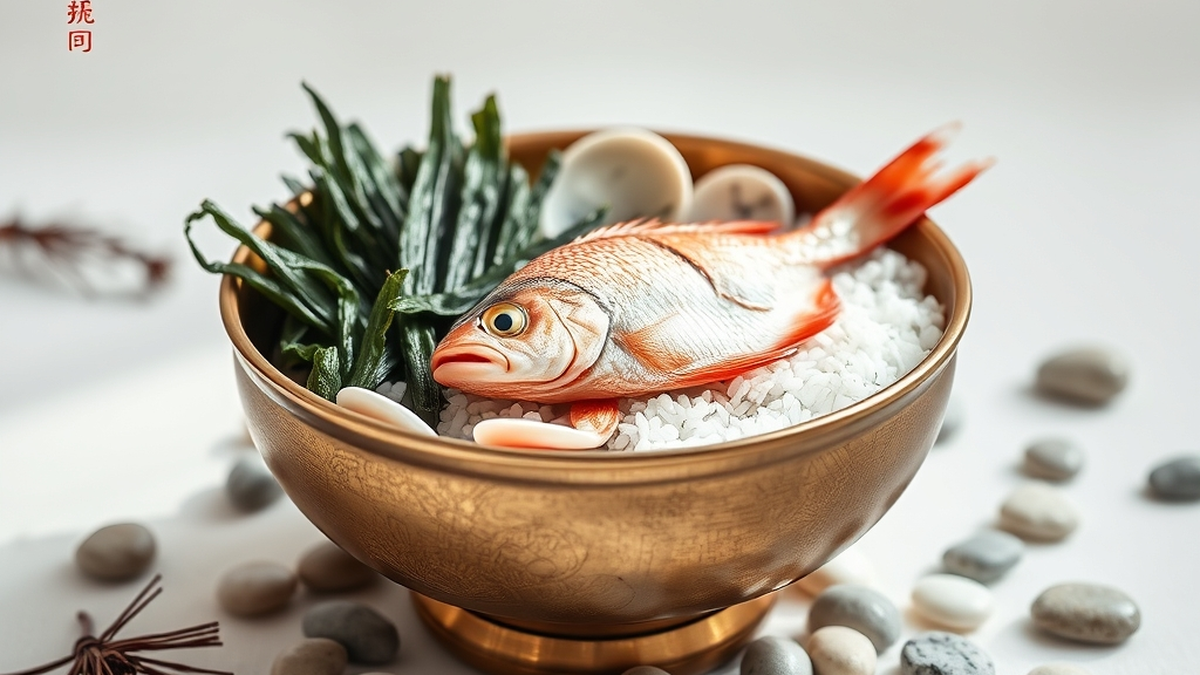
Unlike indoor rituals, rituals for Yongwang take place where the waves meet the land—on rocky promontories, sandy beaches, or directly on the deck of a flagship fishing boat. The altar is laid out with meticulously prepared foods:
- Whole steamed fish (often dried pollack or sea bream), facing outward toward the open water.
- Steamed rice cakes (tteok), often plain white to symbolize purity.
- Fresh fruits, neatly stacked in odd numbers.
- Clear alcohol (cheongju), poured repeatedly as an offering.
During the ceremony, a mudang (Korean shaman) dresses in vibrant robes—frequently ocean blue and bright yellow—holding fans and brass bells. As traditional drums (janggu) and gongs (kkwaenggwari) drive the rhythm to a fever pitch, the shaman dances directly toward the breakers, inviting Yongwang to receive the feast and listen to the village’s petitions.
Eobap: Feeding the Spirits of the Deep
One of the most visually striking moments of a coastal ritual is eobap-dunji (casting fish food) or yongwang-bap (Dragon King’s rice).
After the shaman chants invocations for safe travels and heavy catches, villagers take cooked white rice, wrap it in dried seaweed (gim) or mulberry paper, and cast it by hand far out into the surf. This act is twofold: it serves as a direct tribute to Yongwang’s undersea court, and it feeds the wandering, hungry ghosts of sailors who previously drowned at sea, ensuring their restless spirits do not drag down passing boats.
Real-Life Traces You Can Spot in Korea Today
While modern commercial fishing uses GPS, radar, and heavy steel trawlers, the belief in Yongwang has not disappeared; it has simply settled into everyday habits, regional festivals, and coastal landscapes. If you travel along Korea’s coasts, you will encounter the Dragon King in several common settings.
1. Clifftop Dragon King Shrines (Yongwangdang)
If you visit historic seaside temples, such as Haedong Yonggungsa Temple in Busan or Naksansa Temple in Yangyang, you will notice a distinct building perched precariously over the waves. This is the Yongwangdang (용왕당), or Dragon King Shrine.
Even though these are Buddhist temples, traditional Korean Buddhism seamlessly integrated the indigenous worship of water spirits. Inside these small pavilions, you will not find a statue of the historical Buddha, but rather a painted portrait of an elderly, white-bearded man in imperial robes holding a dragon-headed staff, flanked by leaping carp and coiled sea serpents. Visitors light incense and bow toward the ocean, praying for their family’s safe travels across water or protection from misfortune.
2. The Color Flags on Modern Fishing Boats
Walking through harbors like Tongyeong, Sokcho, or Mokpo, you will see fleets of modern fishing boats flying long, multi-colored streamers from their central masts. Known as seonanggi or five-color flags (representing the cardinal directions: blue, red, yellow, white, and black), these are direct descendants of shamanic protective banners.
When a captain buys a new vessel, they do not just register the paperwork; many still hold a modest boat ritual (gosa) on the pier. A pig’s head is placed on a table facing the sea, fruit and dried fish are arranged, and the captain bows toward the water to introduce his vessel to Yongwang, requesting that the ship never run aground.
3. Haenyeo Diver Altars on Jeju Island
On Jeju Island, the haenyeo divers—women who harvest sea urchins, abalone, and conch without oxygen tanks—maintain an exceptionally intimate relationship with the sea god. Their safety depends entirely on physical endurance and the mercy of shifting currents.
Outside many diver changing houses (bulteok or modern facilities), you can still see small, stacked-stone shrines dedicated to Yongwang and Gaemeori Halmang (a local sea deity). Before entering winter seas, older divers will occasionally leave a cup of soju or a piece of rice cake on the rocks, offering a quiet prayer: “Take the harvest, but leave the life.”
Common Misunderstandings About Korean Water Dragons
For visitors encountering these beliefs for the first time, a few cultural distinctions prevent common misunderstandings:
- Not Fire, but Rainfall: A Korean dragon does not destroy villages with fire. Instead, a dragon’s primary atmospheric power is calling forth the rainclouds (gui). In agricultural times, inland farmers prayed to river dragons for rain during droughts, while coastal villagers prayed to Yongwang to stop violent deluges that ruined harbors.
- The Dragon King is Not an Invincible Monster: In Western fairy tales, a dragon must be defeated to restore peace. In Korean folklore, dragons are treated as rulers who can be reasoned with, flattered, bargained with, or even tricked. They operate under celestial hierarchy; Yongwang is powerful, but he is still accountable to the supreme heavenly ruler (Okhwang Sangje, the Jade Emperor).
- The Imugi Distinction: Not all water serpents in Korea are full dragons. Folklore features the imugi (이무기)—a giant, hornless serpent that spends a thousand years at the bottom of the ocean or in deep mountain pools cultivating spiritual energy. Only after catching a falling jewel from heaven (yeouiju) can an imugi ascend to become a true dragon and serve under Yongwang.
A Respect Born of the Tides
Korea’s coastal geography shaped a culture that could never afford to view the ocean as entirely passive or controllable. Surrounded on three sides by waters of vastly different temperaments—the dramatic tidal flats of the Yellow Sea, the deep and freezing depths of the East Sea, and the island-strewn currents of the South Sea—coastal Koreans built a working philosophy of coexistence with the water.
When you walk past a coastal temple perched above the surf, or watch a fisherman toss a handful of rice cakes into the morning tide, you are not watching a relic of medieval myth. You are seeing a continuous, practical tradition of respect: a brief pause to acknowledge Yongwang, the ancient sovereign who still governs everything beneath the surface.