Beyond Goblins: Understanding the Spirit of the Dokkebi
The Dokkebi: Why These Mythical Creatures are Not Just ‘Goblins’
If you have spent any time immersed in Korean stories, you have likely encountered a figure that is often translated as a “goblin.” You might see them depicted as horned, muscle-bound, club-wielding creatures in an old woodblock print, or perhaps as a tragic, centuries-old soul in a high-budget television drama. But if you look for them in Western folklore, you will hit a wall. To call a Dokkebi (도깨비) a goblin is to miss the entire point of what they represent in the Korean cultural consciousness.
A goblin, in the Western tradition, is typically a malevolent, greedy, or disgusting creature lurking in the dark corners of a dungeon. A Dokkebi, by contrast, is far more complex. They are not necessarily evil, nor are they strictly divine. They are creatures of energy—mischievous, playful, occasionally helpful, and deeply embedded in the rhythm of Korean life.
Defining the Undefinable: What is a Dokkebi?
To understand the Dokkebi, you have to strip away the idea of a standard monster. Unlike Western mythological creatures that are often born from biological lineages or cursed bloodlines, the Dokkebi is a spirit of transformation.
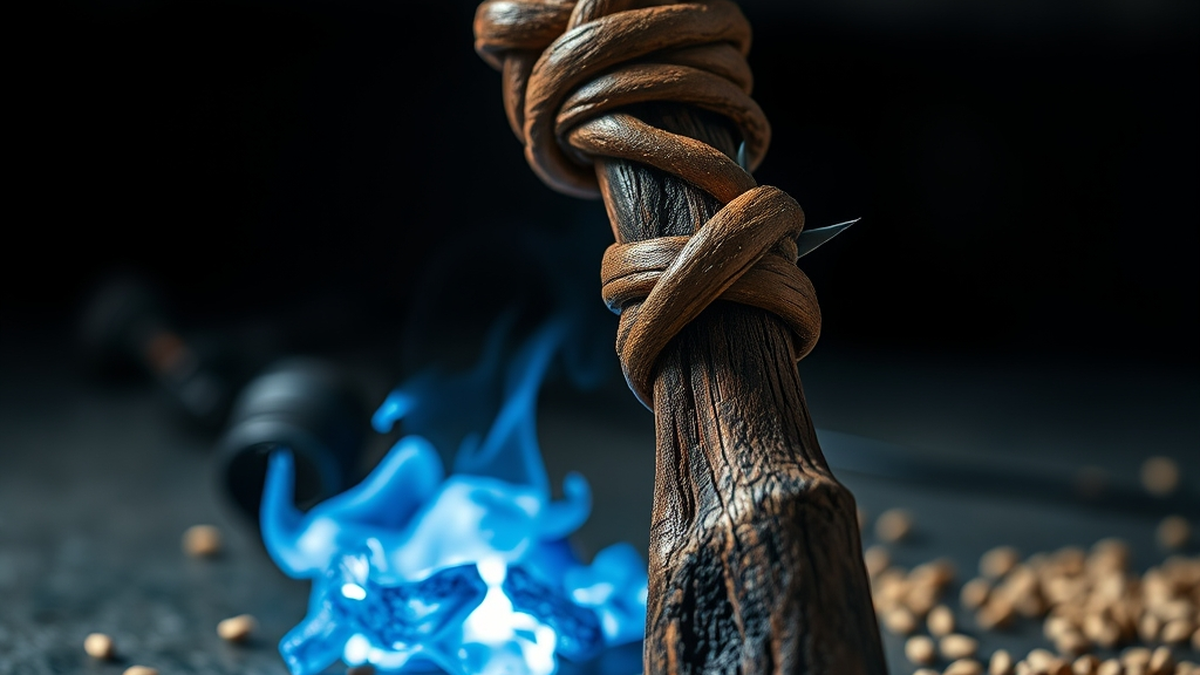
In traditional Korean folklore, they are often said to manifest from inanimate objects that have been stained with human blood or deep human emotion—an old broom, a discarded wooden club, or a long-worn straw hat. They possess a physical form, often described as having one horn (or sometimes two), wild hair, and a weathered face, but they are essentially non-human manifestations of a space or an object.
They are beings of spontaneity. If you hear a strange sound in the rafters of an old house at night, or if you feel a sudden, inexplicable gust of wind in the woods, the older generation might jokingly suggest, “The Dokkebi are having a party.” They do not hide in dungeons; they walk the village paths, sit on the roof tiles, and linger near the banks of streams. They are part of the landscape. They aren’t meant to be feared with the same gravity as a demonic spirit; rather, they are to be humored, bargained with, or simply tolerated as part of the neighborhood.
Mischief, Pranks, and the Rules of the Game
The most enduring characteristic of the Dokkebi is its love for games and pranks. In rural folklore, stories of the Dokkebi are less about “horror” and more about “bafflement.”
Imagine a farmer returning from the fields, only to realize he has taken the wrong path, or a traveler whose luggage has been rearranged while he slept. The Dokkebi are notorious pranksters. They are said to challenge humans to ssireum (씨름), the traditional form of Korean wrestling. However, there is a trick to beating them. Because the Dokkebi only have strength in their right side, if you grab their left leg, they will eventually give up and leave you alone.
This is a recurring theme: the Dokkebi is a creature of simple, almost childlike logic. They can be outsmarted, but they can also be charmed. They have a known fondness for makgeolli (막걸리), a milky, effervescent rice wine, and buckwheat jelly. Tales often recount a farmer leaving a bowl of wine out for the spirits, only to find it gone in the morning, followed by a period of unexpected good fortune for his harvest. They are fickle, but they are not inherently malicious. They treat human interactions as a game, and if you play along with the right spirit—or the right drink—you might find yourself on the winning side of their mischief.
Symbols of Wealth and the “Dokkebi-mangchi”
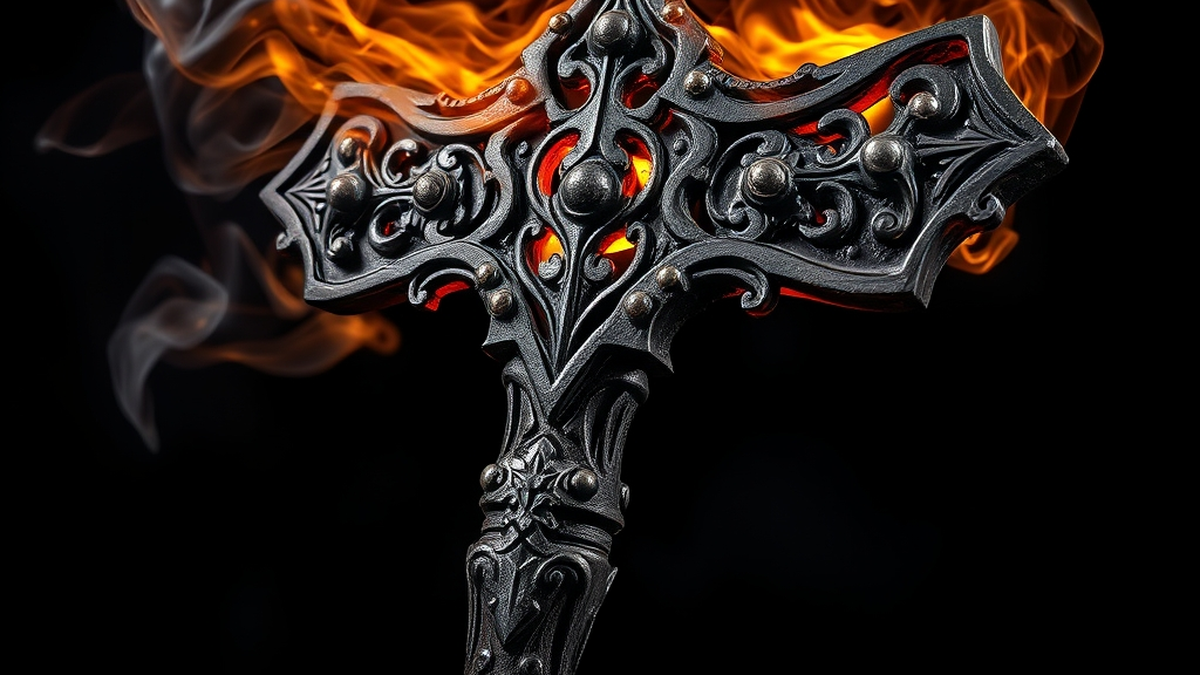
One of the most recognizable items associated with these spirits is the Dokkebi-mangchi (도깨비방망이)—the magic club. In many children’s stories, this club is not a weapon of war but a tool of creation. If a human manages to acquire it, they need only tap it against the ground and command it to “bring me gold” or “bring me rice,” and the items will appear instantly.
This highlights a vital nuance: the Dokkebi represents the unpredictable nature of wealth and fortune. They are the personification of a lucky break or a sudden, unexplained blessing. When a business experiences a surge in popularity, or an individual finds a path to prosperity they didn’t expect, the Dokkebi is often the metaphorical explanation for that surge.
However, this wealth comes with a warning. Because Dokkebi magic is whimsical, it is not always stable. Folkloric warnings often caution that wealth gained through a Dokkebi can disappear as quickly as it arrived if the owner becomes arrogant or greedy. In this sense, they act as a moral compass in village lore. They reward the simple-hearted and humble traveler, but they mock those who try to exploit their power. They represent the reality that life is often chaotic and that sometimes, you simply have to accept that your fortune—or your bad luck—might be the result of a Dokkebi deciding to shake things up.
Recognizing the Dokkebi in Real Situations
If you are walking through a Korean market today, you might see the Dokkebi logo on a snack bag or a cartoon character on a government sign. But to really “recognize” them, look for the social cues.
When a group of friends is laughing about a strange, coincidental event—like missing a bus only to find out the bus broke down a mile up the road—you might hear someone laugh and mention that a Dokkebi was playing with them. It is a way of externalizing the randomness of life. It allows people to laugh at a frustrating situation rather than stewing in it.
You also see their influence in the way traditional Korean architecture and interior design value the “spirit” of the home. Items that have been used for a long time are treated with a sort of respect; they have a history, and in the old ways of thinking, they might have developed a “personality” of their own. This is not about worshipping spirits; it is about acknowledging that the environment we live in is not just a collection of dead matter. It is vibrant, shifting, and occasionally, it likes to play tricks on us.
Moving Beyond the “Goblin” Label
The tendency to translate Dokkebi as “goblin” or “troll” is a byproduct of trying to force a unique cultural entity into a Western taxonomy of monsters. Western goblins are typically categorized as “monsters” in the sense that they are something to be vanquished. A Dokkebi is not something to be vanquished; they are something to be lived alongside.
They reflect a cultural perspective that views nature and the unseen world as inherently connected to the human experience. They are neither wholly good nor wholly evil; they are a manifestation of the unexpected.
Whether you are watching a modern film or walking through a historic village, remembering the Dokkebi helps bridge that gap of understanding. They remind us that Korean folklore is rarely about binary fights between heroes and villains. Instead, it is a dance between the human and the supernatural, where the best strategy is often a bit of wit, a bit of humor, and a willingness to accept that sometimes, the world just wants to play a game.
So the next time you lose your keys in your own house, only to find them sitting in a place you know you already checked twice, take a breath. You don’t have to call it a haunting or a curse. You can just smile, shrug, and acknowledge that the Dokkebi have been by for a visit. It makes the everyday a little bit more magical, and a lot less frustrating.