The Cultural Significance of Bossam and the Art of Ssam
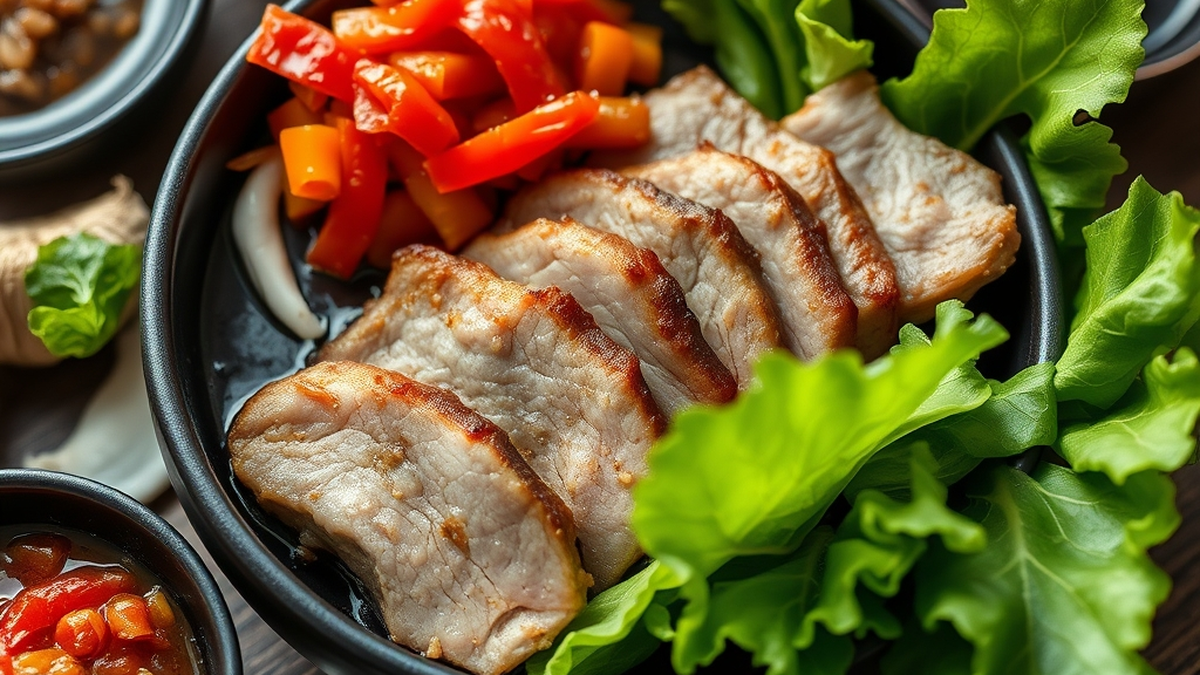
The Cultural Significance of ‘Bossam’ and Lettuce Wraps
When you sit down at a Korean restaurant, you might notice a distinct shift in the table’s energy once the Bossam (boiled pork belly) arrives. It is often served on a platter surrounded by a colorful ring of accompaniments: ruby-red radish kimchi, glossy fermented shrimp sauce, raw garlic cloves, and, most importantly, a basket of fresh, crisp greens.
Unlike a sandwich or a burger, where the bread serves as a vessel meant to be finished in its entirety, the Ssam (the act of wrapping food in a leaf) is a social performance. It is a way of building a singular, harmonious bite that changes with every addition. As the summer months bring a vibrant array of seasonal greens to the market, it is the perfect time to look at the etiquette, the logic, and the communal warmth behind this Korean staple.
The Art of the Ssam: Building the Perfect Wrap
For those new to the table, the Ssam can be intimidating. The question is often: how much can you actually fit in one leaf without it crumbling in your hand?
The foundation of a good Ssam is the leaf itself. You might see everything from standard red or green leaf lettuce to Kkaennip (perilla leaves), which have a distinct, minty, basil-like flavor. To build one, start by placing the leaf flat in the palm of your non-dominant hand. If you are feeling adventurous, place a Kkaennip on top of a lettuce leaf to add that aromatic depth.
Next comes the pork. Take a slice of Bossam—which should be tender, succulent, and slightly warm—and dip it lightly into the Ssamjang (a savory, nutty paste made of soybean paste and chili paste). Place the meat in the center of the leaf.
Now, the customization begins. This is where the flavor profile of the bite is decided. You might add a small piece of Mu-samsaengchae (spicy radish salad) for crunch, or a slice of raw garlic and green chili if you want a sharp, pungent kick. The key is balance. If you overstuff the wrap, it becomes impossible to eat in one bite, and in Korean dining culture, the Ssam is intended to be a single-mouthful experience.
Once you have assembled your ingredients, fold the edges of the leaf inward to create a neat, compact bundle. If you have done it correctly, you should be able to pop the entire thing into your mouth. It feels like a small culinary puzzle, and once you master the “one-bite” rule, you start to understand why this method of eating is so addictive.

The Communal Table and the Language of Luck
In Korea, the concept of Ssam carries a lighthearted, almost folkloric association with luck. There is a long-standing cultural shorthand that suggests “wrapping” food—and consuming it—is akin to wrapping up blessings or good fortune.
This is particularly evident in social settings. If you are dining with friends or colleagues and see someone struggling to balance their side dishes, or perhaps someone who has been working hard, it is not uncommon for a friend to build a Ssam and offer it to them. This gesture is an informal way of showing care. It’s a quiet acknowledgment: “Here, have a good, healthy bite.”
This social ritual shifts the focus of the meal from simply eating to sharing. Because Bossam is usually served on a shared platter rather than as individual portions, the table is naturally collaborative. You are all reaching for the same basket of greens, the same bowls of kimchi, and the same platter of pork.
It is important to remember the table manners here. Because the food is communal, it is considered polite to use the provided serving utensils for the meat and kimchi rather than dipping your personal chopsticks directly into the shared side dishes. Keep your personal space organized, and you will find that the rhythm of a Bossam meal is one of the most relaxed, conversational experiences you can have in a restaurant.
Seasonal Greens and Why Summer Matters
While Bossam is enjoyed year-round, there is a specific pleasure in eating it during the summer months. In Korea, this season is prime time for Ssam-chaeso (leafy greens for wrapping). During the heat, when appetite can sometimes wane, the sharpness of fresh greens paired with the savory, fatty depth of boiled pork acts as a palate cleanser.
The variety of greens available in the summer is immense. Beyond basic lettuce, you might encounter Sangchu (lettuce), Kkaennip (perilla leaves), Baechu (napa cabbage), or even blanched Hobak-ip (pumpkin leaves). Each leaf offers a different texture and scent.
Using napa cabbage, for example, creates a very different experience than using soft green lettuce. Cabbage is sturdier, crunchier, and holds a bit of the natural moisture of the vegetable, which balances the richness of the pork belly perfectly.
Because these greens are at their peak during the warmer months, you will often find that the sides served with Bossam change to match them. You might see cooling cucumber salads or extra-spicy radish kimchi to stand up to the fresh, grassy notes of the summer harvest. It is a seasonal rhythm that dictates the meal, making every Bossam experience feel distinct depending on when you visit.
Avoiding Common Pitfalls
For the uninitiated, there are a few subtle pitfalls to avoid so you don’t end up with a messy, shredded leaf or a flavor profile that doesn’t quite work.
First, do not worry about making the “perfect” wrap on your first try. It is common to see people drop a piece of garlic or have a bit of sauce drip, especially as you get toward the end of a long dinner. If the leaf tears, it is perfectly acceptable to double up with a second leaf.
Second, watch the Ssamjang ratio. Because the paste is quite potent, a little goes a long way. If you add too much, you will mask the delicate, savory flavor of the boiled pork and the freshness of the greens.
Third, take your time. There is no race to finish the greens. Part of the Ssam culture is the pacing. You build, you wrap, you eat, you chat. If you find yourself eating the pork alone and forgetting the greens, you are missing out on the essential “cushion” that makes Bossam what it is. The contrast between the hot, tender meat and the cold, crisp vegetable is the defining characteristic of the dish.
Lastly, be mindful of the raw garlic and chili. If you are not used to the heat of raw garlic, start with a very small sliver. The Ssam is a personal composition, so treat it as a laboratory for your own taste buds.
A Familiar Part of the Table
The next time you see a basket of greens hitting the table alongside a steaming platter of pork, you will know exactly what to expect. You are not just looking at a meal; you are looking at a communal ritual that emphasizes freshness, balance, and the simple, human act of putting together a bite of food to share with those around you.
Whether it is the aromatic scent of the perilla leaves, the crunch of the radish, or the perfectly cooked pork, the Bossam and Ssam experience is a foundational element of Korean dining. It is a slow, thoughtful process that turns a simple dinner into a social connection, one leaf at a time. Once you start building your own, you will find that it becomes second nature—a small, habitual pleasure that makes every Korean meal feel a little more complete.