Dining in Korea: A Guide to Ordering and Etiquette
The Art of Ordering: Navigating Modern Korean Restaurant Etiquette
Stepping into a bustling Korean restaurant can feel like entering a choreographed dance. You are greeted by the rhythmic clatter of metal chopsticks against stainless steel bowls, the sizzle of pork belly on a tabletop grill, and the occasional, sharp shout of “Imo!” (Auntie) from across the room. For an international visitor, the urge to remain perfectly still is often strong, mostly out of a fear of committing a cultural faux pas. But the reality is that the “rules” of Korean dining aren’t a rigid rulebook; they are a fluid, practical language of their own.
Once you decode the rhythm of the meal, you realize that the culture isn’t about strict formality. It’s about efficiency, communal connection, and knowing exactly how to bridge the gap between “customer” and “server” in a way that feels natural for everyone involved.
The Call Button and the “Imo” Dynamic
In many parts of the world, making eye contact with a server or waving a hand to get their attention is the standard protocol. In Korea, this is almost entirely replaced by the magic of the call button. You will usually find it attached to the side of the table or tucked away in a small plastic holster.
When you press it, a soft chime echoes through the dining room. It’s not an emergency signal; it’s simply a digital extension of your presence. If your table doesn’t have a button—common in older, smaller establishments—you don’t need to feel anxious about shouting across the room. A polite, audible “Jeogiyo!” (Excuse me!) directed toward the kitchen or the service station is perfectly acceptable.
The term Imo—literally meaning “aunt”—is the colloquial, affectionate way to address a woman running the front of house. You’ll hear it everywhere. It creates a warm, familial atmosphere that skips the stiff hierarchy of professional service. If you’re a traveler, calling out “Imo, yeogi, mul juseyo!” (Auntie, over here, please bring some water!) is the most authentic way to get what you need without the formality of “Sir” or “Ma’am.” It acknowledges the person, not just the service role.
The Shared Table and the Banchan Ecosystem
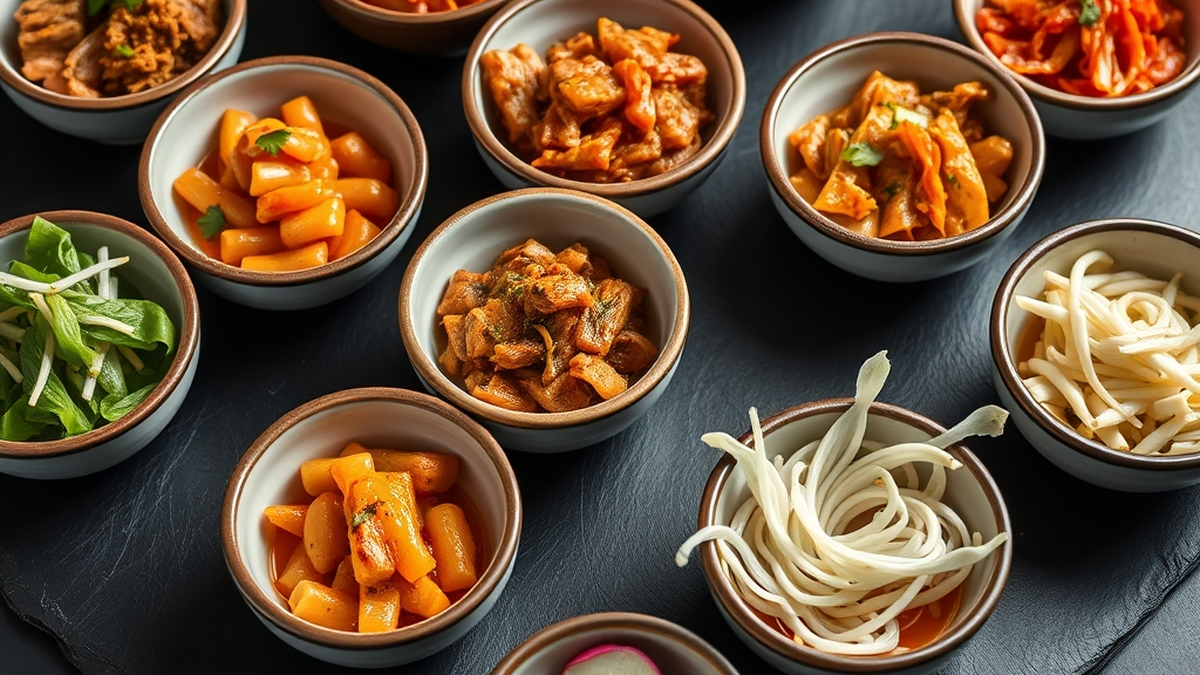
The centerpiece of any Korean meal is the banchan (side dishes). These small plates of kimchi, seasoned sprouts, fish cakes, and marinated vegetables are the heartbeat of the table. A common point of confusion for newcomers is whether these dishes are “shared” or personal.
The answer is both. Banchan are communal by design. They are intended to be sampled throughout the meal, acting as palate cleansers or flavor enhancers for your main course. If a plate of kimchi sits between you and your friend, it belongs to the table. However, a small etiquette nuance exists: try not to “dig” through the plates. Take a piece from the top or the edge rather than hunting for the specific piece you want.
If you find yourself running low on a specific side dish, you don’t have to pay for a refill. In most local restaurants, banchan are bottomless. When you’re ready, a quick “Banchan deo juseyo” (Please give me more side dishes) is all it takes. The server will arrive with a fresh refill, often moving with a speed that makes it clear this is a routine part of their day. It’s a low-pressure interaction; there is no need to apologize for asking for more. In fact, if the banchan is particularly good, finishing it off is the highest compliment you can pay the kitchen.
The Nunchi of the Bill
The most delicate moment of any meal is when the bill finally arrives. In many Western cultures, asking for “separate checks” is standard, even expected. In Korea, the practice of nunchi—a difficult-to-translate term that essentially means “the ability to gauge the social atmosphere”—comes into play.
In professional or casual social settings in Korea, the bill is rarely split down to the exact cent. Instead, there is an unspoken rotation: one person usually covers the meal, and the other might cover the coffee or the next outing. This isn’t about one person being wealthier; it’s about social flow.
If you are dining with Korean friends or colleagues and the check arrives, you might notice that no one reaches for their calculator. Instead, there is often a polite scramble—a “battle of the hands”—where everyone makes a motion to pay. If you are the visitor, you don’t need to force your way into this battle if your host insists. A simple “Thank you, I’ll get the coffee later” or “Next time, it’s on me” is a perfect way to balance the social ledger.
If you are traveling solo or with other tourists, paying at the counter is the standard. Don’t wait for the bill to be brought to your table at the end of the meal. In most Korean restaurants, you simply walk up to the counter near the exit when you’re ready to leave. You don’t need to ask for the bill, just tell them your table number or point to where you were sitting. It is a quick, functional transition from the dining space back into the street.
Ordering and the “Set” Mentality
When browsing a menu, you might notice that many dishes are listed with a minimum order requirement, especially for things like samgyeopsal (pork belly). You might see “2 servings minimum” on the menu. This isn’t a strategy to force you to overeat; it’s a reflection of how the restaurant’s supply chain and grill setup are managed.
If you are dining solo, this can be intimidating. However, many modern restaurants are shifting to accommodate single diners, and you will often see “1-person menu” options or simple lunch sets like bibimbap or jigae (stew) that are perfectly portioned for one. If you’re at a grill-heavy restaurant and feeling shy, just be upfront. A friendly “Honja-yeyo” (I’m alone) is usually met with a nod and a gesture to a smaller, more comfortable table.
As you navigate these interactions, remember that most restaurant owners and servers aren’t looking for a “perfect” tourist. They are looking for someone who acknowledges the shared space of the restaurant. You’ll find that the more you lean into the casual, efficient, and communal nature of the Korean dining experience—the call buttons, the banchan refills, and the walk to the register—the more you stop feeling like a guest and start feeling like part of the neighborhood’s daily rhythm.