The Art of Korean Jjigae: Stews That Unite the Table
The Art of Jjigae: How Korean Stews Anchor Every Family Table
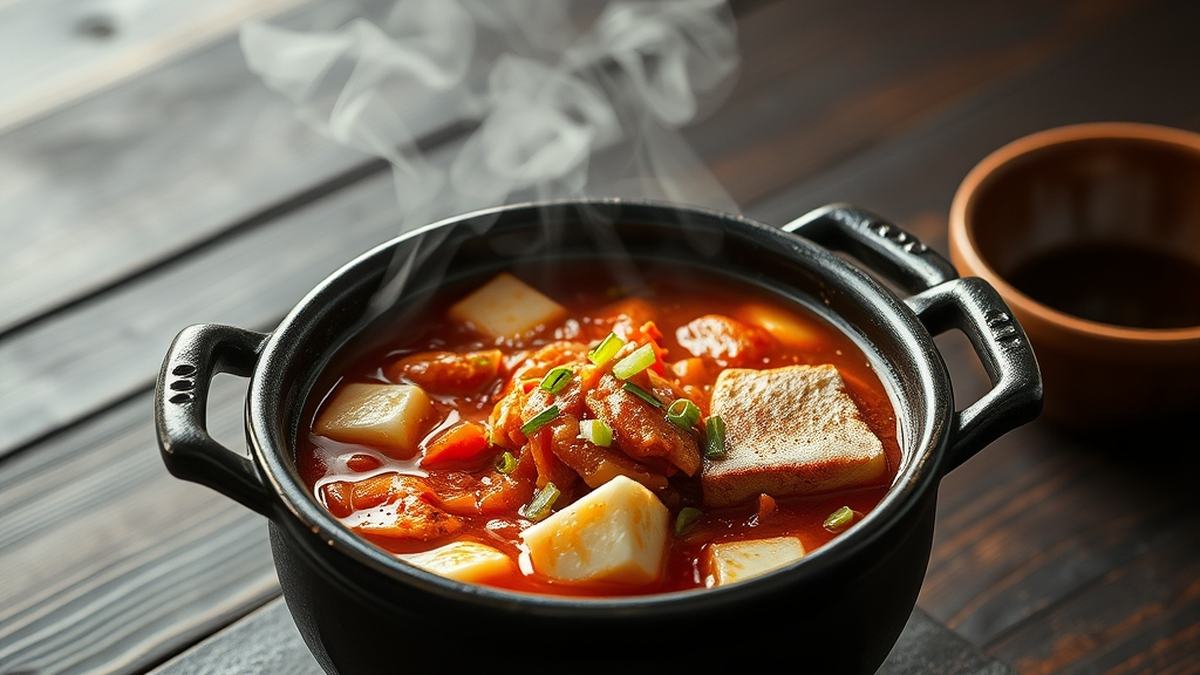
The sound is unmistakable: a sharp, aggressive hiss as a heavy earthenware pot, known as a ttukbaegi, is placed onto a metal stand at the center of the table. Inside, the broth is still roiling, the surface churning with tofu, vegetables, and slivers of pork. In Korea, this moment—the arrival of the jjigae—marks the true beginning of a meal. As the steam clears, the family or group of friends reaches for their long-handled spoons, diving into the same bubbling vessel.
For the international visitor, Korean dining can feel like a puzzle of side dishes, but the jjigae is the constant. As the air turns crisp in November, these stews move from being a standard lunch item to the essential anchor of the dining table. Understanding the difference between these warm bowls and knowing how to navigate them is the key to feeling at home in a Korean restaurant.
The Hierarchy of Liquid: Guk, Tang, and Jjigae
If you have ever stared at a Korean menu and wondered why there are three different words for soup, you are not alone. In Korean culinary culture, the distinction is based on the ratio of ingredients to liquid, and the intensity of the flavor profile.
Guk (soup) is the lightest. It is the clear, nourishing liquid you might have with a bowl of rice in the morning. Think of miyeok-guk (seaweed soup); it is thin, subtle, and intended to be sipped alongside the rice, which remains the star of the show.
Tang (broth/soup) sits in the middle. These are usually stews that require a long, slow cook time, often involving bones or large cuts of meat. Seolleong-tang (ox bone soup) or samgyetang (ginseng chicken soup) fall into this category. They are often served in individual bowls, and the diner is expected to season the broth themselves with salt, scallions, or pepper at the table.
Then, there is jjigae (stew). This is the heavy hitter. Jjigae is thick, salty, and intentionally seasoned to be eaten with rice. It is not meant to be consumed like a drink; it is a concentrated flavor bomb meant to be spooned over a mouthful of steamed white rice. While guk and tang are often served in individual portions, jjigae is almost always designed for sharing. When you see a bubbling pot placed in the middle of the table, you are looking at the social heart of the meal.
The Pillars: Kimchi-jjigae and Doenjang-jjigae
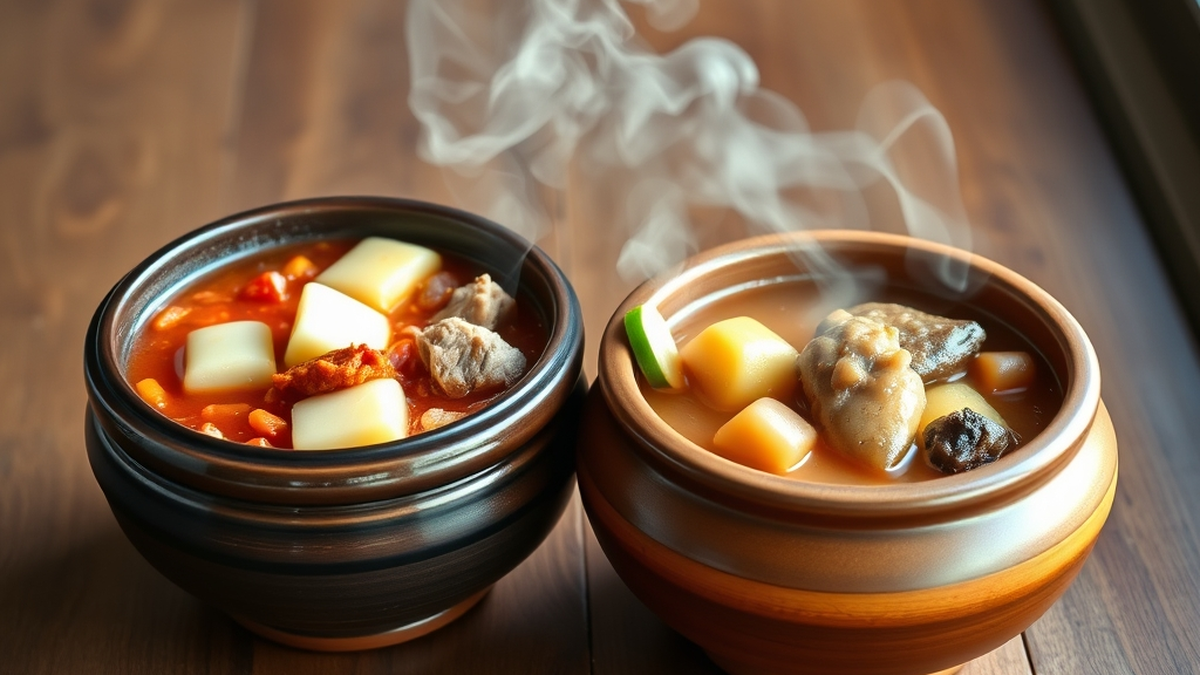
If you want to understand the rhythm of a Korean household, you need only look at two pots: Kimchi-jjigae (fermented cabbage stew) and Doenjang-jjigae (soybean paste stew).
Kimchi-jjigae is the undisputed king of the table. Its success depends entirely on the age of the kimchi used. If the kimchi is fresh, the stew will be sweet and bright. If the kimchi is mukeunji—well-aged, sour, and pungent—the stew becomes deep, complex, and savory. It is usually cooked with chunks of fatty pork belly, which melt into the broth, balancing the sharp acidity of the fermented cabbage. When a group of friends sits down to a late-night dinner, this is the stew that keeps the conversation going. It is hearty, unapologetically spicy, and pairs perfectly with a bowl of warm rice.
Doenjang-jjigae, on the other hand, is the earthy, grounding counterpart. Doenjang, or fermented soybean paste, has a funk that is similar to a very strong, aged cheese. It is a humble stew, often packed with tofu, onions, zucchini, and occasionally small clams or dried anchovies for a touch of oceanic depth. While Kimchi-jjigae feels like a celebration, Doenjang-jjigae feels like a sigh of relief at the end of a long day. It is the taste of a home-cooked meal, familiar and consistent.
When ordering, it is helpful to remember that jjigae is not a starter. It is the centerpiece. You do not finish the stew and then wait for the main course; the stew is the main course.
The Communal Spoon and the Ttukbaegi
The most distinct aspect of Korean dining culture is the shared pot. In many Western dining settings, the idea of multiple people dipping their spoons into the same vessel might feel unconventional, but in Korea, the jjigae pot is a communal space.
The ttukbaegi—the thick, black earthenware pot—is essential to this experience. It retains heat exceptionally well, keeping the stew at a near-boil for several minutes after it leaves the stove. This is why the stew arrives at the table still bubbling.
There is an unwritten etiquette to this communal eating. Because the stew is shared, it is common practice to use a separate ladle to transfer portions into smaller, individual bowls if the group is large. However, in a close-knit setting—like a family dinner or a meal with close friends—it is very common for everyone to eat directly from the pot.
If you are dining with locals and you find yourself unsure, look at what your companions are doing. If they are using their own spoons to reach into the pot, feel free to join in. If they are using a ladle to fill their small bowls, follow suit. This shared act of eating from the same source is a subtle way of signaling closeness. It turns the meal into a collaborative effort, where everyone is focused on the same center point, navigating the hot, spicy liquid together.
Navigating the Table: When and How to Eat
In November, when the temperature drops, the social value of a hot jjigae increases. You will find that even the most casual neighborhood eateries will prioritize these stews during the colder months.
When you sit down, don’t be surprised if the jjigae arrives alongside a variety of banchan (side dishes). The jjigae provides the salt and the heat, while the banchan—perhaps some spinach, bean sprouts, or pickled radish—provide the texture and the cooling contrast.
The most common mistake for newcomers is trying to eat the jjigae like a soup. If you try to finish a bowl of jjigae by itself, you will find it overwhelmingly salty or spicy. The secret is the rice. The rice is the canvas, and the jjigae is the paint. Take a spoonful of rice, dip it into the stew, or spoon a bit of the broth and ingredients over the rice in your bowl. This combination is what makes the meal functional. The rice mellows the intensity of the fermented paste or the spicy cabbage, creating a balanced bite every time.
As you become more comfortable with these stews, you will start to notice the regional variations. In coastal areas, you might find jjigae packed with fresh seafood or crabs. In mountain regions, you might see stews heavily focused on mushrooms and wild vegetables. Each region uses the jjigae base to highlight the local harvest, but the structure—the bubbling pot, the shared spoons, and the bowl of steaming rice—remains the same.
The next time you find yourself at a Korean restaurant, look for the pot that is still hissing on the table. Listen for the sound of spoons clinking against the stoneware. You are watching the anchor of the Korean meal, a simple, hot, and communal ritual that has defined the family table for generations. It is not just dinner; it is a way to gather, to warm up, and to share the space.