The Art of Banchan: Understanding Korea’s Seasonal Side Dishes
The Art of Banchan: Why Side Dishes Define a Korean Meal
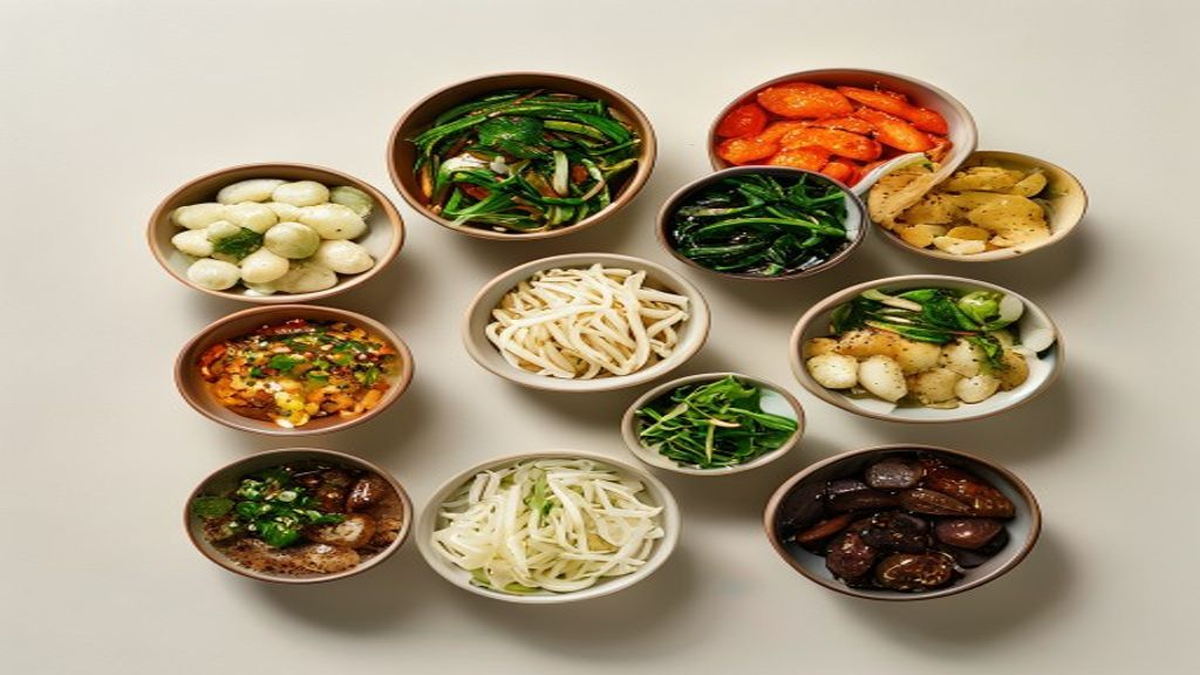
The moment a server in a Seoul restaurant finishes setting your table, the landscape before you transforms. A single main dish, perhaps a bubbling jjigae (stew) or a grilled cut of meat, is suddenly eclipsed by an array of small, colorful ceramic plates. There might be six, or perhaps ten, each filled with a different preparation: blanched greens, stir-fried mushrooms, braised tofu, or thinly sliced roots. This is banchan.
To the uninitiated, this spread can be overwhelming. It is not merely a garnish or a condiment; it is the infrastructure of the Korean meal. Understanding banchan is not about mastering a specific recipe or memorizing a history book—it is about learning how to navigate the communal rhythm of a Korean dining table.
The Architecture of the Table
In Korean dining culture, the table is rarely built around a single “hero” dish. Instead, the meal is designed as a collective ecosystem. The banchan acts as a bridge between the main dish and the bap (steamed rice).
When you sit down, you will notice that the rice is placed directly in front of you, with the soup or stew usually to its right. The banchan are spread across the remaining space. There is a practical logic here: the smaller dishes provide the texture, acidity, and bite that balance the richness of the main course.
If you find yourself staring at an unfamiliar table, remember that banchan are meant to be shared. Unlike Western-style courses where a dish belongs to one person, these small plates are essentially a public utility. It is common etiquette to use your chopsticks to take a modest amount from the side plate and place it on your own rice bowl before eating it. This prevents the “double-dipping” that might disrupt the shared nature of the dish. If a plate is placed very close to you, you are essentially its steward for the duration of the meal, ensuring that everyone else at the table has an easy reach to it.
The Rhythm of the Seasons
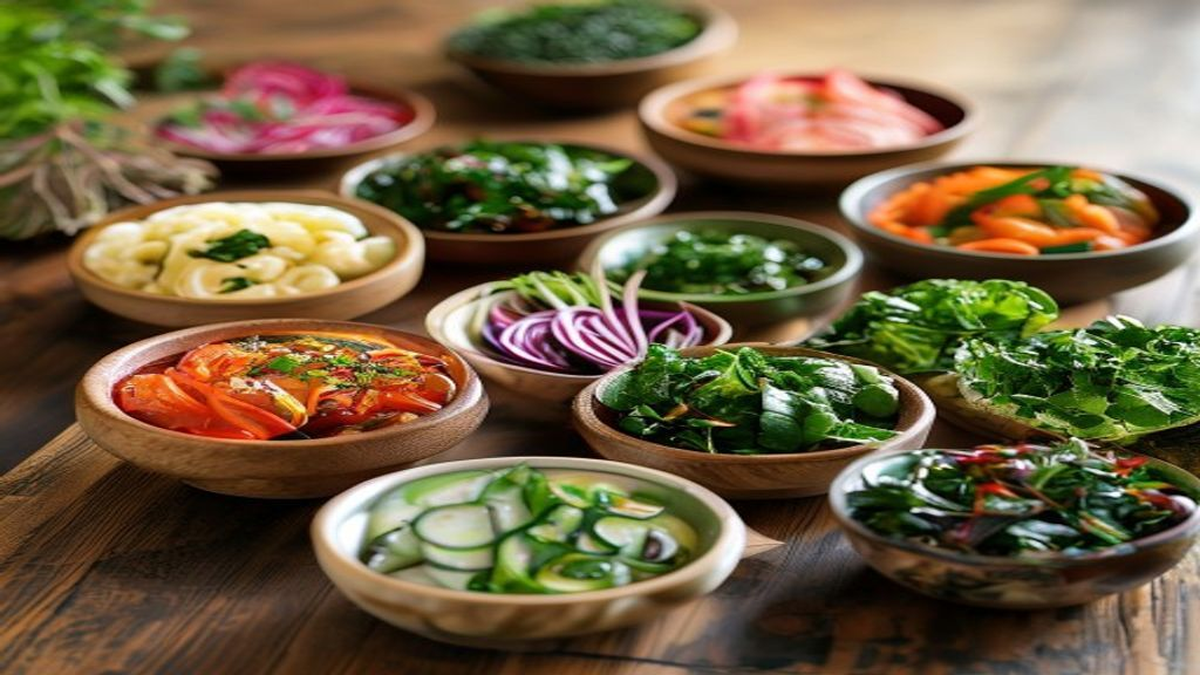
July in Korea is a distinct culinary marker. As the heat and humidity rise, the banchan on the table shift to reflect the environment. You will see less of the heavy, long-braised dishes typical of the winter and more of what is fresh and fleeting.
Summer banchan often features namul—seasoned vegetable dishes. You might encounter oi-muchim (spicy seasoned cucumbers), which provide a sharp, cool contrast to a hot bowl of rice. There are also frequent appearances of gaji-bokkeum (stir-fried eggplant), which is prized for its soft, absorbing texture, and sukju-namul (blanched mung bean sprouts), which offers a crisp, refreshing crunch.
The reason for this seasonality is rooted in the practical necessity of traditional preservation. Because Korea experiences distinct seasons, the method of balhyo (fermentation) and simple seasoning allows families to maximize the output of the harvest. A banchan isn’t just a side dish; it is a snapshot of the local climate. When you see a table filled with bright green herbs and crisp summer vegetables, you are essentially eating the landscape of the current month. If you revisit that same restaurant in January, the table will look entirely different—filled with preserved roots, dried fish, and fermented ingredients that withstand the cold.
Fermentation as a Daily Texture
A common point of confusion for newcomers is the assumption that banchan is just a collection of various pickled vegetables. While fermentation is indeed a cornerstone, it is better understood as a spectrum of texture rather than just a way to add sourness.
Beyond the well-known varieties of fermented cabbage, there are hundreds of banchan that utilize different fermentation techniques to alter the molecular structure of an ingredient. You might be served jang-ajji, which are vegetables like garlic, peppers, or onions that have been marinated in soy sauce, vinegar, and sugar. These are designed to be eaten in tiny quantities. A single piece of a jang-ajji garlic clove is potent enough to cut through the fattiness of grilled pork belly, providing a sharp, salty punctuation to the bite.
This is the key to enjoying banchan: do not treat them as individual bowls to be finished in one go. Instead, think of them as an artist’s palette. If your main dish is particularly rich or oily, the banchan are your tools for palate cleansing. You might take a small portion of a bitter, blanched green to reset your taste buds, followed by a sweet-and-salty root vegetable to bridge the gap back to your rice.
Etiquette and the “Refill” Culture
Perhaps the most daunting part of the banchan experience is the refill. In many local restaurants, these side dishes are provided as an unlimited accompaniment. If you finish a plate of, say, braised lotus root or seasoned seaweed, it is standard practice to ask for more.
However, a subtle rule of thumb applies: if the restaurant is busy and you are at a small, family-run spot, it is considered polite to wait until a server is passing by or to clear the finished plate slightly to the side to indicate it is empty. You do not need to feel pressured to finish every single plate. Banchan are meant to provide variety, and if you leave a little bit behind, it is simply accepted as part of the abundant nature of the setting.
One common misunderstanding is the fear of being rude by “taking too much.” Because the plates are communal, there is a natural social monitoring at the table. If a specific dish is popular, it will vanish quickly. If you find yourself in a group, look for the unspoken cues of your companions. If someone is reaching for the last piece of a favorite dish, it is often polite to let them take it, as the abundance of other options means the social cost of “losing” one dish is nonexistent.
Recognizing the Familiar
Once you begin to recognize the logic of these plates—the balance of salt, acid, texture, and season—the Korean table stops feeling like a chaotic assembly of bowls. Instead, it begins to feel like a conversation. You are not meant to finish the table; you are meant to engage with it.
The next time you sit down at a restaurant and a collection of ceramic dishes arrives, take a moment to look at the textures. Identify the cooling summer greens, the salty fermented roots, and the blanched, crunchy textures. Choose one to pair with your first spoonful of rice, and let the rest sit as a backdrop. Whether you are eating a quick weekday lunch or participating in a longer, multi-dish dinner, you are participating in a tradition that prizes variety over singular focus.
Ultimately, banchan turns a solitary act of eating into an interactive process. It reminds you that the meal is not just about the main attraction, but about the small, shifting details that fill the space in between.