Korean Summer Etiquette: Staying Cool and Respectful
Navigating Korean Summer Etiquette: Umbrellas and Fans
Stepping out onto a Seoul street in mid-July, you will notice a distinct choreography of movement. It is a humid, heavy heat, and the locals have developed a specific set of tools to navigate the commute, the lunch rush, and the walk to the subway. You will see people shielding themselves from the glare with UV-blocking parasols, and you will hear the faint, rhythmic whirring of portable fans.
This isn’t just about escaping the heat; it is about how people manage personal space and physical comfort in a densely populated, climate-conscious society. For the international traveler, understanding these subtle habits is the difference between feeling like a tourist melting on the pavement and moving through the city with the rhythm of a local.
The Parasol (Yang-san): More Than Just Rain Protection
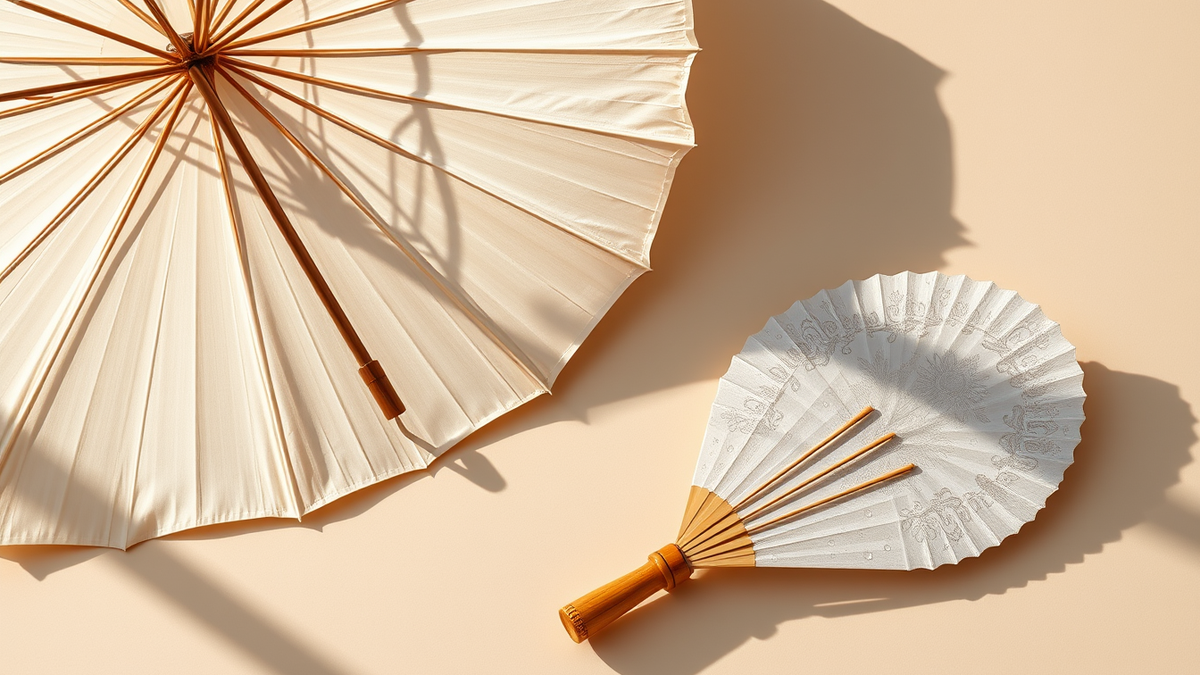
In many parts of the world, umbrellas are strictly for rain. In Korea, however, the yang-san (sun umbrella) is a daytime staple for many commuters. It is common to see office workers, elderly residents, and students walking under a portable shade during the peak sun hours of noon to 4:00 PM.
The etiquette here is straightforward: awareness of your perimeter. Because the streets can be narrow and crowded, a full-sized umbrella can be a hazard to others. You will notice that those who use them are often careful about keeping them tucked close or tilting them when passing someone in a tight alley.
Real-world observation: If you are walking toward someone on a sidewalk and both of you are carrying open umbrellas, the social convention is for the person with the “lower” ground or the one who notices first to tilt their umbrella upward or slightly to the side to create space.
Dialogue snippet: Scenario: Two friends meeting near a subway exit. Friend A: “Wow, it’s really bright today. Should we have brought the yang-san?” Friend B: “Definitely. My skin is going to fry. Let’s just walk under the building shadows until we hit the main crossing.”
If you find yourself needing shade, don’t worry about looking out of place. Whether you buy a cheap, sturdy one from a local convenience store or bring your own, it is a perfectly normal way to walk through the city without feeling overwhelmed by the sun.
The Hand Fan: Manual and Mechanical
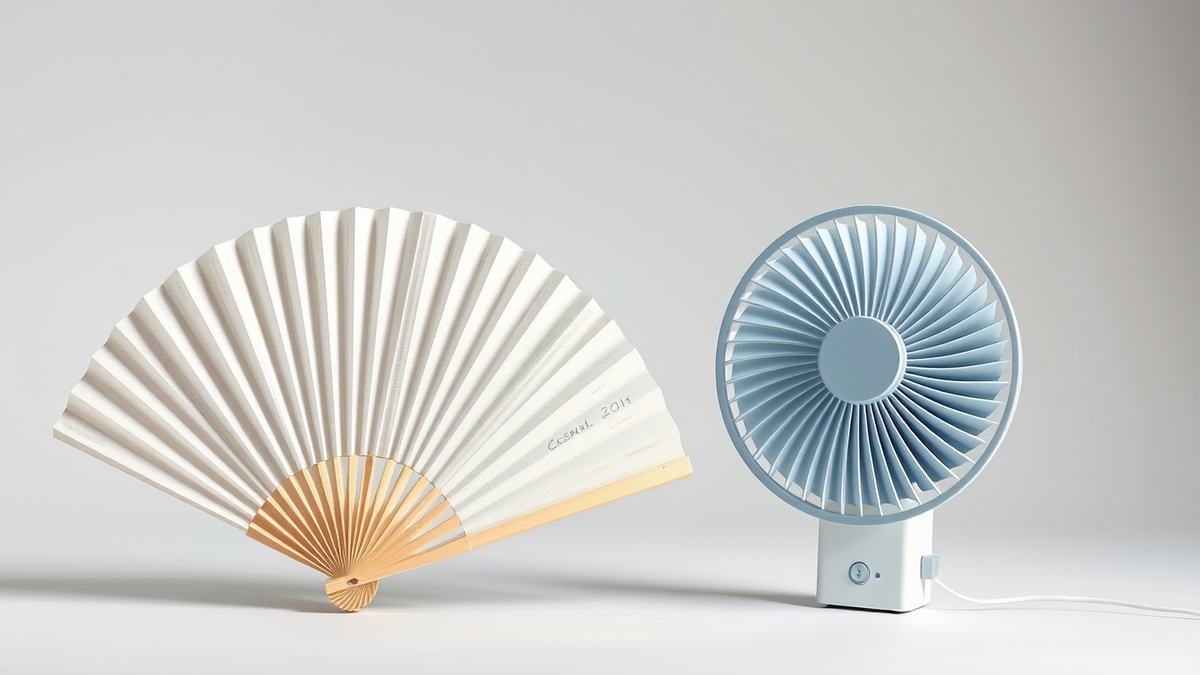
The buchae (traditional hand fan) has long been a staple of Korean culture, but in the modern summer, it has been joined by the hand-seon-pung-gi (portable handheld fan). These small, battery-operated devices are almost universal during the summer months.
When you are on a crowded bus or subway train, you will hear a faint, collective buzzing—that is the sound of dozens of these fans operating at once.
The etiquette of the portable fan:
- Directing the air: It is considered polite to aim the fan away from people who are sitting directly next to you, especially if you are in a quiet, confined space like a library or a theater.
- The “Close-Quarters” Rule: If you are in an elevator or a very tight queue, it is polite to switch the fan to a lower setting or turn it off entirely. The goal is to provide yourself with relief without blowing hot air or constant noise at the person standing inches away from you.
- The Traditional Fan: You will still see many people using folding fans made of paper or fabric. These are often used in more formal settings or while sitting at outdoor cafes. They are silent and viewed as a graceful way to keep cool.
Dialogue snippet: Scenario: On a crowded, slow-moving bus. Passenger A (turning off their electric fan): “It’s so humid, I can’t breathe.” Passenger B: “I know. My fan died halfway here. You’re lucky you charged yours.” Passenger A: “I’ll lend you my paper one if you want to trade off.”
Using these fans is a signal that you are adjusting to the environment. It shows that you are conscious of the heat and are taking proactive steps to stay comfortable, just like everyone else around you.
Climate Sensitivity and Social Norms
Korea’s summer climate is marked by the jang-ma (rainy season), which brings high humidity even when it isn’t actively raining. Because of this, public spaces like cafes, banks, and offices are kept at very cool temperatures. This creates a “thermal transition” problem: you might be boiling outside and shivering inside.
This is why many Koreans carry a light layer, like a thin cardigan or a baram-magi (windbreaker). This isn’t just about fashion; it’s about being prepared for the stark contrast between the sweltering heat of the streets and the aggressive air conditioning of indoor environments.
How to blend in:
- Observe the entry: When entering a shop or restaurant, don’t rush to switch off your fan immediately. Take a moment to adjust to the temperature.
- The “Shared Air” awareness: In small spaces like taxis, you might see a passenger ask the driver if they can adjust the AC. It is very common to hear a polite: “Could you make the air conditioning a little cooler, please?” (eoreum-eul jom deo kang-ha-ge hae-ju-sil-soo is-seul-ka-yo?)
If you are a traveler, you don’t need to overthink these norms. The key is simply awareness. If you have an umbrella, make sure you aren’t poking your neighbor. If you have a fan, ensure you aren’t pointing it directly at the person next to you in a crowded elevator.
Recognizing the Culture in Motion
The next time you are standing at a crosswalk in Seoul or Busan, look around. You will see a person holding a UV umbrella, someone else fanning themselves with a rhythmic flick of the wrist, and someone else checking their watch while holding a humming handheld fan.
It might seem like a chaotic mix of technology and tradition, but it is actually a highly refined system of personal comfort. People aren’t just trying to stay cool; they are signaling that they respect the shared space by keeping their cooling tools contained.
You’ll start to see it everywhere: the way a student closes their umbrella the moment they step under the shade of a tree, or the way a businessperson clicks their fan off as soon as they step into a quiet elevator. It is a quiet, rhythmic dance of survival in the heat, and once you recognize it, you’ll find yourself naturally syncing up with the pace of the city.
Summer in Korea can be intense, but once you have your own yang-san or a reliable fan, you’ll find that you can navigate the heat with the same ease as the locals. It is a small part of the daily rhythm, but it is one that makes the summer months feel much more manageable.