A Guide to Korean Convenience Stores: The Hub of Daily Life
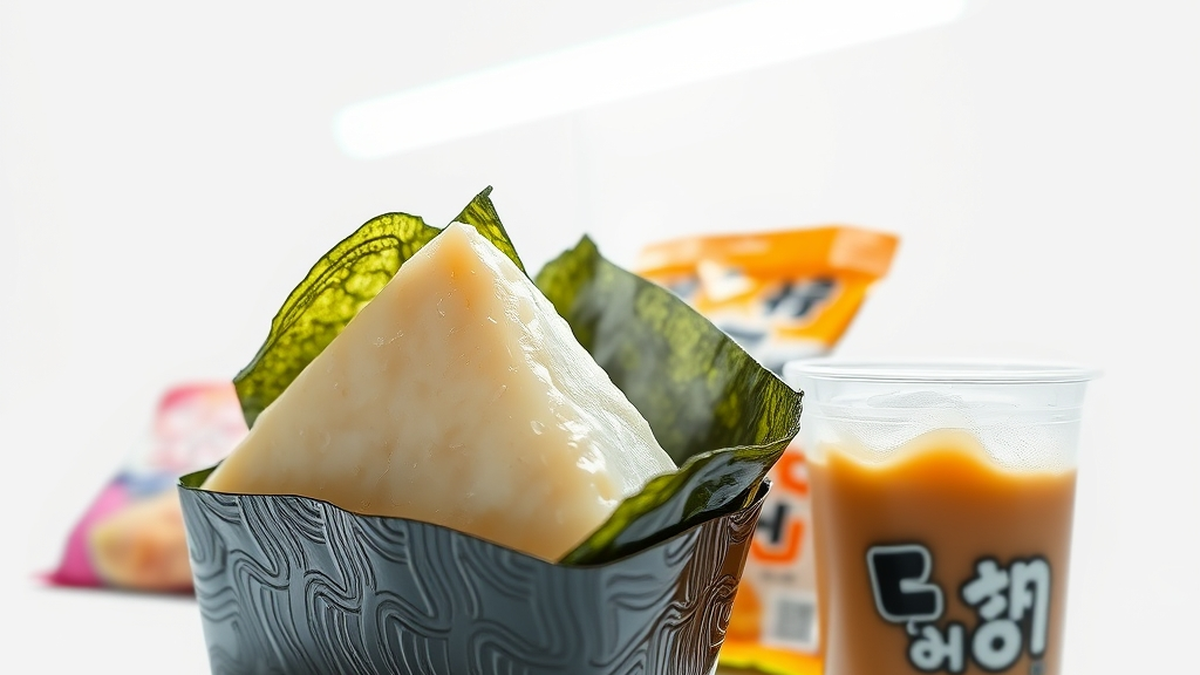
Navigating Korean Convenience Stores: The Secret Hub of Modern Life
If you land at Incheon International Airport and take the subway into Seoul, your first stop after checking into your accommodation will likely be a bright, glass-fronted shop glowing with fluorescent light. It might be a CU, GS25, or 7-Eleven. In Korea, these are collectively known as pyeonuijeom (convenience store).
To a visitor, they might look like any standard shop stocked with snacks and drinks. However, for a student cramming for an exam or an office worker finishing a late shift, the pyeonuijeom is a functional extension of their living room. It is where life happens in the margins of the day.
The Language of the Counter: Daily Exchanges
When you walk into a pyeonuijeom, you aren’t just entering a retail space; you are stepping into a predictable, fast-paced social ecosystem. The staff, known as albasaeng (part-time workers), are pros at managing high volumes of customers with efficiency.
Most interactions are guided by specific, short phrases. If you are buying a few items, the cashier will almost always ask if you have a membership card or a specific payment app to earn points.
“Point-jeu jeokrip-ha-si-ge-sseo-yo?” (Would you like to accumulate points?)
If you don’t have one, a simple “A-ni-yo, gwaen-chan-a-yo” (No, that’s okay) is the standard response. You don’t need to apologize or explain why you don’t have a membership; the cashier will move on to the next customer instantly.
If you are buying a hot drink or something that requires a bag, you might hear: “Bong-tu-ga pir-yo-ha-se-yo?” (Do you need a bag?)
Because many stores charge for plastic bags, it is common to see people decline and simply carry their items out in their hands or drop them into their own backpacks. Learning these three or four short phrases—“Yes,” “No, thank you,” and “Bag, please”—is the easiest way to feel like you’re blending into the rhythm of the store rather than standing out as a confused tourist.
Beyond the Shelf: The Eating Space
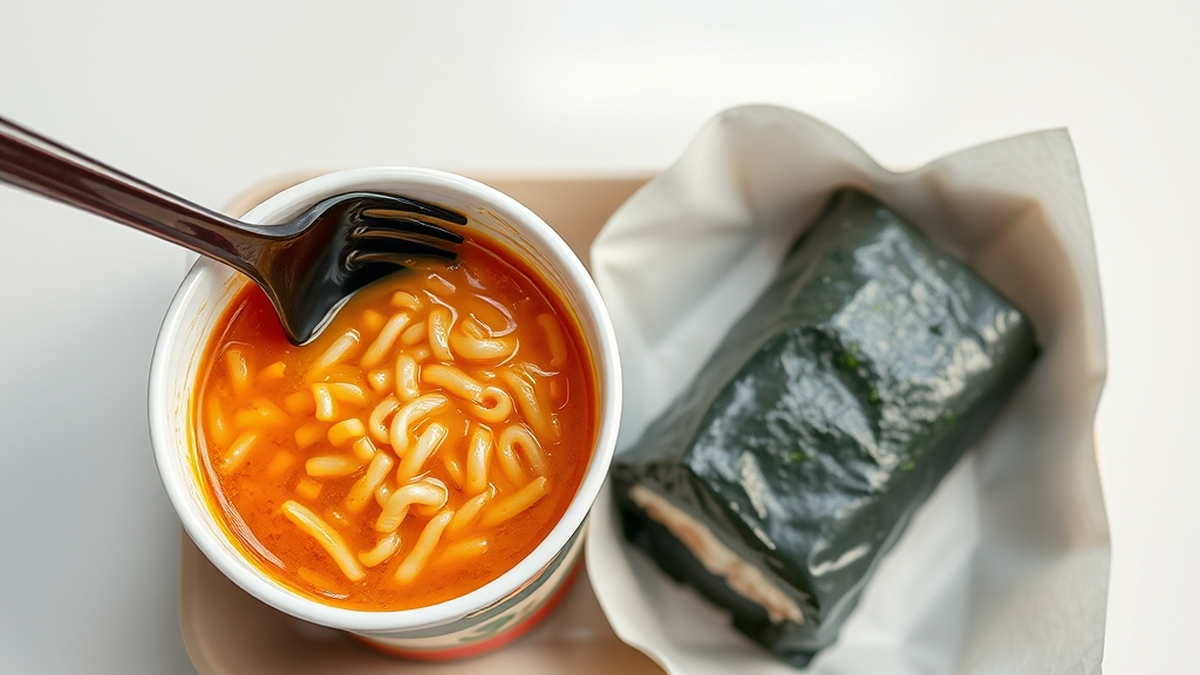
One of the most distinct features of a Korean convenience store is the it-eo-bang (eating area). You will often see a row of stools facing the window or a small table tucked in the corner. This isn’t just a place to wait for a bus; it is a legitimate dining spot.
You will see office workers in suits eating a quick sandwich or students sharing a cup of ramen between tutoring sessions. The social etiquette here is quiet efficiency. People eat, look at their phones, and leave. You aren’t expected to chat with others, but you are expected to keep your area clean.
If you buy a cup of ramen, you will see a hot water dispenser, usually near the door or the food counter. The process is a quiet, shared ritual:
- Peel back the lid halfway.
- Pour the water to the designated line.
- Place the lid back down (often using your chopsticks to keep it pinned shut).
- Wait three minutes.
There is a communal microwave, too. If you buy a pre-packaged dosirak (lunch box), the cashier will usually ask, “De-u-hyeo-deu-ril-kka-yo?” (Shall I heat it up for you?) If you are taking it home, you can say “Jib-e-seo meog-eul-ge-yo” (I will eat it at home). If you are eating in the store, “Ne, de-u-hyeo-ju-se-yo” (Yes, please heat it up) is the way to go.
The Cultural Significance of “1+1”
If you see a sign that says “1+1” or “2+1,” don’t be alarmed—you haven’t accidentally signed up for a promotion you don’t understand. This is a staple of the pyeonuijeom experience.
“1+1” means buy one, get one free. “2+1” means buy two, get one free.
For the international reader, this can be slightly confusing. Do you have to take all three items to the counter? Yes. If you only take two items for a “2+1” deal, the cashier will almost certainly point to the shelf and ask if you want the third item. They aren’t trying to upsell you; they are being helpful by ensuring you get the deal you are entitled to.
This system is so ingrained in daily life that people often check the “2+1” tags before they check the price of the item itself. It’s a small, institutionalized part of shopping that keeps the aisles moving. When you see a local grab three bottles of the same iced tea, you’ll know they’ve mastered the store’s arithmetic.
Navigating Late-Night Utility
In many parts of the world, a shop closing at 10:00 PM is a signal to head home. In Korea, the pyeonuijeom is often the only thing keeping the city running in the early hours of the morning.
Whether it is 2:00 AM on a Tuesday or a holiday afternoon, these stores are open. For travelers, this is a safety net. If you have forgotten a toothbrush, need a power bank, or just need a bottle of water after a long flight, the convenience store is your reliable anchor.
However, respect the space. While it is a “hub,” it is still a workplace. If the store is crowded with people waiting to pay, don’t linger at the drink cooler trying to decide between two types of green tea. Grab your items, head to the counter, and make your choice once you are in the queue.
You’ll notice that regulars move with a distinct sense of purpose. They know where the coffee is, they know where the wet wipes are, and they have their payment ready before they even reach the cashier. If you emulate that rhythm—eyes scanning for the “1+1” tag, payment method in hand, and a quick “gam-sa-ham-ni-da” (thank you) as you leave—you’ll find that the pyeonuijeom quickly stops feeling like a foreign retail outlet and starts feeling like a familiar part of your day in Korea.
It is a small, bright, and busy space. It doesn’t need to be grand to be essential. It is simply there, waiting with a hot cup of coffee and a “1+1” deal, right when you need it.