Munsin: The Korean Guardian Spirit of the Front Door
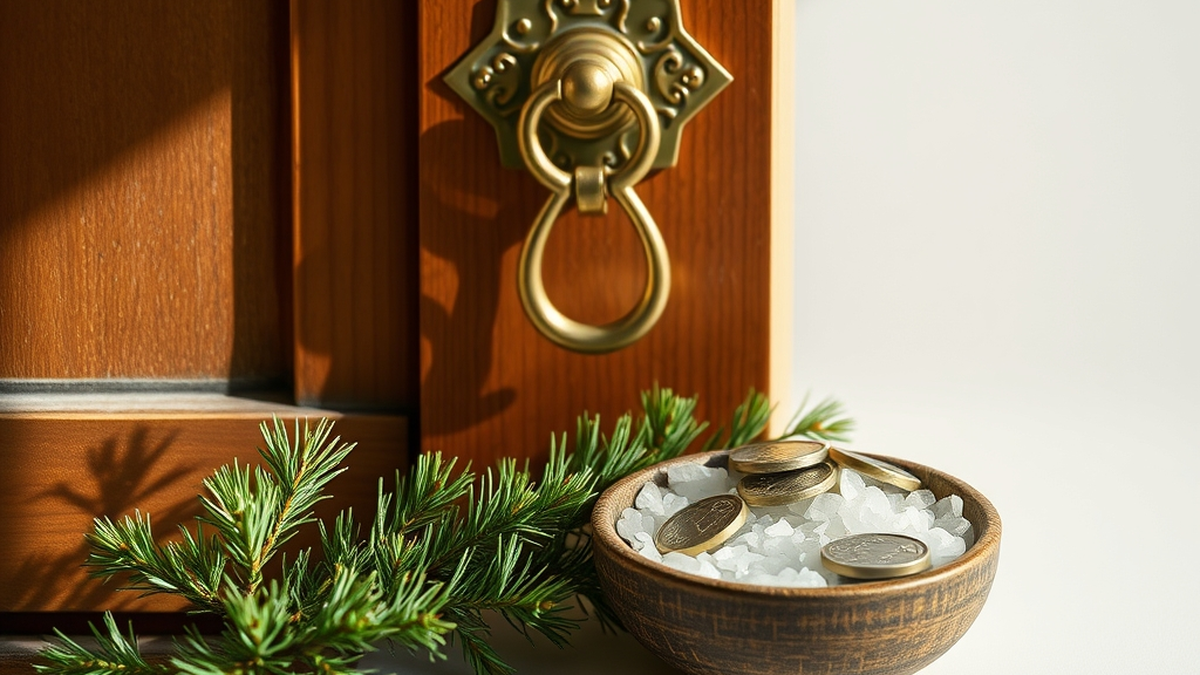
Munsin: The Guardian Spirit of the Front Door
In the quiet corners of a traditional Korean home, every threshold carries a weight that goes beyond wood and stone. To walk through a door is not merely to transition between rooms; it is to cross a boundary guarded by a specific, unseen inhabitant. In the vast pantheon of Korean household deities—the Gasin (household gods)—none stands as vigilant or as significant as Munsin, the Door Guardian.
As the late autumn air turns crisp and the impulse to retreat into the warmth of the indoors takes hold, there is no better time to look at the folklore that turned the humble front door into a site of spiritual protection. Munsin is the sentinel of the entryway, the entity tasked with filtering the flow of energy into the home and ensuring that what remains outside stays there.
The Sentinel at the Threshold
In traditional Korean folk belief, the home is a living entity, a structure inhabited by a collection of spirits, each presiding over a specific domain. The kitchen has its fire goddess, the storeroom its own protector, and the house site itself is overseen by the master deity of the grounds. However, the Munsin occupies a unique position of authority because the door is the primary point of vulnerability.
The front door, or Daemun, is the physical manifestation of the boundary between the private, sacred space of the family and the chaotic, unpredictable nature of the outside world. Munsin is the spirit that resides within this threshold. The role is functional and defensive: to prevent malevolent spirits, misfortune, and bad luck from crossing the perimeter.
Historically, the belief in Munsin was not a matter of superstition practiced in a temple, but a daily acknowledgment of boundaries. When a family entered or exited their home, they were moving through the domain of the Munsin. The spirit was viewed as a stern, unyielding guard who demanded respect for the sanctity of the household. If the door was neglected or treated with disrespect, the protection was thought to falter, leaving the family susceptible to the ill will of wandering spirits.

Architectural Spirituality and Spatial Taboos
To understand the Munsin is to understand how traditional Korean architecture interacts with the concept of spiritual protection. The layout of a traditional house (Hanok) was designed with a clear hierarchy of spaces, and the entrance was the first line of defense in maintaining the internal harmony of the home.
The concept of the Gasin system—the belief in household gods—is deeply tied to the physical structure of the home. Because the Munsin is tied to the door, the door itself was treated with a level of reverence that might seem unusual to a modern observer. For instance, one was traditionally expected to step over the threshold of a door rather than stepping directly on it. Stepping on the threshold was seen as an act of disrespect toward the resident deity, a slight that could invite misfortune.
This architectural spirituality extended to the maintenance of the door. In many regions, specific rituals were performed to honor the Munsin. These were not grand, public ceremonies but quiet, domestic gestures. Sometimes, a small offering of food or a scrap of fabric would be placed near the door frame to appease the spirit. The goal was to ensure that the “gaze” of the Munsin remained fixed on the outside, keeping the household’s internal environment stable.
This belief system created a natural environment of mindfulness. When you are taught from childhood that the door is not just a piece of wood but a guarded boundary, you develop a different relationship with the space you inhabit. You learn to handle the threshold with care, closing it firmly and keeping the area around the entrance clear of clutter, not just for aesthetic reasons, but to honor the spirit of the space.
Symbols and Representations
Unlike the more anthropomorphic figures found in other mythologies, the Munsin is often represented by symbols rather than statues or elaborate paintings. The most common way to honor the Munsin was through the use of Munbae, or door paintings. These were artistic depictions of generals or fierce-looking spirits, often applied to the doors during the lunar new year.
The imagery used in these paintings was intentionally intimidating. These figures were meant to project strength and authority, serving as a visual deterrent to any negative entities trying to gain entry. The colors were often bold, utilizing deep reds and blacks to emphasize the protective nature of the guardian.
Another symbol associated with the Munsin is the use of paper talismans, or Bujeok. These would be placed on or near the doorframe to reinforce the protective barrier. While these practices have faded from common daily life in modern, high-rise urban settings, the underlying cultural instinct remains: the desire to designate the home as a sanctuary.
Even today, in many modern Korean apartments, you might notice small stickers or charms placed near the digital locks or the frames of the front door. While the modern occupant might view these as a cultural tradition or a simple nod to good fortune rather than a literal belief in a door god, the gesture is a direct descendant of the ancient practice of acknowledging the Munsin. It is a way of marking the home as a private, secure space against the noise and stress of the outside city.
Modern Recognition: Seeing the Guardian
For the international reader, the concept of the Munsin can feel abstract until you see it in the context of modern Korean life. When you visit a traditional village or explore a historic site, pay attention to the doorways. You will notice that the thresholds are often elevated, requiring a deliberate step to cross. This is not just a structural feature; it is a physical reminder of the boundary.
If you find yourself in a traditional home or a restaurant built in the Hanok style, observe how people interact with the entrance. You will rarely see someone leaning heavily against the doorframe or pacing back and forth on the threshold. There is a subconscious, rhythmic way of moving through these spaces that respects the boundary.
Recognizing this aspect of Korean culture helps explain why the concept of “home” is so central to the Korean identity. The home is not just a place to sleep; it is a protected, sacred enclosure. The Munsin represents the idea that the internal life of the family is something to be guarded and curated.
You might also notice the emphasis on keeping the Hyeon-gwan—the entryway area of a modern apartment—tidy and well-lit. In the past, a dark, cluttered entrance was thought to be an invitation for bad luck to settle in. Today, this is often interpreted as a principle of home organization, but the root is the same: the desire to maintain a welcoming, clear path for positive energy to enter and a strong barrier against the unwanted.
By understanding the role of the Munsin, you gain a new perspective on the simple act of opening and closing a door. It is a transition that has been layered with centuries of folklore, turning a mundane architectural detail into a meaningful point of connection between the family and their environment. As you move through your own home this autumn, consider the doorway not just as a passage, but as the quiet, watchful edge of your own personal sanctuary.