Surviving the Summer Heat: A Guide to Korean Convenience Stores
Korean Convenience Store Culture: A Summer Survival Guide
If you are walking down a street in Seoul during the height of July, you will notice a specific cadence to the city’s movement. People are not just walking from A to B; they are periodically veering into bright, glass-fronted boxes bathed in fluorescent light. These are the pyeonuijeom (convenience stores).
In the heat of the Korean summer, these stores serve as more than just retail points. They are climate-controlled cooling stations, quick-stop cafeterias, and decentralized social hubs. For a newcomer, understanding the pyeonuijeom is less about memorizing brands and more about learning the unspoken etiquette of how these spaces function as a staple of daily life.
The Geography of the Pyeonuijeom
The term pyeonuijeom is a simple combination of pyeonui (convenience) and jeom (store). While the word is clinical, the reality is atmospheric. Because they are situated on almost every street corner in high-density areas, they act as the neighborhood’s “third place.”
In the summer, the first thing you notice is the sound of the automatic door chiming as you enter—a sharp, melodic chime that acts as the signal that you have escaped the humidity. Inside, the aisles are narrow, packed with everything from basic groceries and toiletries to a complex array of frozen drinks and prepared meals.
You will often see two distinct types of “convenience store people” in the summer: the person doing a “quick swipe” for a water bottle or ice cup, and the person settling in. Because most stores provide indoor or outdoor tables—often shaded by branded umbrellas—the pyeonuijeom becomes an informal lounge. You might see a pair of friends sitting outside at 11:00 PM, sharing a cup of ramen and a cold beverage, turning a pit stop into an impromptu social outing.
The Summer Ritual: Ice Cups and Beverage Hacks
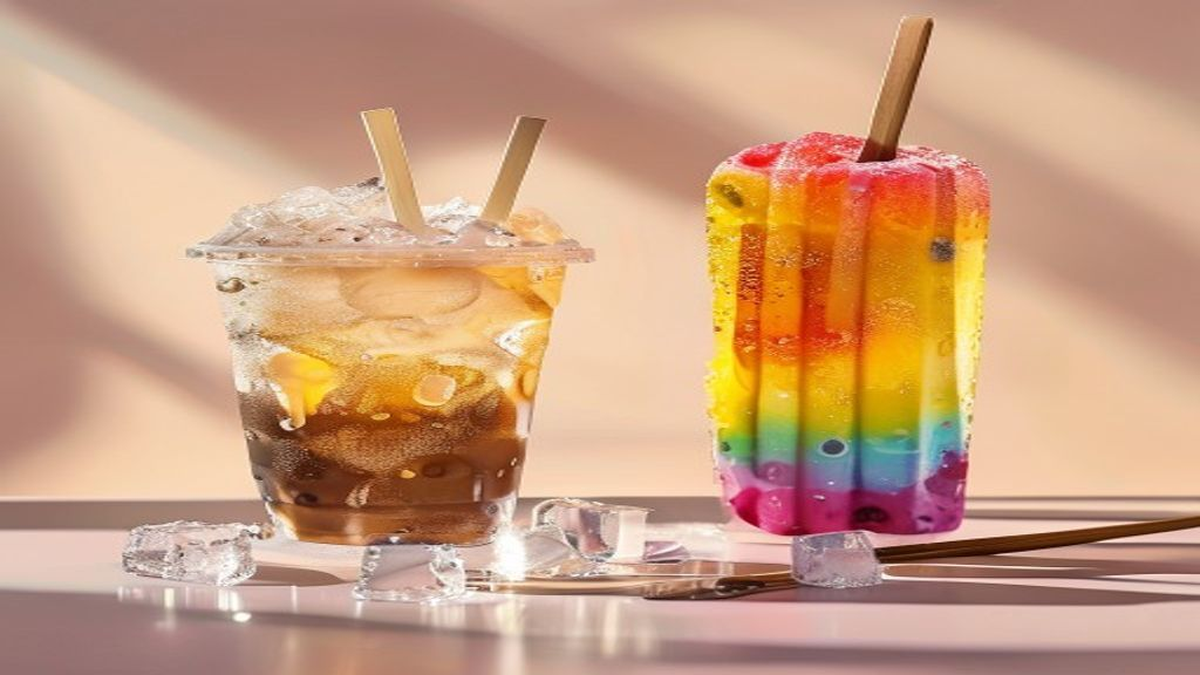
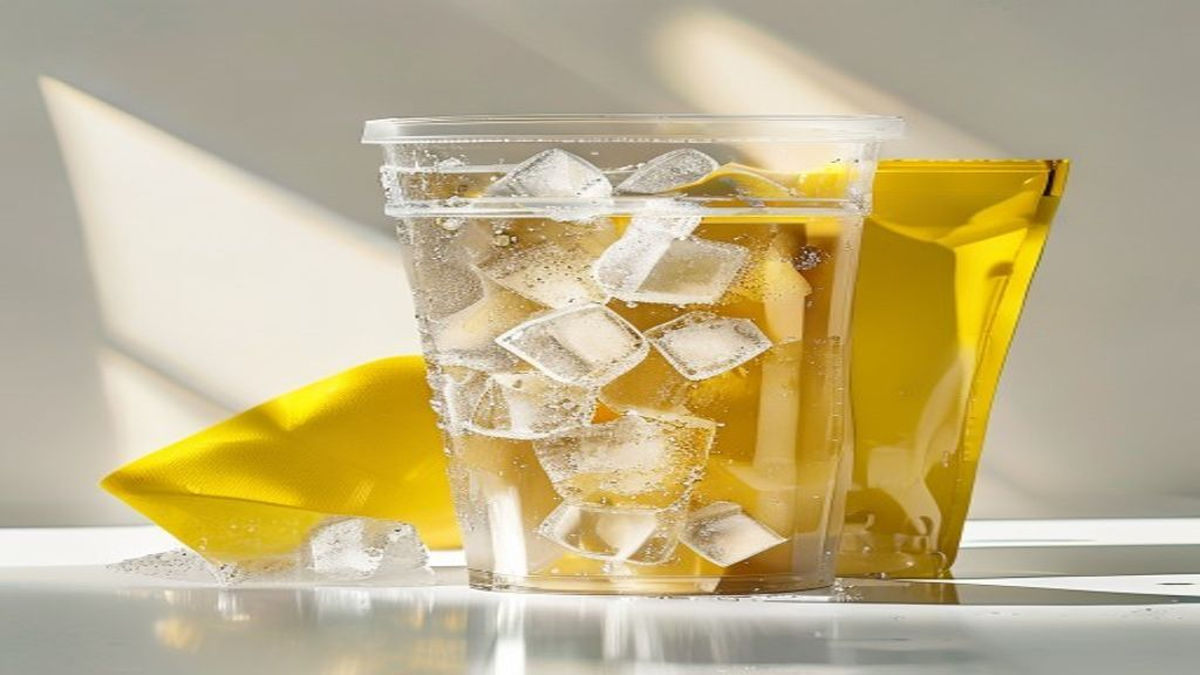
The quintessential summer experience in a Korean convenience store is the “ice cup” system. You will find small plastic cups filled with ice in the freezer section. The routine is simple: you pick a cup of ice, head to the beverage fridge, select a pouch of coffee, tea, or fruit juice, pour the liquid over the ice, and pay at the counter.
It is a low-stakes DIY project that feels deeply ingrained in the local pace of life. You will hear this in conversation often. If a friend suggests a quick break, they might say:
“Jeo gundae-seo pyeon-i-jeom-e ga-seo a-i-seu keo-pi han-jan hal-kka?” (Shall we go to the convenience store over there and have an iced coffee?)
The response is usually a casual, “Joa,” (Good) or “Eung, gap-si-da” (Yeah, let’s go).
This is not a high-concept culinary experience, but it is a vital part of staying hydrated and cool. Learning to navigate the ice cup freezer—and the various flavor pouches tucked into the refrigerated shelves—is the fastest way to feel like you know exactly what you are doing. If you are ever unsure, just watch the person in front of you. You will notice that they never ask for a cup; they simply reach into the freezer, grab the ice, and know exactly where the drink pouches are located.
The Unspoken Social Contract of the Tables
One of the most distinctive aspects of pyeonuijeom culture is the seating area. Unlike convenience stores in many other parts of the world, which are often strictly grab-and-go, the Korean variety frequently invites you to sit.
During summer evenings, these outdoor plastic tables are highly coveted. It is common to see people sitting there with a variety of snacks—a bowl of instant noodles prepared with the store’s hot water dispenser, a triangle kimbap (seaweed rice roll), and a cold drink.
However, there is a subtle social contract here. These are public-facing semi-private spaces. If you sit at a table to eat, you are generally expected to clean up after yourself. The trash bins are usually clearly marked for sorting—recycling plastic, paper, and food waste. Using these correctly is a small but important part of being a functional member of the neighborhood.
If you find yourself sitting next to someone else at a shared table, the atmosphere is usually one of quiet indifference. People are there to relax, scroll through their phones, or talk to their companions. It is perfectly acceptable to be there alone or with a group. If someone is already occupying a table, it is best to find another one, even if there is empty space, to respect the small, fleeting sense of privacy that a table provides.
Navigating the Language of Convenience
If you want to blend in, pay attention to the language used at the counter. Interactions are typically brief and functional. The clerk will usually ask if you need a bag—“Bong-tu pilyo-ha-se-yo?” (Do you need a bag?)—or if you have a loyalty card or app to scan for points.
You might hear phrases like:
- “Il-hoe-yong-eun pilyo-eop-seo-yo.” (I don’t need a disposable [bag/spoon].)
- “Yeo-gi-seo meok-go gal-ge-yo.” (I’ll eat this here.)
Using “Yeo-gi-seo meok-go gal-ge-yo” is particularly useful if you have purchased instant noodles or a snack that requires the store’s facilities. It signals to the clerk that you will be occupying a seat for a few minutes.
You may also notice the distinct layout of the “counter talk.” Many interactions happen without much more than a nod. When you hand over your card or cash, the clerk might say “Gam-sa-ham-ni-da” (Thank you) or “Chung-jeon-hae-deu-ril-kka-yo?” (Would you like me to charge/top up [your transportation card]?). If you use a transit card to pay for your items, the process is seamless and fast.
A Seasonal Constant
Ultimately, the pyeonuijeom is a space of reliability. In the sweltering heat of the Korean summer, these stores provide a predictable, air-conditioned reprieve that feels consistent regardless of the neighborhood.
Whether you are seeking a specific iced tea, a quick snack before a late-night walk, or just five minutes of cool air, the pyeonuijeom is always there, marked by that familiar chime. It does not demand much from you, other than a bit of courtesy and a basic understanding of how to clear your own table.
As you become more familiar with the rhythm of these spaces, you will likely find that they become a natural part of your own daily route. You will find yourself knowing exactly which fridge holds your favorite drink and exactly where the napkins are kept. It is a small, quiet way to settle into the pace of life here, one ice cup at a time.