Korean Banchan Culture: Grandma's Love
Unveiling the Heart of Korean Home Cooking: The Warmth of Korean Banchan Culture
Annyeonghaseyo, K-VIBE fam! Have you ever sat down for a Korean meal and marvelled at the dazzling array of small dishes accompanying your rice? That, my friends, is the beautiful and essential Korean Banchan Culture (반찬 문화), and it’s so much more than just ‘side dishes.’ It’s a centuries-old tradition, a testament to resilience, a canvas for creativity, and above all, a heartfelt expression of love and care that truly defines Korean hospitality.
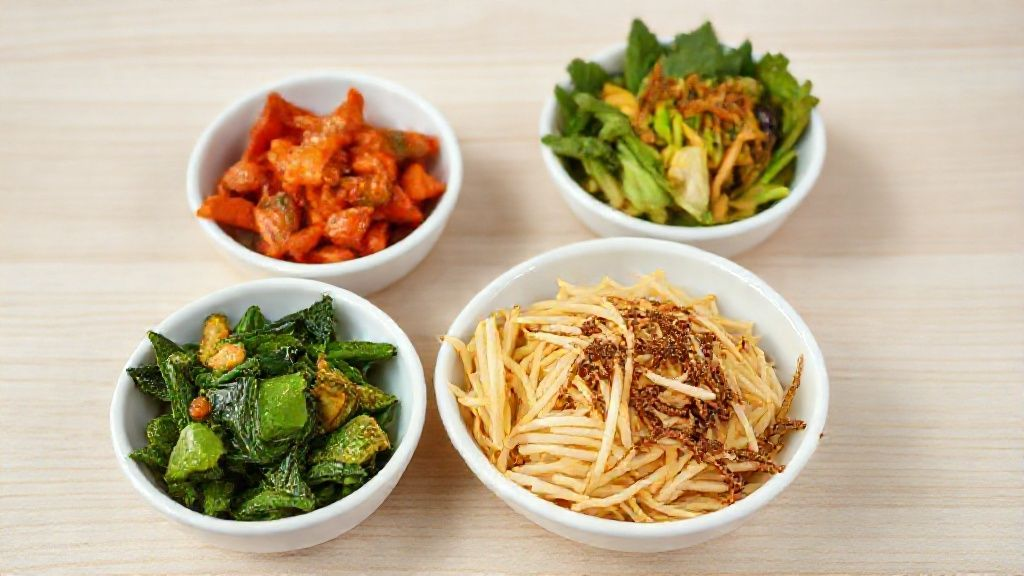
Imagine a Korean dining table, a bab-sang (밥상), laden not just with a main course, but with a vibrant spectrum of colors, textures, and aromas. Each little dish, a banchan (반찬), tells a story, carrying with it the warmth of a Korean home and the very essence of hansik (한식), traditional Korean food. Today, we’re diving deep into the history, meaning, and heartwarming charm of this truly unique culinary cornerstone. Get ready to feel the jeong (정)!
The Unsung Heroes of Every Korean Meal: What Exactly is Banchan?
When you order Korean food, whether it’s a sizzling bulgogi (불고기) or a comforting kimchi jjigae (김치찌개), you’re rarely served just that one dish. Instead, your table quickly fills with an assortment of small plates – these are your banchan. They are not appetizers or mere accompaniments; they are integral components of a balanced Korean meal, designed to complement the main dish and, most importantly, the staple: bap (밥), or cooked rice. This holistic approach to dining is at the very core of Korean Banchan Culture.
More Than Just Side Dishes: A Symphony on Your Table
At its heart, banchan (반찬) refers to all the side dishes served with a bowl of rice (bap). While a meal might also include a soup (guk, 국) or a stew (jjigae, 찌개), it’s the banchan that truly provides variety, nutrition, and flavor balance. Each banchan is typically small in portion but collectively, they offer a diverse range of tastes – savory, spicy, sour, sweet, and umami – ensuring every bite is exciting. From crisp fermented vegetables to tender braised meats, sweet and salty stir-fries to delicate steamed greens, the possibilities within Korean Banchan Culture are endless. They create a culinary dance, allowing diners to mix and match flavors, creating a personalized dining experience with every spoon of rice.
Kimchi: The Indispensable Icon
You cannot talk about banchan without mentioning kimchi (김치). This fermented cabbage dish isn’t just a banchan; it’s the banchan. It’s a cultural icon, a source of national pride, and an absolute must-have on almost every Korean table. There are hundreds of varieties of kimchi, from the fiery red baechu kimchi (배추김치) made with napa cabbage, to the refreshing white baek kimchi (백김치), and the crunchy kkakdugi (깍두기), or radish kimchi. The depth of flavor, the tangy spice, and the satisfying crunch of kimchi are unparalleled, and its presence is the most immediate indicator of authentic Korean Banchan Culture. It’s believed to aid digestion and boost immunity, making it not just delicious, but also incredibly healthy.
A Journey Through Time: The Rich History of Korean Banchan Culture
The story of banchan isn’t just about food; it’s about survival, adaptation, and the ingenuity of Korean people throughout history. The current form of Korean Banchan Culture has evolved over centuries, shaped by geography, philosophy, and practical necessity.
From Royal Tables to Peasant Homes: Ancient Roots
The origins of banchan can be traced back to ancient times, influenced heavily by agricultural practices and, surprisingly, Buddhism. With the rise of Buddhism in Korea, vegetarianism became prevalent, encouraging the development of diverse vegetable-based dishes. As meat consumption was restricted, cooks became masters at preparing vegetables in countless ways – pickling, fermenting, seasoning, and blanching them to bring out different flavors and extend their shelf life.
The Korean dining table, or bab-sang (밥상), evolved to feature a central bowl of rice, surrounded by various small dishes. Royal court cuisine, in particular, boasted an extravagant array of banchan, showcasing the kingdom’s prosperity and culinary artistry. Even in common households, the focus was on making the most of seasonal ingredients and preserving them for leaner times, leading to a rich tapestry of Korean Banchan Culture.
Adapting to Nature: Seasons, Sustainability, and Survival
Korea’s distinct four seasons played a crucial role in shaping banchan. Long, harsh winters meant that fresh produce was scarce for months. This necessity spurred the development of elaborate preservation techniques. Fermentation, pickling, salting, and drying became essential skills, leading to iconic banchan like kimchi, which could be stored for extended periods. Kimjang (김장), the communal tradition of making large quantities of kimchi for winter, is a UNESCO-recognized cultural heritage and a perfect example of this adaptive aspect of Korean Banchan Culture.
Summers, on the other hand, brought an abundance of fresh greens and vegetables, which were lightly seasoned to highlight their natural flavors. This seasonal rhythm meant that the bab-sang was ever-changing, always offering something fresh and appropriate to the time of year, embodying a sustainable approach to food that is remarkably relevant today.
The Family’s Culinary Legacy: Passing Down Flavors
For generations, the art of making banchan has been a skill passed down from mother to daughter, grandmother to granddaughter. Recipes weren’t always written down; they were learned by observation, by feel, and by taste. This oral tradition ensured that family recipes, often guarded secrets, endured, contributing to the unique character of Korean Banchan Culture in every household. The matriarchs of the family were (and still are) the keepers of this culinary flame, their knowledge and practiced hands shaping the flavors that define a family’s identity.
The Warmth of Home: Jeong (정) and Son-mat (손맛) in Every Dish
If you want to truly understand Korean Banchan Culture, you need to understand two deeply ingrained Korean concepts: jeong (정) and son-mat (손맛). These aren’t just words; they are feelings, traditions, and the very essence of Korean hospitality and familial love.
The Essence of Jeong: Love, Care, and Connection
Jeong (정) is a complex Korean word that doesn’t have a direct English translation. It encompasses feelings of affection, attachment, deep care, empathy, and a strong sense of community and connection. It’s the warmth you feel from genuine human connection. When a Korean mother or grandmother meticulously prepares banchan for her family, she’s not just cooking; she’s pouring her jeong into every single dish.
Imagine visiting a Korean friend’s home. Before you even sit down, their mother (omma, 엄마) or grandmother (halmeoni, 할머니) might be bustling in the kitchen, preparing a fresh batch of banchan. They might insist you eat more, refilling your plates even when you say you’re full. This act of feeding and nurturing through delicious food, especially banchan, is a profound expression of jeong. It’s a non-verbal way of saying, “I care about you, and I want you to be well-fed and happy.” The abundance and variety of banchan on a Korean bab-sang symbolize this overflowing love and generosity that is so central to Korean Banchan Culture.
Grandma’s Magic Touch: The Legend of Son-mat
And then there’s son-mat (손맛). Literally translating to “hand taste,” son-mat refers to the unique, indescribable deliciousness that comes from a specific person’s cooking, especially a mother’s or grandmother’s. It’s that secret ingredient that can’t be replicated, even if you follow a recipe to the letter. It’s the subtle difference in the amount of soy sauce (ganjang, 간장), the exact pressure in kneading dough, or the intuition to add just a pinch more garlic (maneul, 마늘) or chili paste (gochujang, 고추장).
Every Korean will tell you that their halmeoni’s (할머니) kimchi jjigae (김치찌개) or omma’s (엄마) japchae (잡채) is the best in the world, and it’s because of their son-mat. This magical touch transforms simple ingredients into unforgettable flavors, imbued with years of experience and, of course, jeong. This concept makes Korean Banchan Culture intensely personal and nostalgic. It’s why a taste of homemade banchan can instantly transport you back to childhood memories, to the comforting embrace of family.
Variety is the Spice of Life: No Two Homes are Alike
One of the most charming aspects of Korean Banchan Culture is its incredible diversity, even within the same dish. You might try kimchi at one friend’s house and find it spicier and more fermented, while at another’s, it’s milder and fresher. The same goes for doenjang jjigae (된장찌개), a soybean paste stew, or bibimbap (비빔밥), a mixed rice dish. While the core ingredients remain, the subtle nuances in seasoning, preparation, and presentation vary dramatically from one household to another.
This regional and familial variation is what makes exploring banchan so exciting. It reflects the unique preferences and culinary legacies of each family, making every meal a discovery. You could eat banchan every day for a year and still discover new flavors and combinations, all thanks to the rich tapestry of Korean Banchan Culture.
A Kaleidoscope of Flavors: Exploring the Diverse World of Banchan
The sheer variety of banchan is breathtaking. It’s a testament to Korean culinary innovation, transforming humble ingredients into dishes that tantalize the palate. Let’s explore some of the main categories and ingredients that make up this incredible Korean Banchan Culture.
From Namul to Jorim: A Glimpse into Banchan Categories
- Namul (나물): These are seasoned vegetable dishes, often blanched, sautéed, or fresh. They are the epitome of healthy eating and come in countless forms. Think sigeumchi namul (시금치나물), seasoned spinach, or kongnamul (콩나물), soybean sprouts, tossed with sesame oil, garlic, and soy sauce. Namul showcase the natural flavors of vegetables beautifully.
- Jorim (조림): These are braised dishes, cooked in a savory sauce until the flavors are deeply infused. Popular examples include dubujorim (두부조림), braised tofu, and eomukbokkeum (어묵볶음), stir-fried fish cakes, often made with soy sauce (ganjang, 간장), sugar, and garlic. They offer a comforting, hearty counterpoint to lighter banchan.
- Bokkeum (볶음): Stir-fried dishes that are quick to prepare and packed with flavor. Myeolchi bokkeum (멸치볶음), stir-fried dried anchovies, is a classic, often sweetened with a bit of corn syrup and sesame seeds, providing a delightful crunch. Ojingeo bokkeum (오징어볶음), spicy stir-fried squid, is another popular choice, bringing a kick of gochujang (고추장) to the table.
- Jeon (전): Savory Korean pancakes, often made by lightly coating vegetables, meat, or seafood in flour and egg, then pan-frying them. Pajeon (파전), green onion pancake, and hobakjeon (호박전), zucchini pancake, are beloved for their crispy edges and soft interiors. They add a delightful textural element to the Korean Banchan Culture.
- Japchae (잡채): While often served as a main dish in its own right or as a special occasion food, japchae (잡채), stir-fried glass noodles with vegetables and sometimes meat, is also a very popular and substantial banchan. Its colorful presentation and savory, slightly sweet flavor make it a crowd-pleaser.
These dishes frequently utilize key Korean condiments like fermented soybean paste (doenjang, 된장), chili flakes (gochugaru, 고춧가루), sesame oil, and garlic (maneul, 마늘) to create their distinctive flavors. The thoughtful combination of these ingredients is fundamental to Korean Banchan Culture.
Seasonal Delights and Regional Gems
Just like in history, modern Korean Banchan Culture celebrates seasonality. Spring brings fresh greens like bomnamul (봄나물), such as wild garlic and aster, lightly seasoned. Summer offers refreshing cucumber and eggplant dishes. Fall features hearty root vegetables, while winter is dominated by various kimchi and preserved dishes.
Regions also boast their unique banchan. The coastal areas might offer more seafood-based banchan, while mountainous regions might feature wild greens and root vegetables specific to their locality. For example, gat kimchi (갓김치), made with mustard greens, is a specialty of Jeolla-do (전라도), known for its exceptionally rich cuisine. This regional diversity adds another fascinating layer to the complexity of Korean Banchan Culture.
Banchan Beyond the Home: Restaurants and Banchan Shops
While homemade banchan holds a special place, you’ll experience Korean Banchan Culture vividly in restaurants too. Most Korean restaurants offer a complimentary selection of banchan that are often refilled upon request, showcasing the generosity inherent in Korean dining. The quality and variety of banchan served can often be a good indicator of the restaurant’s overall quality.
Moreover, in modern Korea, specialized banchan shops have become incredibly popular. These shops, ranging from small, family-run establishments to larger, more modern stores, offer a vast selection of freshly made banchan for busy individuals and families. It’s a convenient way to bring the warmth and variety of Korean Banchan Culture to any table, even if you don’t have time to prepare everything from scratch. These shops are a lifeline for many, ensuring that the tradition of a diverse and balanced bab-sang continues in contemporary life.
Conclusion: More Than Food, It’s a Feeling
Korean Banchan Culture is more than just a culinary tradition; it’s a living testament to Korean history, resourcefulness, and deep-seated values. It’s in the vibrant colors of a fresh namul, the fiery kick of kimchi, the comforting warmth of a braised jorim, and the magical son-mat of a halmeoni’s hands.
When you sit down to a Korean meal, remember that each small dish represents a chapter of history, a season’s bounty, and most importantly, an expression of jeong – that indescribable Korean warmth, care, and connection that makes every meal a shared experience of love. It’s the feeling of home, no matter where you are.
So, the next time you savor a Korean meal, take a moment to appreciate the incredible journey of each banchan. Which banchan is your favorite? Have you tried making any at home, or experienced the unique son-mat of a Korean omma or halmeoni? Share your thoughts and experiences in the comments below! Let’s continue to celebrate the beautiful and heartwarming Korean Banchan Culture together.
Until next time, keep exploring and keep vibing with K-Culture!