Jeong: The Warm, Slow Bond That Transcends Affection
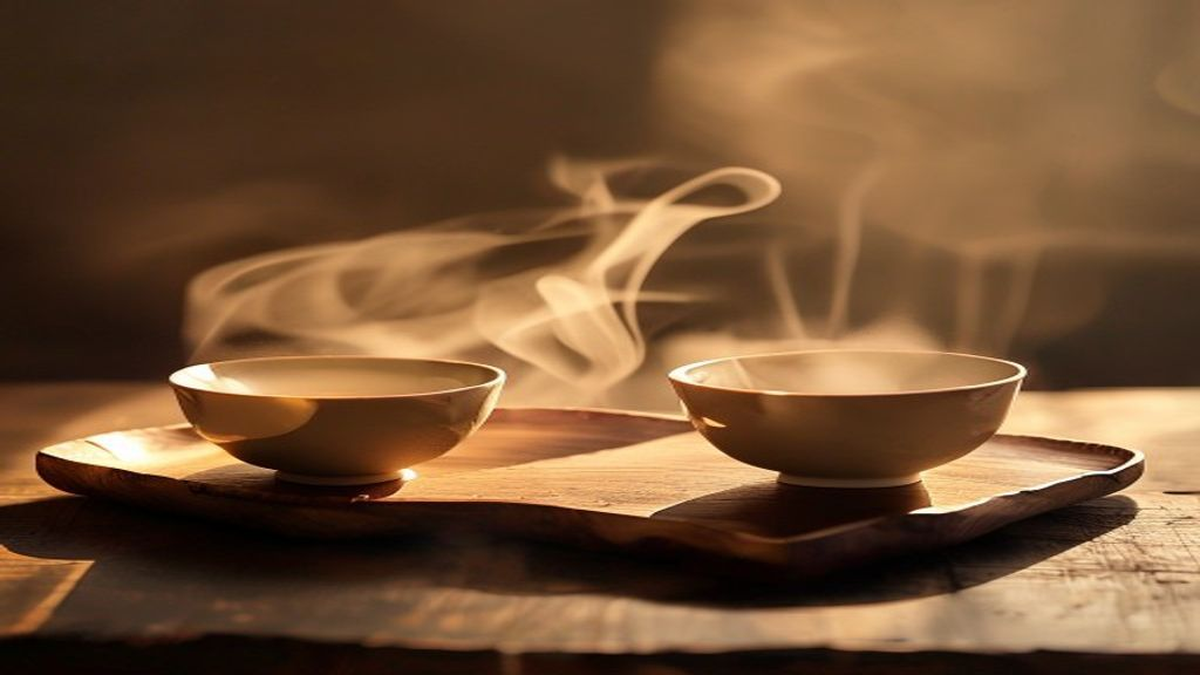
Jeong (정) is often described as the “emotional glue” of Korea, but to those who have felt its pull, it is far more than a simple bond or a fleeting moment of affection. If you have spent any significant time in South Korea, you have likely encountered it without even knowing its name. It is in the extra scoop of rice a restaurant owner gives you for free, the silent understanding between old rivals, and the fierce loyalty that transcends logic. While Western cultures often prioritize individual independence and romantic “love,” Korean culture is built upon the sturdy, weathered foundation of Jeong.
To understand Korea is to understand Jeong. It is a concept that is warmer than mere kindness, slower than modern networking, and notoriously difficult to translate into a single English word. In this deep dive, we explore why this invisible thread is the heartbeat of the Peninsula and how it continues to shape a hyper-modern society in a digital age.
1. Defining the Indefinable: The Anatomy of Jeong
When most international visitors first hear about Jeong (정—pronounced “jung”), they mistake it for “love.” However, Sarang (사랑—love) is often viewed as a romantic, active, and sometimes volatile emotion. Jeong, by contrast, is passive, persistent, and cumulative. It doesn’t strike like lightning; it settles like dew.
The Embers, Not the Fire
If love is a bright flame that can eventually burn out, Jeong is the bed of glowing embers that remains long after the fire has dimmed. It is a sentiment born of shared time and space. You do not “fall in” Jeong at first sight. Instead, it is something that “builds up” or “sticks” to you over years of interaction. This is why Koreans often say that Jeong is “heavier” than love. It carries the weight of history, shared meals, and even shared hardships.
The Paradox of Miun-jeong (Hateful Affection)
One of the most fascinating aspects of this concept is Miun-jeong (미운 정—hateful affection). In a Western context, if you dislike someone, you generally avoid them. In Korea, the philosophy of Miun-jeong suggests that even if you bicker, argue, or genuinely dislike someone, the mere act of being in their life for a long time creates a bond.
Consider a long-married couple who argues daily or two coworkers who have been rivals for a decade. Even if they claim to be tired of one another, there is a deep-seated attachment there. They know each other’s habits, flaws, and rhythms. When one is absent, the other feels a void. This is the “hateful affection” that acknowledges the human connection is more important than the temporary friction of personality.
Goun-jeong: The Tender Side
Conversely, Goun-jeong (고운 정—tender or “pretty” affection) is the sweetness we more easily recognize. It is the attachment formed through kindness and mutual care. While Goun-jeong is what we strive for, the Korean psyche recognizes that a “complete” relationship often contains both Goun-jeong and Miun-jeong. This duality is what makes a bond unbreakable; it has survived both the sunshine and the storm.
2. The Social Fabric: Jeong as a Communal Compass
In many individualistic societies, the “self” is the primary unit of measurement. In Korea, the primary unit is often the group, expressed through the concept of Uri (우리—we/our). Jeong is the fuel that keeps this “we-centric” engine running, fostering a sense of collective responsibility and generosity that can be startling to outsiders.
The Power of Uri (우리)
In Korea, you rarely hear someone refer to “my” mother or “my” house. Instead, they say Uri eomma (우리 엄마—our mother) or Uri jib (우리 집—our house), even if they are an only child. This linguistic habit reflects a deep-rooted sense of communal ownership. Jeong expands the boundaries of the family to include the neighborhood, the workplace, and the nation. When you have Jeong for someone, their problems become your problems, and their successes become your pride.
In-jeong: Humanity in Daily Transactions
You will often see Jeong manifest as In-jeong (인정—humanity or compassion). This is the social grace that allows for flexibility in a world of rigid rules. It’s the street food vendor who gives you an extra Mandu (만두—dumpling) because you looked particularly hungry, or a landlord who doesn’t raise the rent because they have developed a bond with the tenant over several years.
To a Western observer, this might look like “bad business” or “favoritism.” To a Korean, it is simply being human. It is the acknowledgement that people are more than their economic utility. Without In-jeong, society becomes cold and mechanical; with it, the “social temperature” stays warm.
The Table as a Sacred Space
Nowhere is Jeong more visible than at a dinner table. Korean dining is rarely an individual affair. The abundance of Banchan (반찬—side dishes) shared from common plates is a physical manifestation of this bond. Feeding someone is perhaps the highest expression of Jeong. When a Korean grandmother insists you eat a third bowl of rice, she isn’t just concerned about your nutrition; she is “pouring” her Jeong into you. The act of sharing food is a ritual that dissolves the boundaries between individuals.
3. The “Slow” Bond: Jeong vs. Global Individualism
In our modern, “Pali-pali” (빨리빨리—hurry, hurry) culture, everything is optimized for speed. We network on LinkedIn, swipe on dating apps, and move on from friendships when they no longer “serve our growth.” Jeong is the antithesis of this transactional lifestyle. It is a slow-growth emotion that requires patience.
Connectivity vs. Genuine Connection
The world has never been more “connected,” yet loneliness is at an all-time high. This is because digital connectivity is often thin and instantaneous. Jeong, however, is thick and historical. You cannot “hack” your way into Jeong. It requires what Koreans call Sigan-i-yak (시간이 약—time is the medicine/answer). For an international reader, the comparison might be the difference between a “friend” you met at a networking event and a “neighbor” you’ve lived next to for twenty years. You might have more in common with the friend, but you have more Jeong with the neighbor.
The Role of Uiri (의리)
Closely linked to Jeong is Uiri (의리—loyalty or a sense of duty). While Jeong is the feeling, Uiri is the action that follows it. If a friend is in trouble, Uiri is what compels you to help them, even if it is inconvenient or illogical. In the West, we often prioritize “justice” or “logic.” In Korea, the “justice of the heart” (based on Jeong and Uiri) often takes precedence. This creates a safety net where people look out for one another not because the law requires it, but because their shared history demands it.
Why “Quick” Doesn’t Work
You can’t buy Jeong, and you certainly can’t rush it. This is often a point of frustration for expats or international businesspeople who want to build relationships quickly. In Korea, the first few meetings are rarely about the “deal”; they are about sensing the other person’s Heung (흥—joyful energy) and building a baseline of Jeong. If you try to skip the slow process of bonding—shared meals, late-night drinks, and casual conversation—you will find that your relationships remain superficial and fragile.
4. Navigating Jeong: A Guide for the International Soul
For those moving to Korea or engaging deeply with its culture, Jeong can be both beautiful and overwhelming. It is a double-edged sword that offers incredible warmth but also demands a degree of conformity and emotional labor.
The Role of Nunchi (눈치)
To navigate Jeong, one must master Nunchi (눈치—the art of sensing others’ feelings). Nunchi is the “radar” you use to determine how much Jeong is present in a room. It helps you understand when to offer help, when to accept a gift, and when to give someone space. Without Nunchi, the “stickiness” of Jeong can feel intrusive. With it, you can move through Korean society with grace, building bonds that are both deep and respectful.
Is There a Downside?
It is important to be honest: Jeong isn’t always easy. Because it is a communal bond, it can sometimes feel like “pressure.” If everyone in a group has Jeong for each other, it becomes harder to say “no” or to set firm boundaries. The expectation of mutual sacrifice can be taxing for those raised in highly individualistic cultures. However, most who experience it find that the trade-off—knowing you are never truly alone—is well worth the loss of some personal autonomy.
How to Build Jeong as a Visitor
If you want to experience this unique Korean bond, start by being “present.”
- Frequent the same places: Go to the same small Sikdang (식당—restaurant) or coffee shop. Over time, the owner will recognize you. That recognition is the first seed of Jeong.
- Accept the “extra”: If someone gives you a small gift or extra food, accept it with gratitude. This is an invitation to connect.
- Show Uiri: Be there for people when things are difficult, not just when it’s fun. The Jeong formed during hard times is the strongest kind.
Conclusion: The Heart of the “Hermit Kingdom”
Jeong is the reason why, despite its rapid modernization and skyscraper-filled cities, Korea remains a place of profound human connection. It is a reminder that we are not isolated islands, but parts of a vast, interconnected sea. It is a bond that is warmer than a handshake, slower than a text message, and stronger than a contract.
As the world becomes more digital and fragmented, perhaps we all need a little more Jeong in our lives. We need the “hateful affection” that keeps us from giving up on each other, the “humanity” that allows for extra dumplings, and the “slow time” that builds unbreakable bonds.
What is your experience with “Jeong”? Have you ever felt a bond with someone that defied logic or translation? Share your stories in the comments below—let’s build some Jeong together in this community!
Sources and Further Reading
- The Korea Foundation (KF): A primary resource for understanding Korean aesthetics and social philosophy, specifically their publications on “Koreanness.”
- National Institute of Korean Language (국립국어원): For the etymological roots and linguistic nuances of terms like Jeong, In-jeong, and Uiri.
- “The Korean Mind: Understanding Contemporary Korean Culture” by Boye Lafayette De Mente: A comprehensive look at the psychological drivers of Korean society.
- UNESCO Intangible Cultural Heritage: While Jeong is a concept rather than a single practice, UNESCO’s documentation on Korean communal traditions (like Kimjang) provides excellent context for how Jeong is practiced.
- Yonsei University Press: Academic journals and books regarding the “Social Psychology of the Korean People.”