Dano: Honoring Traditional Customs at the Peak of Summer
Dano: Celebrating the Height of Spring and Summer
In the rhythm of the Korean lunar calendar, there is a point in the fifth month when the intense heat of summer begins to assert itself, yet the lush greenery of spring has not fully faded. This is Dano (단오), a day that marks the peak of seasonal transition. While many international observers of Korea are familiar with the grand festivities of the lunar new year or the mid-autumn harvest, Dano exists in a quieter, more functional space. It is a moment rooted in the realities of agrarian life, designed to usher in a period of intense agricultural labor and ward off the discomforts of the humid summer ahead.
For those living in or visiting Korea, Dano is not marked by massive public holidays or frantic shopping sprees. Instead, it is recognized through subtle shifts in communal spaces, specific seasonal snacks, and the continued observance of ancient customs that seek to bring harmony to the changing climate.
The Significance of the Solar Cycle in Rural Life
To understand Dano, one must look at it through the lens of a traditional rural calendar. Historically, the fifth lunar month was a critical junction. The winter stores were long depleted, and the summer harvest was still months away. This period, often called “the barley hump,” was a time of physical endurance. Dano was not merely a festival of joy; it was a festival of protection.
In traditional Korean thought, the fifth day of the fifth lunar month was considered to have the strongest “yang” energy—the masculine, expansive force of the sun. Because this energy was believed to be at its peak, the day was viewed as both auspicious and potentially volatile. The rituals associated with Dano were practical measures intended to bolster health and prepare the body for the sweltering heat and the potential for illness that came with it. Even today, as Korea has moved toward a highly urbanized and technological society, the echoes of this cycle remain embedded in the way people structure their seasonal expectations.
Seven Situations Where You Will Encounter Dano
You may not see fireworks for Dano, but you will find it in the quiet details of daily life. If you are paying attention, you will recognize the traces of this holiday in these seven settings:
1. The Neighborhood Market and the Scent of Iris Walk through a traditional market (sijang) in early summer, and you might notice vendors selling bundles of long, green leaves. These are irises (changpo). In the past, the custom was to boil these leaves in large pots of water. The resulting wash was used to shampoo hair, a practice believed to add luster and prevent hair loss, while the scent was thought to repel harmful spirits and insects. Today, you are unlikely to see someone boiling leaves in a public fountain, but you will often see elderly neighbors carrying bundles of iris home or tucking them near their doorways. It is a lingering habit of seasonal maintenance.
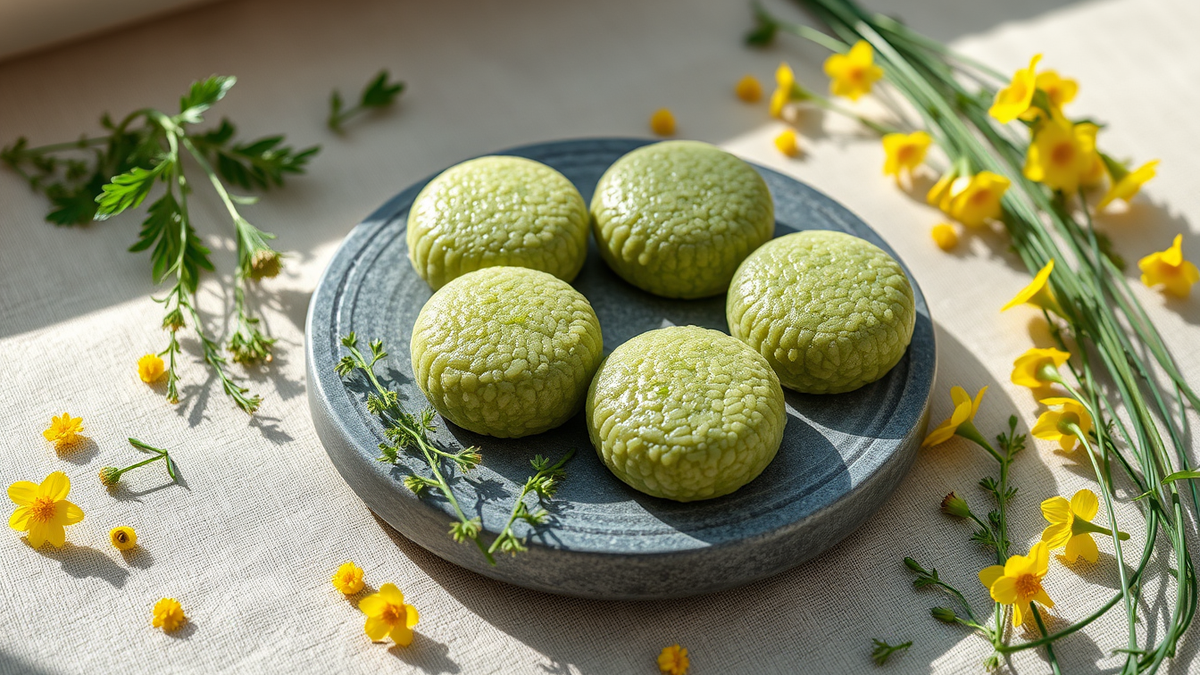
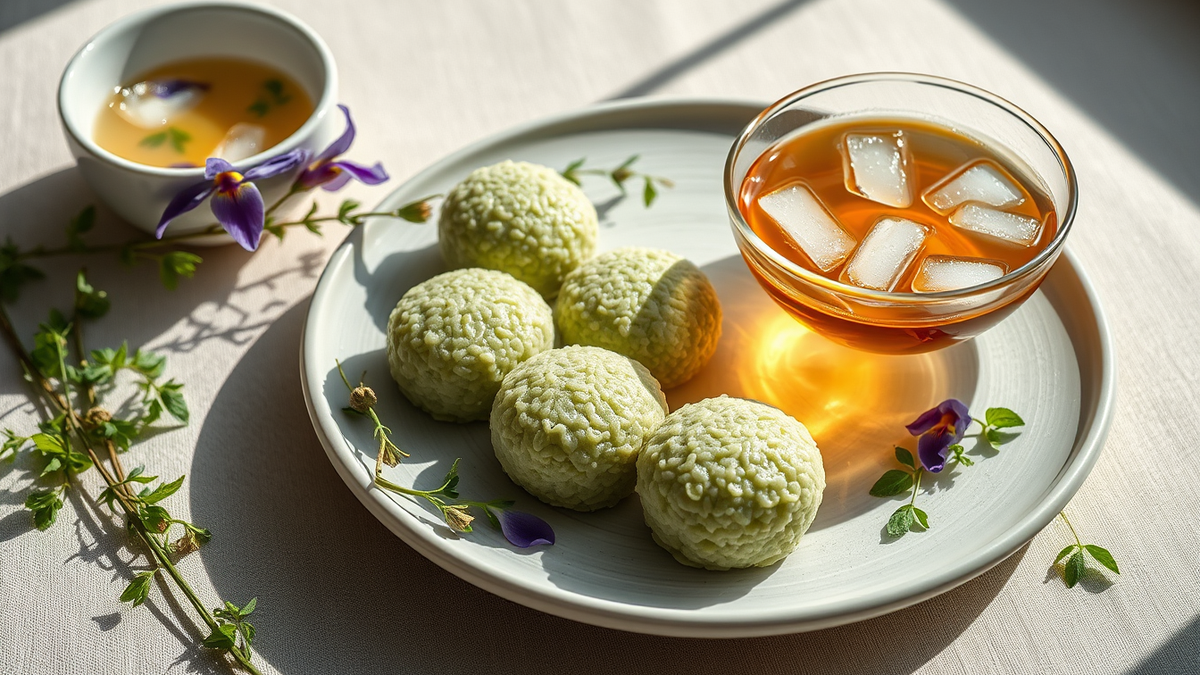
2. The Bakery and the Seasonal Rice Cake Walk into a local rice cake shop (tteok-jip) around Dano, and you will notice a specific item: surichwi-tteok. These are circular rice cakes stamped with the image of a wagon wheel, made using the surichwi herb. The herb gives the rice cake a distinct earthy fragrance and a chewy, resilient texture. When a colleague or neighbor offers you one, they aren’t necessarily making a grand gesture about tradition; they are simply acknowledging that it is the time of year to eat this specific seasonal food. It is a quiet social signal that the calendar has turned.
3. The Schoolyard and Traditional Games In many primary schools or cultural centers, the lead-up to Dano is a time when traditional games are briefly brought back into the spotlight. You might see children practicing geune-ttwigi, or swinging on a high rope swing. Historically, women would use these swings to enjoy the breeze and endure the summer heat, as the movement provided relief from the stillness of the humid air. Seeing a group of students in a community center park trying their hand at this, while slightly awkward and clearly a structured activity, provides a glimpse into how these physical rituals are passed down as recreational skills rather than abstract lessons.
4. The Office Breakroom and the Mid-Day Humidty There is a specific kind of malaise that settles in an office when the humidity of the rainy season approaches. You might notice a colleague complaining about “summer heat sickness” (yeoreum-talsae). While they aren’t suggesting you perform a ritual, the conversation often circles back to the idea that the body needs “strengthening” during this time. This is where the cultural memory of Dano persists; there is an implicit understanding that the heat is coming and that the body needs adjustment. You might find a manager ordering cold noodle soup (naengmyeon) for the team lunch, a modern, practical interpretation of the old desire to manage the summer heat through diet.
5. Messaging and Seasonal Greetings If you have Korean friends or family, you might receive a text message around Dano. It won’t be a long, flowery essay on history. It will likely be a simple, “It’s Dano today, have a cool and healthy day.” It functions similarly to a “happy holidays” greeting but is strictly centered on well-wishes for physical resilience. It is an acknowledgement of the shared environment, a way of saying, “We are both dealing with the same heat, let’s take care.”
6. Public Spaces and Traditional Fans In the days of the Joseon Dynasty, it was customary for the King to distribute fans to his ministers on Dano to help them endure the heat. While the government no longer hands out fans, you will often find cultural centers or public museums offering fan-painting workshops in early summer. Walking through a neighborhood, you might spot an elderly person with a high-quality, hand-painted paper fan (buchae). The fan is a functional object, but its prevalence during the Dano period serves as a visual marker of the season.
7. Casual Conversation about “Good Days” Occasionally, you might hear a local mention that today is a “good day” or a “day to watch out for” based on the lunar calendar. This is not necessarily superstition in a religious sense, but rather a lingering attachment to the traditional belief that certain days have different “temperatures” or energies. If a friend tells you that Dano is a “strong day,” they are simply reflecting a cultural legacy that views the solstice and the height of summer as a period where the environment is particularly potent. It is a nuance of daily life that adds a layer of color to the otherwise mundane nature of a working week.
Understanding the Subtle Rhythm
One of the most important things to remember about Dano is that it is not meant to be a performance. It is not an event you need to “attend” or a ritual you need to “master.” It is a series of quiet, atmospheric shifts that suggest how generations before us navigated the transition into summer.
The emphasis on iris water, the inclusion of herbal rice cakes, and the focus on simple, physical cooling methods are all parts of a tradition designed for a time when people lived in constant contact with the land. Today, even with air conditioning and modern medicine, these customs persist because they anchor the community in a shared seasonal experience. They provide a language for talking about the weather and our health that feels distinctly local.
When you see a vendor selling surichwi-tteok or notice someone fanning themselves in the park with a traditional paper fan, you are seeing a piece of history that has been stripped of its formal requirements and left with only its practical, human essence. Dano remains a reminder that, regardless of how fast the world moves, the cycle of the seasons—and the human desire to meet those seasons with care and common sense—remains the same.
Recognizing these moments doesn’t make you an expert on Korean folklore, but it does allow you to understand the pace of the environment around you a little better. It is a way of observing the world as a participant, noticing the small, seasonal rituals that define the flow of time in Korea. Whether it is a quick snack or a polite greeting, these are the small touchpoints that turn a foreign landscape into a place that feels, day by day, more familiar.