Navigating Korean Public Transportation Etiquette
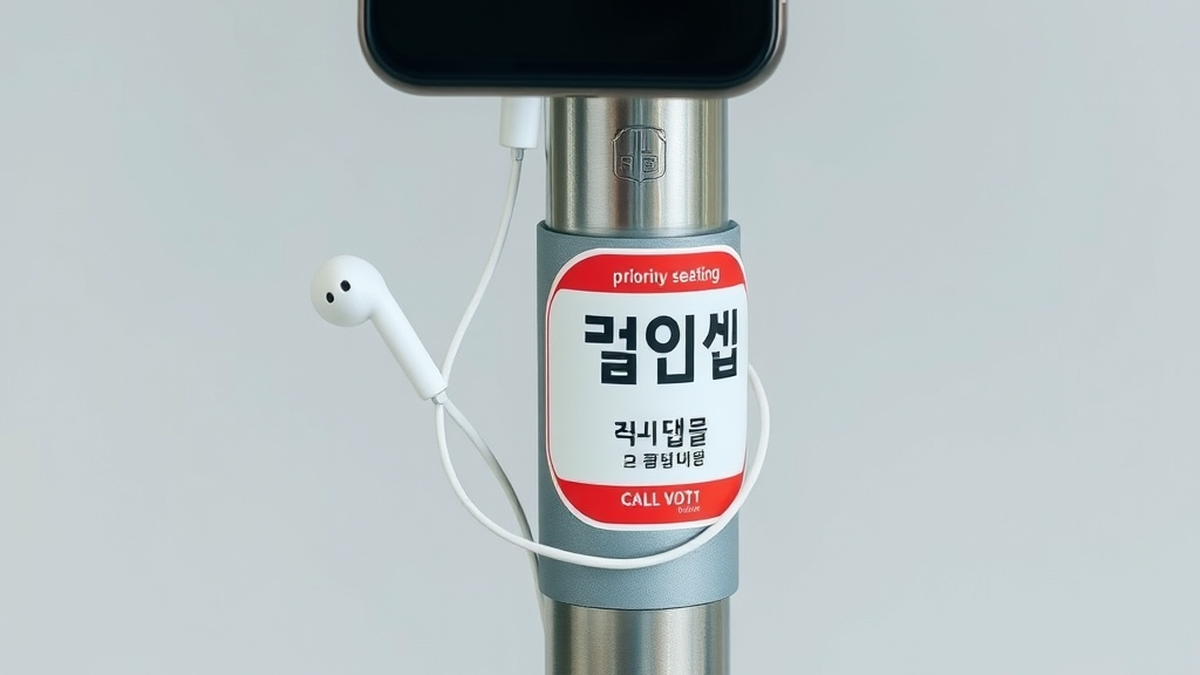
Navigating the Flow: A Guide to Korean Public Transit Etiquette
If you have ever stood on a Seoul subway platform during the evening rush, you have likely noticed a rhythmic, almost choreographed quality to the crowd. It is not that everyone is following a rigid rulebook; rather, it is a shared sense of nunchi—the ability to gauge the social atmosphere—that keeps the commute moving.
For travelers, the Korean transit system is a marvel of efficiency. But beyond the arrival times and the color-coded lines, there is a subtle layer of social behavior that keeps the experience smooth for everyone. Understanding these small, unspoken habits isn’t about memorizing a list of “do’s and don’ts,” but about recognizing how locals navigate a shared space. When you step onto a bus or a subway car here, you are stepping into a communal environment where the goal is simple: minimize friction and respect the space of the person next to you.
The Art of the “Bag-to-Front” Shuffle
One of the first things you might notice on a crowded subway car is how people carry their backpacks. In many parts of the world, a backpack is a permanent fixture on the wearer’s shoulders. In Korea, as soon as a train becomes moderately busy, you will see commuters instinctively swing their bags from their backs to their chests or drop them to their feet.
This isn’t a formal policy enforced by transit authorities; it is a practical response to the density of the commute. By moving the bag to the front, the passenger prevents the “backpack bump”—the unintentional knocking of fellow riders when turning around.
You might see a local standing near the doors, their backpack hugged against their chest like a shield. If you find yourself in a tight squeeze, follow their lead. It is a small movement, but it acts as a silent signal to those around you: I am aware of how much space I am taking up. It’s a gesture that says you are part of the flow, rather than an obstacle to it.
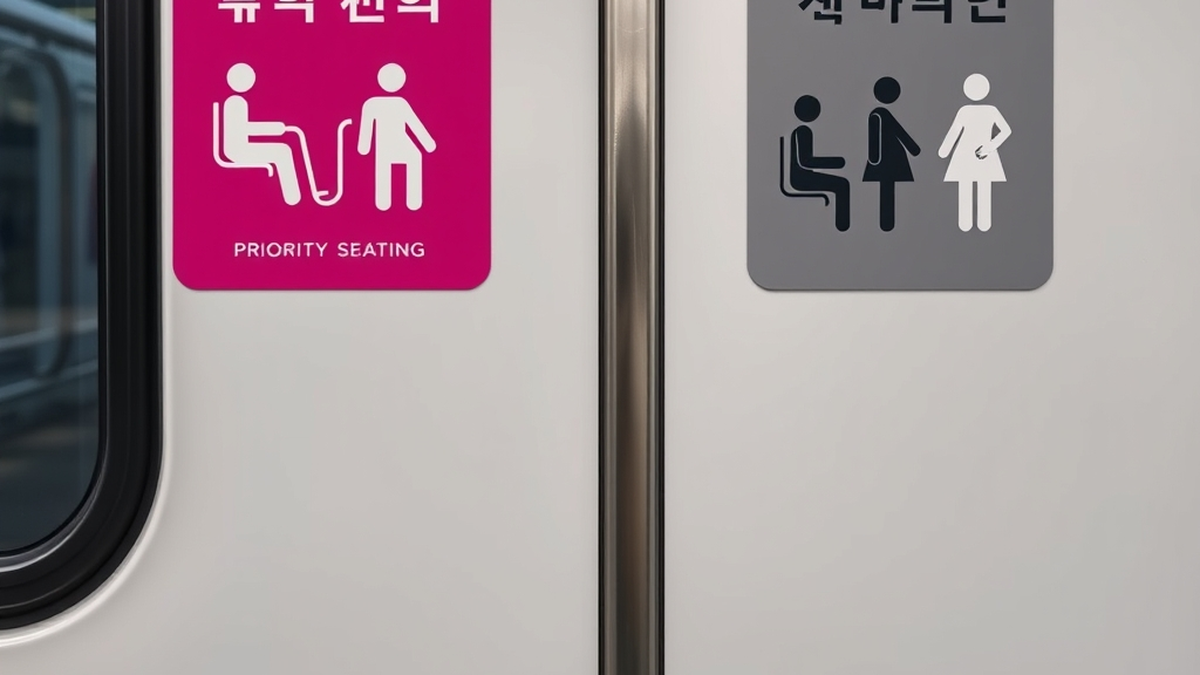
The Priority Seating Distinction
If you look at the rows of seats on a Seoul subway, you will notice that the ends of each row are designated with a specific color or a sign depicting a person in a wheelchair or an elderly individual. These are the gyotongsuyak-seok (priority seats).
In many Western cities, priority seating is often treated as “first come, first served” until someone who needs it arrives. In Korea, the social expectation is quite different. These seats remain empty even when the train is packed, reserved for the elderly, the disabled, or those who are pregnant.
You might see a train so crowded that people are pressed against the glass, yet the priority seats remain conspicuously vacant. It’s a common sight to witness a younger person standing for an entire hour-long journey, even when a priority seat is right next to them. If you are a visitor, it is best to leave these seats clear regardless of how tired your feet are. It isn’t just about following signage; it’s about recognizing that these spots are held in reserve as a matter of communal respect.
Managing the “Soundscape”
Public transit in Korea is remarkably quiet, even when it is physically packed. While you might be used to listening to music or podcasts on your phone without headphones, or chatting loudly with a friend during a commute, the social norm here favors a lower volume.
“Sound leakage” is a common point of minor frustration for locals. If you are watching a video on your phone, the expectation is that you use earphones. If you are traveling with a companion, the conversation is usually kept at a volume that doesn’t reach the ears of the person sitting three rows away.
You might hear a faint, high-pitched beep-beep sound occasionally—that is usually the sound of a transit card being tapped at a terminal. Or, perhaps, the soft chime of an announcement system. These sounds are acceptable because they are necessary for the function of the commute. Loud phone conversations or music bleeding from headphones, however, are treated as disruptions to the shared silence. If you are catching up with a friend on the subway, try to keep your voice low. It’s a simple way to participate in the collective effort to keep the transit experience calm and unobtrusive.
The “Zip-Line” Exit Strategy
Exiting a busy bus or subway car in Korea can feel like a game of strategy. As the train approaches a stop, you will notice that those who plan to get off start shifting toward the doors well in advance. This is not just impatience; it is a way to ensure that the transition—from the train to the platform—happens as quickly as possible.
When the doors open, there is a specific, unspoken rhythm: those getting off move with purpose, and those waiting to get on wait patiently to the side. You will rarely see a “clash” at the door because the people waiting on the platform understand that the priority is to clear the exit path first.
If you are standing near the door and you aren’t getting off at the next stop, the most helpful thing you can do is step off the train briefly to let others pass, then step back on. It sounds like a hassle, but it’s a standard practice that prevents the “bottleneck” effect. Watching how locals position themselves near the doors—often angling their bodies to allow for a clean exit—is a perfect example of nunchi in action. They aren’t pushing; they are simply creating space for the flow of traffic to continue.
Finding Your Own Rhythm
As you travel through Korea, you will find that these social habits become second nature quickly. You don’t need to worry about memorizing an extensive set of rules or feeling like you are being “policed” by the locals. Most people are far too focused on their own commute to notice a small mistake.
The goal of these behaviors is simply to make a high-density environment feel a bit more manageable for everyone involved. When you choose to keep your voice down, offer a seat, or move your bag to your chest, you are essentially acknowledging the people around you. It is a quiet, respectful way to exist in a space that is shared by thousands of people every single day.
Next time you find yourself on the Green Line or a local bus, take a moment to look around. Notice how the crowd breathes together, adjusting to the rhythm of the stops and the density of the passengers. By simply observing these small, everyday interactions, you will find that you aren’t just a tourist watching the city go by—you are a part of the city’s movement.