A Guide to Bunsik: Korea's Favorite Street Food Staples
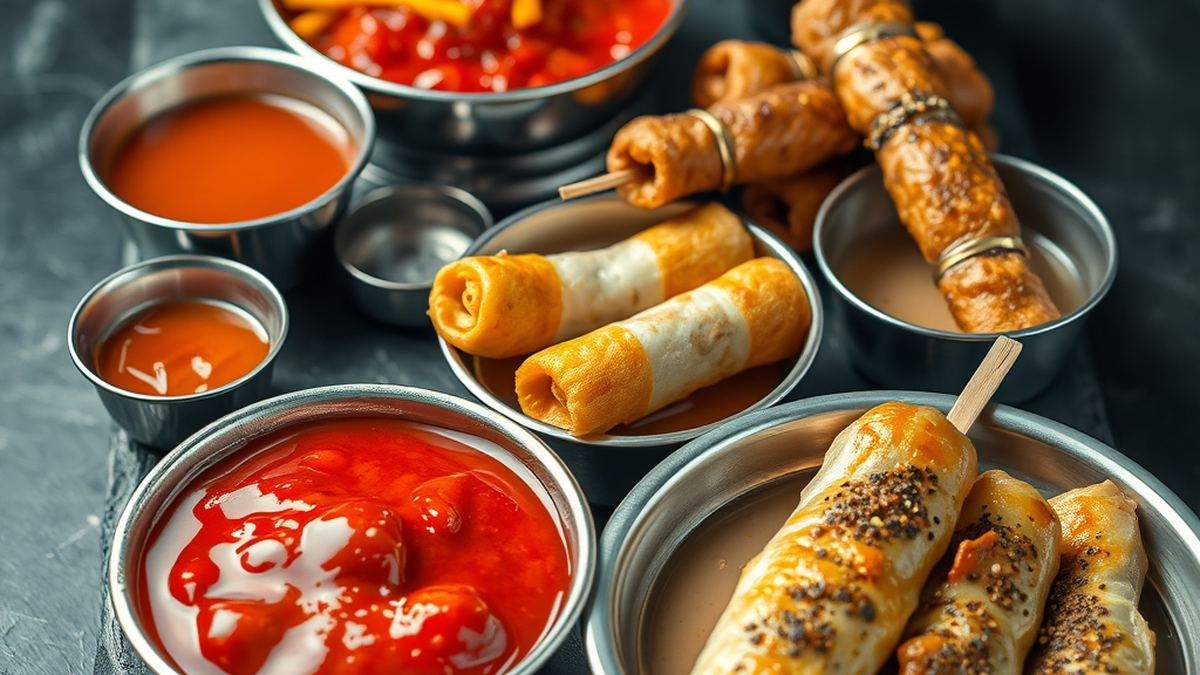
On a chilly afternoon in Seoul, the scene outside an ordinary neighborhood subway exit follows a familiar rhythm. Steam billows from large rectangular metal vats under heavy plastic flaps, carrying the savory aroma of simmered kelp, dried anchovies, and sweet-and-spicy chili paste. Commuters in padded winter coats step up to the counter, grab a pair of wooden tongs, and balance a paper cup of hot broth in one hand while spearing food with a long bamboo skewer in the other.
This is the world of bunsik (분식).
To international audiences, Korean street food is often framed around viral internet challenges featuring blisteringly hot sauces. But for anyone living in Korea, bunsik represents something far more functional and routine: a reliable, affordable network of snacks and casual meals woven directly into daily life. It is the food of middle schoolers pooling their pocket change after academy classes, office workers sneaking a ten-minute lunch between meetings, and late-night revelers stopping for a warm bite before catching the last train home.
       [ THE BUNSIK ECOSYSTEM ]
                  │
  ┌───────────────┼───────────────┐
  ▼               ▼               ▼
Tteokbokki      Twigim          Sundae
(Spicy Rice    (Deep-Fried    (Steamed Blood
  Cakes)         Bites)          Sausage)
  │               │               │
  └───────────────┼───────────────┘
                  ▼
         [ The Dip & Mingle ]
  (Everything dipped into chili sauce)
                  │
                  ▼
         Eomuk Broth (Free Refill)
The Post-War Roots of “Flour Food”
The term bunsik literally translates to “food made from flour” or “powdered food.” While the category today includes rice dishes, blood sausage, and fish cakes, its name points directly to mid-twentieth-century food policies in South Korea.
In the decades following the Korean War, rice was in short supply. The South Korean government launched nationwide consumption campaigns to encourage citizens to eat wheat and other grains rather than relying solely on scarce white rice. Schools served bread, and restaurants were mandated to mix barley into their rice bowls. During this era, small eateries began serving cheap, filling dishes made from imported wheat flour, such as knife-cut wheat noodles (kalguksu, 칼국수), hand-torn dough soup (sujebi, 수제비), and wheat-based rice cakes.
As the economy grew and rice became abundant again, the necessity for flour-only meals disappeared, but the infrastructure of affordable, quick-service diners remained. The meaning of bunsik shifted. It stopped being a strict nutritional category and evolved into an umbrella term for everyday, casual fast food. Today, a bunsik-jip (분식집, bunsik shop) can range from a sidewalk pushcart (pojangmacha, 포장마차) to a compact storefront equipped with stainless steel counters and plastic stool seating.
The Counter Classics: The Core Lineup
Walking into a classic bunsik spot, you will rarely see people ordering a single dish in isolation. Bunsik is designed to be combined, mixed, and shared. A few central items form the foundation of almost every menu.
Tteokbokki (떡볶이)
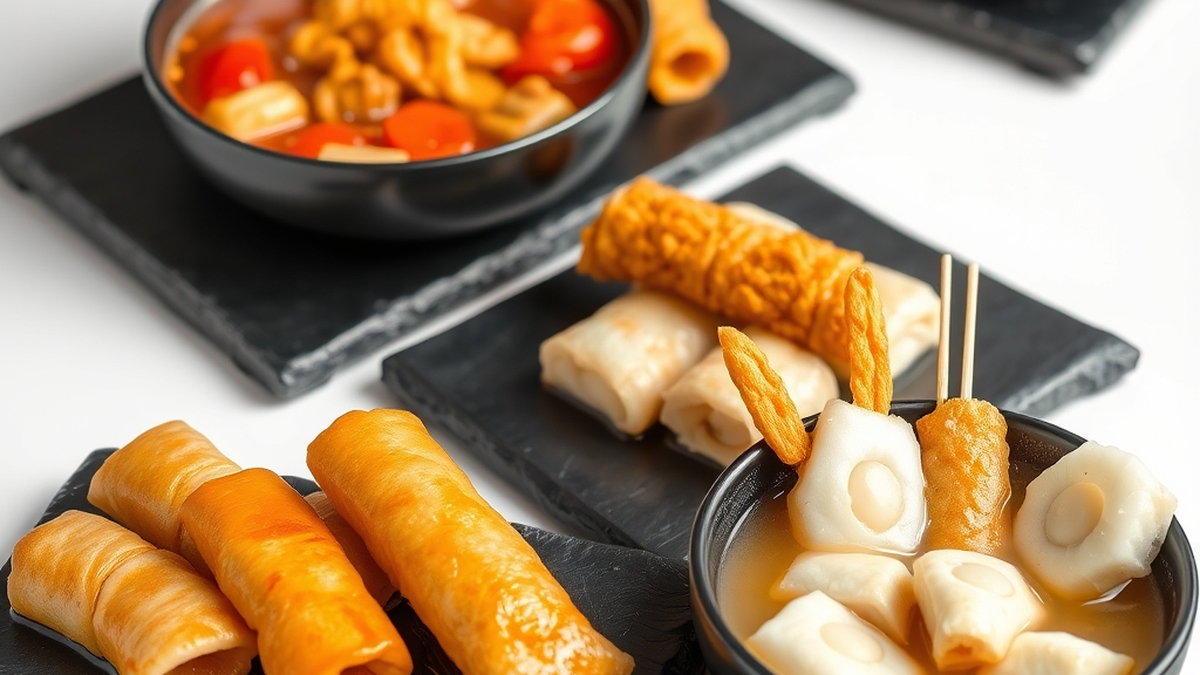
Simmered rice or wheat cakes in a thick sauce made from gochujang (red chili paste), gochugaru (red chili powder), sugar or corn syrup, and dashi broth. The sauce strikes a balance between sweetness, savory depth, and heat. The cylindrical cakes can be made of rice (ssal-tteok, 쌀떡), which offers a dense, chewy bite, or wheat (mil-tteok, 밀떡), which is softer, slightly springier, and absorbs the sauce more thoroughly. Locals often have strong, vocal preferences between the two, though both sit side-by-side in large, bubbling flat pans across the country.
Twigim (튀김)
Deep-fried street tempura. The lineup commonly includes:
- Sweet potato slices (goguma-twigim)
- Squid tentacles and rings (ojingeo-twigim)
- Hard-boiled eggs coated in light batter
- Gimmari (김말이): seasoned glass noodles wrapped in sheets of roasted seaweed, dipped in batter, and fried until crisp.
The frying station sits directly next to the tteokbokki pan for a reason. When ordering, the vendor will usually ask if you want your twigim served plain with soy sauce or smothered directly under a ladle of spicy tteokbokki sauce (beombok, 범벅).
Sundae (순대)
Korean blood sausage, typically made by mixing pig’s blood with sweet potato glass noodles (dangmyeon) and barley or glutinous rice, encased in natural casings and steamed. It is sliced on a wooden cutting board upon order, releasing a cloud of steam, and served with optional steamed organ meats like liver (gan) and lung (heopa). In Seoul and the surrounding areas, sundae is served alongside a small dish of seasoned salt mixed with ground chili pepper. In Busan and the southern regions, it is traditionally served with a savory, funky dip made of ssamjang (seasoned soybean paste) or fermented salted brine.
Eomuk (어묵)
Fish cakes made from pureed white fish blended with starches and seasonings, threaded in wavy folds onto long wooden skewers. They sit submerged in giant stainless steel troughs of piping hot, clear broth seasoned with dried kelp, white radish, green onions, and dried seafood. The broth is communal, self-serve, and free of charge. Patrons ladle the broth into small paper cups while waiting for their main order, sipping it between bites of spicy food to balance the heat.
| Dish | Primary Texture | Flavor Profile | Common Pairing Practice |
|---|---|---|---|
| Tteokbokki | Chewy, elastic | Sweet, savory, moderately spicy | The “base sauce” for everything else |
| Twigim | Crisp, crunchy | Rich, savory, oily | Dipped or tossed directly into tteokbokki sauce |
| Sundae | Soft, dense | Mild, earthy, mineral | Dipped in seasoned salt or tteokbokki sauce |
| Eomuk | Tender, bouncy | Savory, ocean-rich | Sipped with broth as a palate cleanser |
Beyond the Cart: The Sit-Down Bunsik Diner
While sidewalk carts specialize in the holy trinity of tteokbokki, twigim, and sundae, brick-and-mortar bunsik restaurants expand the menu to function as all-day diners. These locations often display a long laminated menu board or a paper ticket where diners mark their choices with a ballpoint pen.
The anchor of the sit-down bunsik diner is Gimbap (김밥)—cooked rice seasoned with sesame oil and salt, rolled in roasted seaweed sheets (gim) with strips of pickled yellow radish (danmuji), braised burdock root, egg ribbons, spinach, and carrots. Diners can choose classic versions or fillings like canned tuna mixed with mayonnaise, sautéed kimchi, or pork cutlet (donkkaseu).
Another staple is Ramyeon (라면). While instant noodles are commonly prepared at home, bunsik diners elevate them into a dedicated menu item. Cooks prepare each portion over high gas flames in thin, gold-colored aluminum pots, timing the noodles so they remain noticeably springy (k꼬들꼬들, kkodeul-kkodeul). Diners can ask for additions like a cracked egg stirred into the broth, melted processed cheese, rice cakes, or chopped green onions.
A common meal combination in these diners is a roll of tuna gimbap paired with a bowl of ramyeon. Diners dip the rice roll into the spicy instant noodle broth, creating a cheap, deeply comforting lunch that takes less than five minutes from order to table.
       [ THE DUAL PATHS OF BUNSIK ]
                     │
     ┌───────────────┴───────────────┐
     ▼                               ▼
[ Street Cart / Stall ]     [ Brick-and-Mortar Diner ]
• Standing on the street     • Sit-down casual seating
• Paper cups & wooden picks  • Self-serve pickled radish & kimchi
• Focused on:                • Focused on:
  - Tteokbokki                 - Gimbap varieties
  - Skewered Eomuk             - Stove-cooked Ramyeon
  - Assorted Twigim            - Donkkaseu (Pork cutlet)
  - Steamed Sundae             - Jjolmyeon & fried rice
How and When to Eat: Practical Street Etiquette
For a first-time visitor, walking up to an open-front bunsik stall can feel slightly disorienting because there is rarely a hostess, a formal line, or an English menu. However, the operational rules are simple and intuitive:
- Approach and Claim a Spot: Walk up to an open gap along the counter. If you plan to eat there, grab a wooden skewer or fork from the metal canister on the counter.
- Help Yourself to Broth: You do not need to ask for fish cake broth. Small paper cups or plastic handled bowls sit near the eomuk vat. Ladle out your own broth and sip it while standing. If you want a skewer of eomuk, pick it up directly from the broth vat and count the sticks at the end when paying.
- Specify Sauce on the Side or Mixed: If you order twigim, the vendor will ask if you want it dipped. You can ask for them to cut the pieces into bite-sized lengths and pour tteokbokki sauce over the top, or keep them separate so the batter stays crunchy.
- Shared Condiments: There will often be a bowl of seasoned soy sauce with a pastry brush or an onion wedge floating inside it. Rather than dipping a half-eaten eomuk stick directly into the communal soy sauce, brush the sauce onto the fish cake using the provided brush or spoon.
- Paying: Payment is usually settled after you finish eating. Simply point to what you had or tell the owner the count of skewers and plates. Both cash and local transportation/bank cards are standard, though smaller outdoor carts prefer cash or bank transfers.
A Reliable Constant in the Urban Landscape
Bunsik is neither high-dining nor an exotic curiosity meant for bravado-filled eating contests. It is built entirely around convenience, warmth, and predictability. The sharp crunch of a fried glass-noodle roll, the savory steam rising from a cup of clear radish-and-kelp broth, and the sticky, sweet heat of red sauce on a cold evening are simple sensory markers shared by almost everyone who moves through a South Korean city.